Most advertisers treat January as a quiet continuation of Q4. That mindset usually leads to underperformance.
People are no longer buying gifts or chasing deals. Budgets are tighter. Attention is scattered. And the urgency that drove conversions in December is gone.
If you want your ads to work in January, start by treating it as its own strategic phase — not just a cooldown period.
Understand What Has Shifted Since the Holidays
The gap between holiday urgency and January hesitation is wide. Users are still active on Facebook and Instagram. But their expectations and behavior are different.
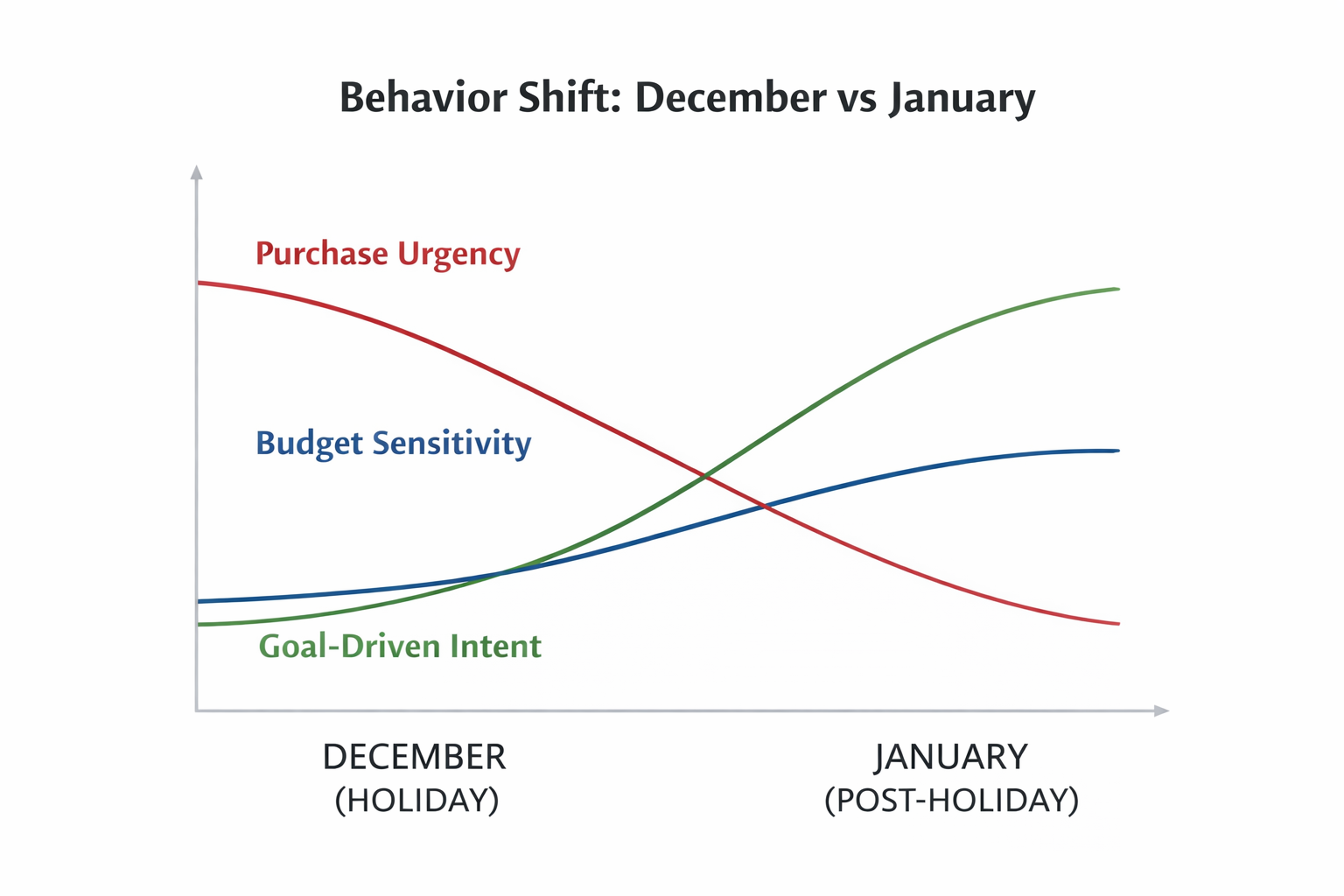
In December, urgency is high but intent is low. In January, urgency drops, intent sharpens, and budget sensitivity increases.
Here’s what usually changes:
-
Intent slows down. In December, people are quick to act. In January, they take more time to consider options.
-
Spending becomes selective. Users are more cautious. They’ll buy what feels essential or helpful — not just what’s on sale.
-
Motivations shift. Wellness, organization, and improvement become more relevant than gifting or indulgence.
If you ignore these shifts, even good offers will struggle to convert.
Adjust Your Campaign Goals First — Then Tweak the Creative
If your KPIs still revolve around direct conversions, your January campaigns will likely fall short. This doesn’t mean sales aren’t possible. But early Q1 often requires warming up your audience again.
Before pushing another product, reframe your campaign goals. Focus on intent signals instead of forcing a purchase.
A few examples of better-aligned goals:
-
Video views. Short, product-centered videos help reintroduce your brand and highlight updated use cases.
-
Lead generation. Offering useful downloads, email opt-ins, or early access builds a stronger list for late Q1.
-
Engagement. Use polls, story replies, or carousel content to identify new audience segments based on interaction.
These goals give you usable signals while building momentum for more conversion-driven ads in February.
Learn how to choose the right objective in Meta Ad Campaign Objectives Explained.
Refresh Your Creative to Match the Tone of the Season
January isn’t about urgency. It’s about clarity. If your visuals still carry the intensity of Q4, users will scroll past them.
Instead of just “freshening up” your creative, think about what people want to feel right now: calm, clear, and in control.
Strong January creatives often feature:
-
Lighter color palettes. Muted tones, clean whitespace, and simplified layouts draw more attention than bold holiday colors.
-
Focused product angles. Don’t show everything. Choose one angle that connects to a real January use case.
-
Language that supports pacing. “See how it works” often outperforms “Buy now.” Let the CTA match the user’s mindset.
You're not just updating aesthetics — you're showing users that your brand understands the season.
Rethink Your Audiences — Especially Retargeting
If you ran broad campaigns in Q4, you probably attracted gift-givers, not just buyers for themselves. That makes retargeting tricky.
Before you reactivate custom audiences, re-segment based on actual behavior. Otherwise, your spend will hit people with no intent to return.
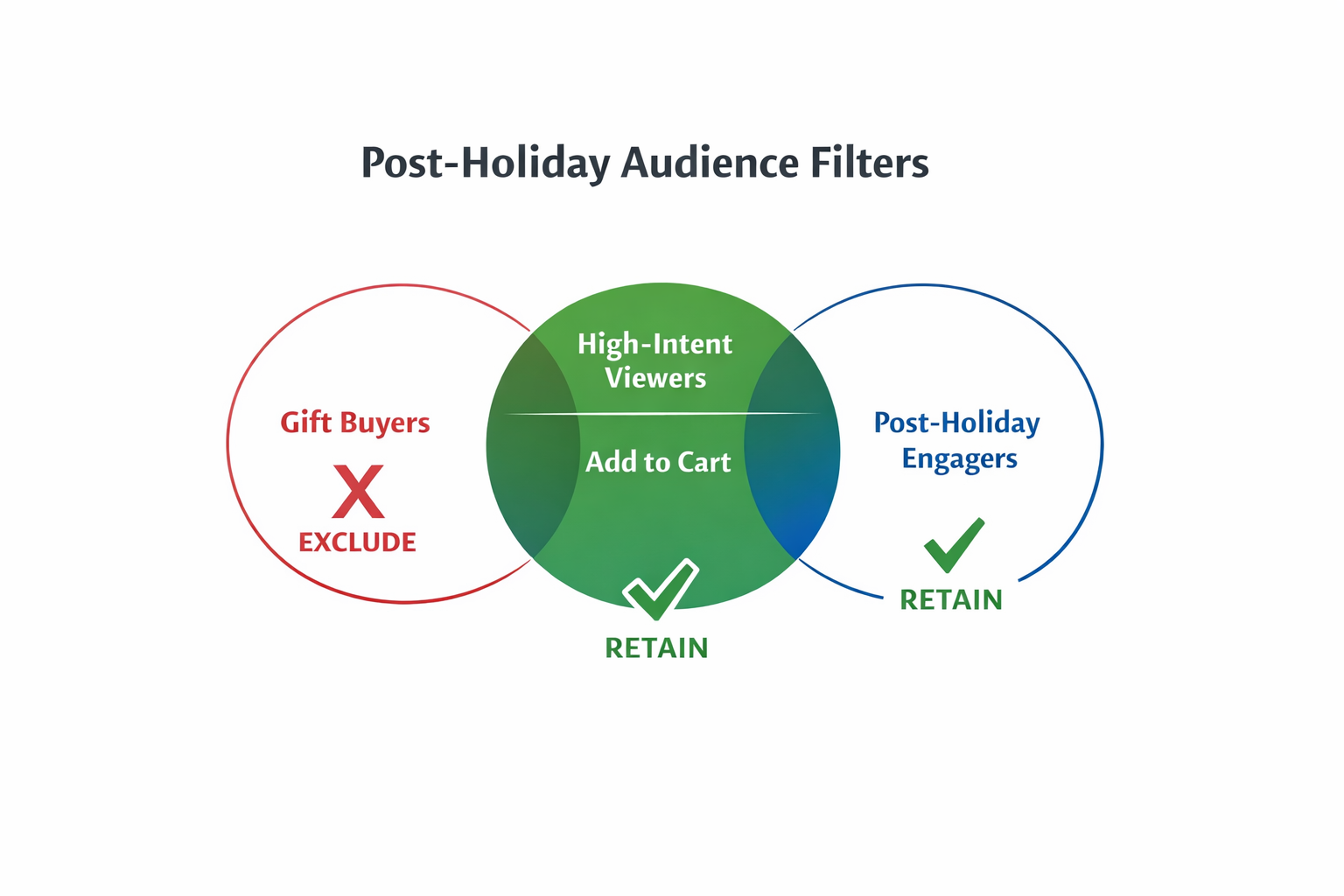
Useful audience layers to build or refine:
-
Viewed product, no purchase. These users showed personal interest, not just casual browsing.
-
Added to cart in late December. They may have paused due to budget or timing, not lack of intent.
-
Engaged with content post-holiday. These signals (comments, saves, video views) reflect early-stage interest worth nurturing.
For detailed strategies, read How to Re-Engage Cold Audiences with Facebook Ad Targeting.
Build Offers That Feel Relevant — Not Just Discounted
Heavy discounts can feel out of place in January. Many buyers associate that with old inventory or leftover sales messaging.
What works better now is value — not urgency. Offer structures that support considered purchases are more effective than time-limited pushes.
Consider these offer types:
-
Bundles or extended use. “Buy 2, get 1 free” or “90-day plan for the price of 60” speaks to users looking for lasting value.
-
Free trials with low effort. Make the first step risk-free, especially if your product supports a New Year goal.
-
Clear outcomes. Replace generic copy with specific results. Instead of “Save time,” say “Cut 20 minutes off your morning routine.”
For offer ideas tailored to Instagram and Facebook, check Lead Magnet Strategy That Will Take Your Instagram Advertising to the Next Level.
Don’t Collapse Your Funnel — Rebuild It in Phases
The Q4 funnel is compressed. December campaigns are often built to convert in one or two clicks. That doesn’t work in January.
Start stretching the funnel back out. Let cold users re-enter at the top, and give warm ones space to make slower decisions.
Your January funnel might look like this:
Top of Funnel (TOF)
-
Short-form video ads that demonstrate a common January problem and your product’s role in solving it;
-
Carousel posts with seasonally relevant use cases (e.g., workspace upgrades, wellness routines).
Middle of Funnel (MOF)
-
Retargeting ads that highlight testimonials, reviews, or “how it works” pages;
-
Lead ads offering deeper content like guides or planners in exchange for an email.
Bottom of Funnel (BOF)
-
Focused sales ads to warm leads, ideally with matched messaging between ad and landing page;
-
Personalized offers based on what product pages a user recently viewed.
See how this approach works in detail in Why Your Facebook Campaign Needs a ‘Middle of Funnel’ Strategy.
Track the Right Signals — Not Just ROAS
It’s easy to panic when revenue slows after December. But in January, the path to purchase is often longer and more layered.
That’s why you need to shift how you evaluate success.
Key signals to monitor:
-
CTR (Click-through rate). Helps you understand if your creative is capturing attention in a more passive environment.
-
CPC (Cost per click). If CPC is dropping but conversions aren’t rising, focus on mid-funnel friction.
-
Time on page or scroll depth. Tells you whether people are exploring or bouncing early.
-
Micro-conversions. Email signups, quiz completions, or wishlist additions indicate growing intent.
For advanced tracking advice, read How to Analyze Facebook Ad Performance Beyond CTR and CPC.
Summary: January Is the Start of Your Next Growth Phase
You don’t need to force results this month. You need to listen to how your audience behaves — and respond with precision.
When you adjust your campaigns to fit where people are mentally and financially, you reduce waste and build stronger performance for Q1.
The advertisers who win in January are rarely the loudest. They’re the ones who reset their strategy instead of recycling December.