Digital marketing has undergone a dramatic transformation over the past decade. Regulations such as GDPR and CCPA, alongside browser restrictions on third‑party cookies, are redefining how organizations collect and use customer data.
According to Salesforce, 88% of consumers say the experience a company provides is as important as its products or services. At the same time, Cisco reports that 81% of consumers are concerned about how companies use their personal data. These trends show that customers want personalized experiences, but they also expect transparency and control.
As third‑party data becomes less reliable and harder to obtain, marketers are increasingly shifting toward first‑party and zero‑party data strategies.
What Is Zero‑Party Data?
Zero‑party data is information that customers intentionally and proactively share with a brand. Unlike third‑party data that is collected through tracking technologies or external providers, zero‑party data comes directly from the individual and is provided with clear intent.
Typical examples include:
-
Preference center selections
-
Survey responses
-
Product interests or category preferences
-
Feedback forms
-
Quiz results
-
Event registrations
Because this information is shared voluntarily, it is generally more accurate and relevant than inferred data.
Why Zero‑Party Data Matters
The importance of zero‑party data is growing rapidly for several reasons.
First, it improves trust. Research from Edelman shows that 59% of consumers will only buy from brands they trust. When organizations clearly explain why they collect information and how it will be used, customers are more willing to participate.
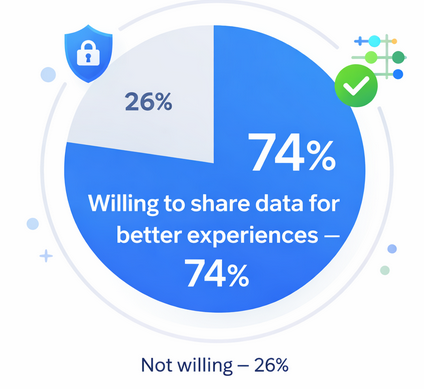
Consumer willingness to share personal information increases significantly when brands provide clear value in return
Second, it increases personalization quality. McKinsey reports that companies excelling at personalization generate 40% more revenue from those activities compared with average performers. Zero‑party data provides direct insight into customer interests, which leads to more accurate targeting.
Third, it helps ensure compliance. Data provided willingly by users is easier to manage within regulatory frameworks because the consent and context are explicit.
Methods for Collecting Zero‑Party Data
Organizations can collect zero‑party data in many ways while maintaining transparency and delivering value to the user.
Interactive Content
Quizzes, product finders, and assessments allow users to share preferences in exchange for personalized recommendations.
Preference Centers
Preference centers give subscribers the ability to control what type of content they receive, how often they receive it, and which topics interest them.
Surveys and Feedback Requests
Short surveys can gather insights about customer needs, expectations, and satisfaction levels.
Event Registrations
Webinars, workshops, and virtual events provide an opportunity to collect information about attendee interests and professional roles.
Turning Zero‑Party Data Into Audience Segments
Collecting data is only the first step. The real value comes from transforming that information into actionable audience segments.
Marketers can segment audiences based on:
-
Product interest
-
Industry or role
-
Purchase intent
-
Content preferences
-
Stage in the buying journey
For example, someone who indicates interest in automation tools and attends a related webinar can be grouped into a high‑intent segment for targeted campaigns.
This approach allows organizations to deliver more relevant messaging while avoiding intrusive tracking techniques.
Best Practices for a Privacy‑First Strategy
To successfully implement a zero‑party data strategy, marketers should follow several best practices.
Be transparent. Clearly explain why information is being collected and how it will be used.
Provide clear value. Users are more willing to share information when they receive personalized recommendations, exclusive content, or improved experiences.
Keep forms simple. Long or complicated forms reduce participation rates. Start with essential questions and gradually collect additional insights.
Maintain data hygiene. Regularly review and update collected information to ensure accuracy and relevance.
Respect user control. Always provide easy options to update preferences or withdraw consent.
The Future of Audience Building
Privacy regulations and technological changes will continue reshaping digital marketing. Gartner predicts that by 2027, 75% of the world’s population will have its personal data protected under modern privacy regulations.
As this shift accelerates, organizations that prioritize transparent data collection and customer trust will gain a competitive advantage.
Zero‑party data allows companies to build audiences based on real relationships rather than hidden tracking mechanisms. The result is more accurate insights, better engagement, and a marketing strategy that aligns with evolving privacy expectations.