Ad accounts don’t break overnight when tracking degrades — they slowly lose clarity. You start seeing stable CPL, but sales teams reject more leads. Attribution looks cleaner than reality, and scaling decisions become harder to justify.
This is the operating environment for 2026. Privacy constraints aren’t new anymore, but most advertisers still run systems built for a level of visibility that no longer exists.
The shift isn’t about compliance. It’s about rebuilding how campaigns generate and validate signal.
Tracking Loss Isn’t the Core Problem — Signal Distortion Is
Most teams focus on what they’ve “lost”: third-party cookies, granular attribution windows, cross-device visibility. That framing leads to patchwork fixes — more tools, more integrations, more dashboards.
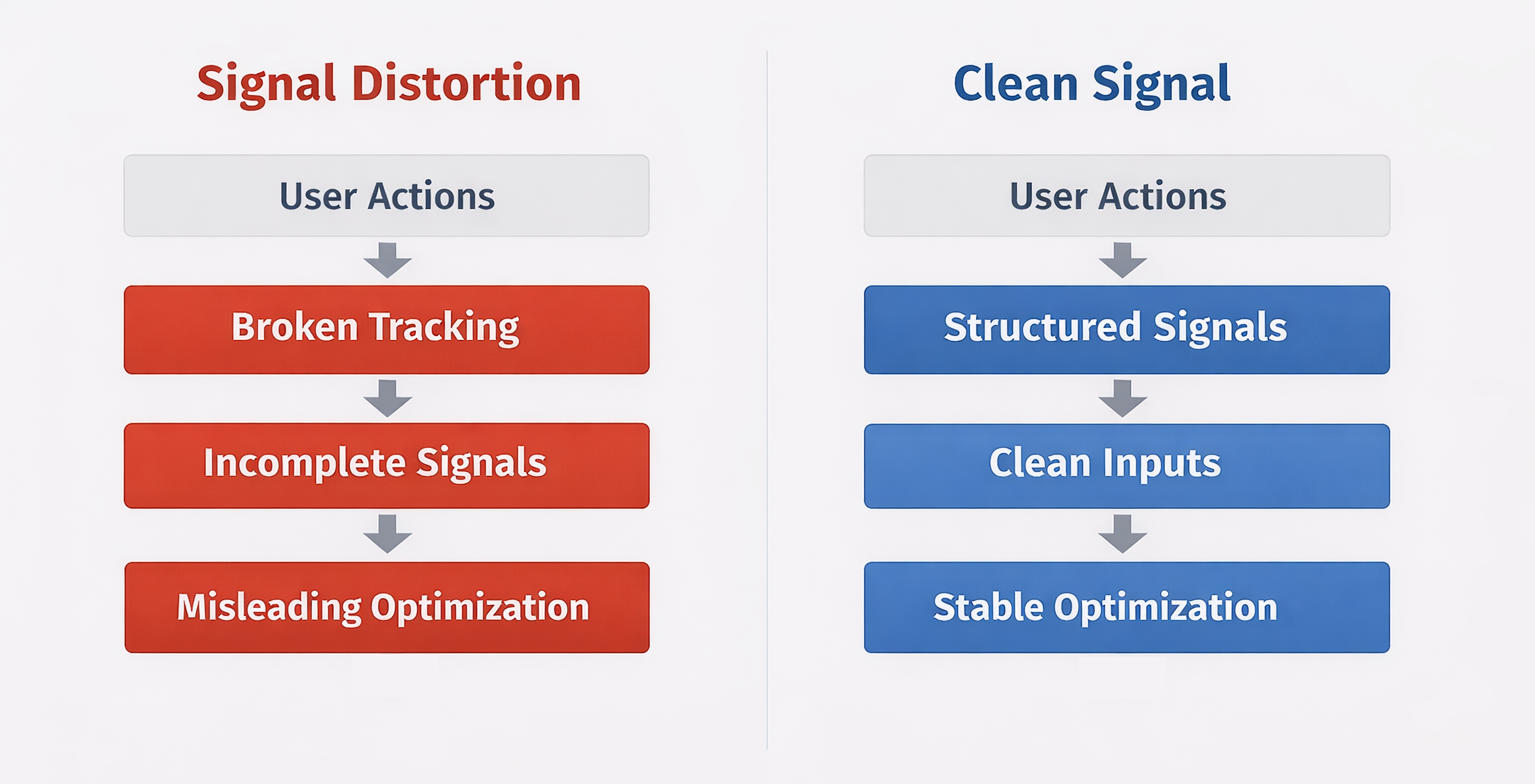
The real issue shows up inside campaign behavior.
When signal quality drops, platforms start optimizing toward proxies. You can see this when:
-
Lead quality declines while CPL stays flat, because the algorithm shifts toward cheaper conversion patterns with lower intent — the same issue explained in Ad Metrics That Lie: When Good Numbers Hide Bad Performance.
-
Retargeting pools shrink unevenly, especially on Safari-heavy traffic, which changes audience composition without clear visibility.
-
Conversion lag increases, making recent performance look weaker than it actually is — a pattern broken down in What Conversion Lag Means for Your Facebook Ads.
These aren’t reporting issues. They’re delivery issues.
If you’re still optimizing based on incomplete signals, you’re training the system in the wrong direction.
First-Party Data Becomes a Bidding Input — Not Just a CRM Asset
Uploading customer lists used to be a scaling tactic. In 2026, it’s a foundational input for how platforms understand value.
The difference is how the data is structured and refreshed.
Most advertisers still upload static lists every few weeks. That creates stale signals. Platforms respond by overgeneralizing audiences, which reduces targeting precision — something discussed in Why First-Party Data Is the Key to Future-Proofing Your Facebook Ads.
A functional setup looks different:
-
Event-based syncing instead of batch uploads.
When a lead moves from MQL to SQL, that change should update the platform within hours, not weeks. -
Segmentation by outcome, not lifecycle labels.
Define segments like “closed in <30 days” instead of generic CRM stages. -
Exclusion logic tied to sales reality.
Prevent the system from recycling low-quality lookalikes.
This turns first-party data into a continuous feedback loop.
Conversion APIs Don’t Fix Measurement — They Reshape Optimization
Many teams implemented server-side tracking expecting cleaner attribution. What they actually get is different optimization behavior.
Once server events replace browser events, platforms receive more consistent signals — but those signals are still incomplete.
You’ll notice:
-
Spend shifts earlier in the day
-
Exploration decreases
-
Platform data looks cleaner than external analytics
If you’re working with this setup, it helps to understand the mechanics behind it in Server-Side Tracking for Facebook Ads: A Beginner’s Guide.
To control this:
-
Send fewer, higher-quality events
-
Avoid flooding the system with weak signals
-
Align events with revenue, not just conversions
Otherwise, you’re scaling distorted data.
Contextual Targeting Is Back — But It Works Differently Now
Contextual targeting is no longer about keywords — it’s about matching intent through creative and environment.
You can see this when:
-
Specific messaging suddenly improves lead quality
-
Broad audiences outperform narrow ones
-
Landing page clarity changes conversion rates
This aligns with how platforms interpret context, as explained in The Role of Context in Ad Targeting.
To make it work:
-
Build creatives around real buying scenarios
-
Match landing page intent to ad messaging
-
Avoid over-restricting audiences
Creative is no longer just messaging — it’s targeting input.
Measurement Shifts from Attribution to Validation
Attribution used to guide decisions directly. Now it often misleads.
Instead, measurement becomes validation.
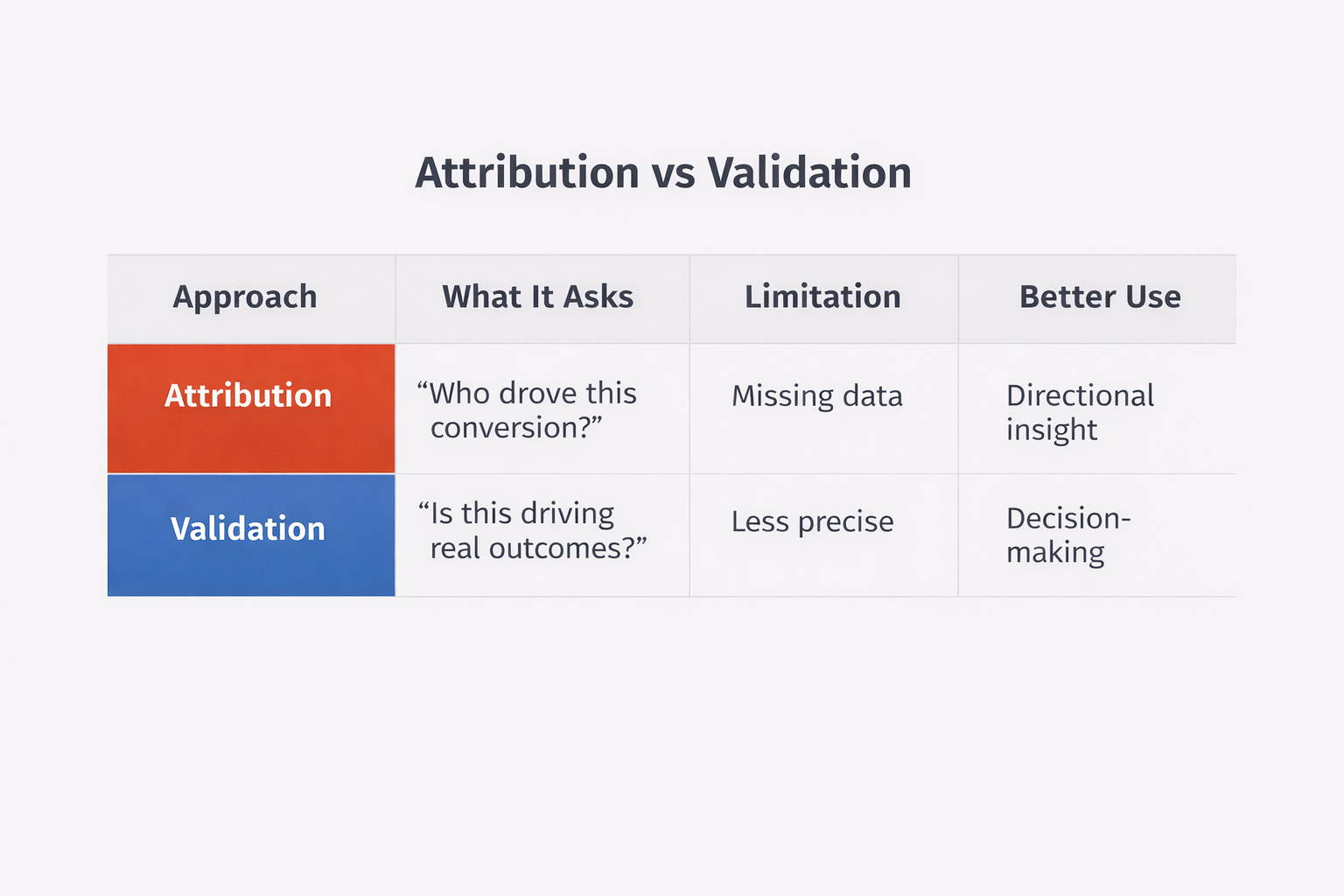
That means:
-
Comparing platform data with CRM outcomes
-
Watching trends, not exact numbers
-
Running controlled spend tests
This is why Facebook Ads Data Alone Can’t Explain True ROI — because key parts of the journey are no longer visible.
Building a Privacy-First Campaign System
Privacy-first marketing isn’t a tactic. It’s system design.
A functional setup includes:
-
Redundant signal paths (browser, server, CRM)
-
Fast feedback loops
-
Clear value signals
-
Creative-driven targeting
Each part compensates for missing data elsewhere.
What Changes for Advertisers in 2026
The biggest shift is operational.
You’re no longer optimizing inside a clear system. You’re interpreting partial signals and validating outcomes outside the platform. Campaign management becomes system calibration.
So stop trying to restore old visibility. Instead:
-
send better signals,
-
validate outside the platform,
-
and let creative do more of the targeting work.
That’s how campaigns stay effective in a privacy-first environment.