Q1 is often treated as a warm-up period, but its impact is long-lasting. Decisions made in January influence budget efficiency, creative performance, and audience learning for the rest of the year.
According to industry benchmarks, brands that clearly define Q1 objectives before launch are up to 30% more likely to hit mid-year revenue targets. At the same time, nearly 45% of marketing teams revise their Q1 strategy within the first six weeks, indicating weak upfront planning.
Mistake #1: Treating Q1 Like a Reset Instead of a Continuation
One of the most common errors is ignoring historical data from the previous year. While a new calendar year feels like a fresh start, audiences do not reset their behavior on January 1.
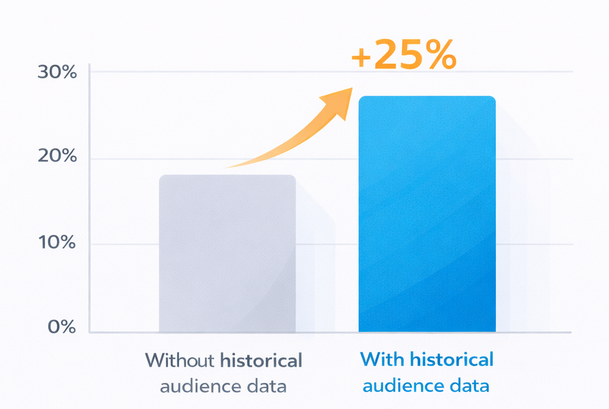
Brands that discard past performance data often repeat the same targeting and messaging mistakes. Research shows that campaigns using prior-year audience insights achieve 20–25% higher early-quarter engagement than those built from scratch.
What works better:
-
Analyze Q4 audience behavior and conversion paths
-
Identify segments that remained active during the holiday slowdown
-
Carry over high-intent audiences instead of rebuilding from zero
Mistake #2: Overestimating Early-Q1 Demand
Consumer demand in Q1 is typically uneven. January often sees cautious spending, while February and March show gradual recovery. Many brands front-load budgets expecting immediate scale, only to face inefficient spend.
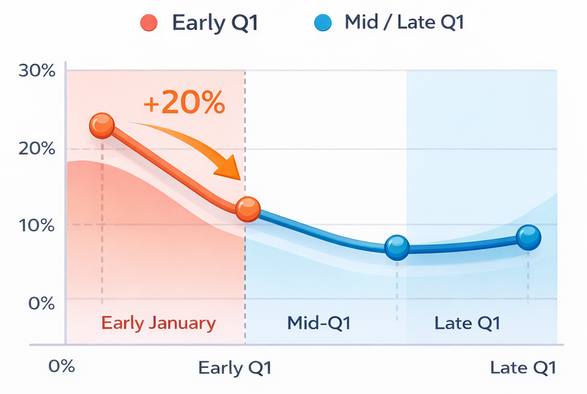
On average, cost per acquisition in early January is 18–22% higher compared to late Q1 across major digital channels. Brands that pace budgets across the quarter report up to 27% better return on ad spend.
What works better:
-
Phase budgets across January, February, and March
-
Use early Q1 primarily for testing and learning
-
Reserve scaling decisions for mid-to-late Q1
Mistake #3: Launching Too Many Campaigns at Once
In an effort to “start strong,” teams often launch multiple campaigns, creatives, and audiences simultaneously. This spreads budgets thin and delays meaningful performance signals.
Data from multi-channel advertisers shows that accounts running fewer, more focused Q1 campaigns reach optimization benchmarks 35% faster than those launching broad campaign structures.
What works better:
-
Prioritize 1–2 core objectives for Q1
-
Limit creative variations initially
-
Expand only after clear performance indicators appear
Mistake #4: Ignoring Audience Quality in Favor of Reach
Q1 planning frequently emphasizes reach and awareness metrics, especially after the holiday season. However, reach without relevance leads to wasted spend and weak downstream performance.
Studies show that campaigns optimized for high-intent audience segments deliver up to 40% higher conversion rates compared to broad targeting strategies, even at lower spend levels.
What works better:
-
Focus on intent signals rather than raw audience size
-
Prioritize segments with recent engagement or purchase history
-
Build campaigns around quality, not volume
Mistake #5: Delaying Measurement and Optimization
Many brands wait until late Q1 to evaluate results, assuming early data is unreliable. This delay often locks in inefficient strategies for weeks.
High-performing teams typically review Q1 performance weekly and make adjustments within the first 10–14 days, resulting in up to 25% lower acquisition costs by the end of the quarter.
What works better:
-
Define success metrics before launch
-
Monitor performance weekly, not monthly
-
Make small, continuous optimizations early
How to Approach Q1 Campaign Planning More Effectively
A strong Q1 plan is less about aggressive spending and more about structured learning. The most successful brands treat Q1 as a foundation-building phase rather than a pressure test.
Key principles to follow:
-
Start with clear, realistic objectives
-
Use historical data to guide early decisions
-
Pace budgets to match real demand patterns
-
Prioritize audience quality and fast feedback loops
Recommended Reading
For deeper insights into improving campaign performance throughout the year, explore these related articles on the blog:
Final Thoughts
Most Q1 campaign mistakes stem from urgency rather than strategy. Brands that slow down, plan carefully, and focus on learning early in the year consistently outperform those chasing quick wins. A disciplined Q1 approach creates stronger momentum—not just for the quarter, but for the entire year.