
Digital advertising environments change faster than annual planning cycles. Platforms update algorithms, user behavior shifts, and costs fluctuate. Without a reset, campaigns often carry outdated assumptions into the new year.
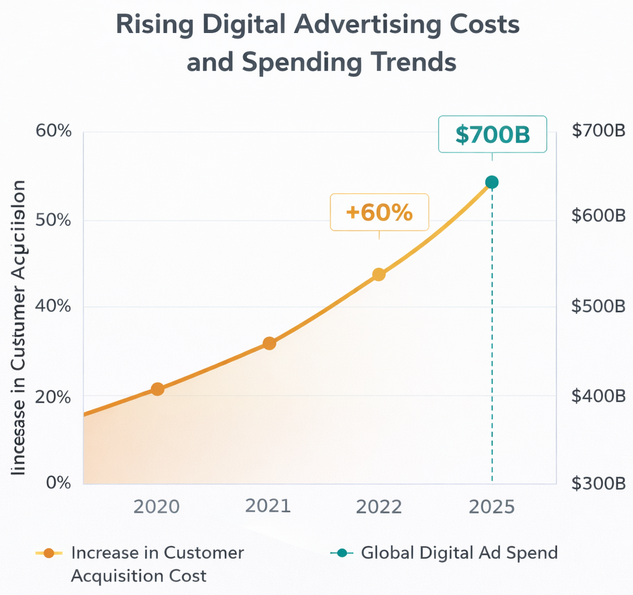
Customer acquisition costs have risen sharply over the past five years, while global digital ad spending is projected to reach approximately $700 billion in 2025, reinforcing the need for strategic optimization
Recent industry data highlights why a reset is critical:
-
Over 60% of marketers say their biggest challenge is inefficient budget allocation caused by outdated targeting or creatives.
-
Ad costs increased by 20–25% year over year across major social and search platforms, making optimization more important than ever.
A structured reset ensures that your strategy reflects current performance realities rather than last year’s momentum.
Step 1: Review Last Year’s Performance With Fresh Eyes
Start with a clean analysis of the previous year. Focus on trends, not isolated wins or losses.
Key questions to answer:
-
Which campaigns consistently delivered profitable conversions?
-
Where did cost-per-acquisition steadily rise?
-
Which audiences showed declining engagement over time?
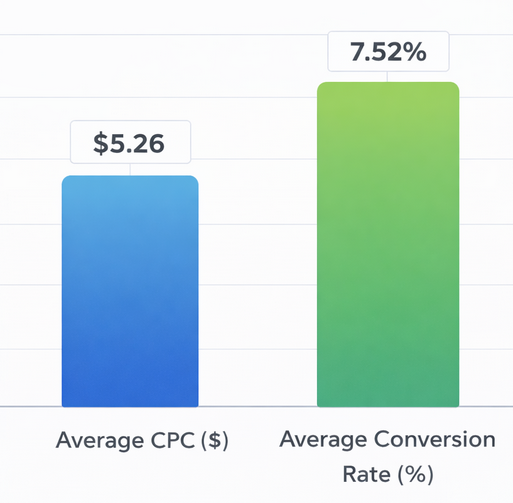
Key 2025 advertising benchmarks show an average CPC of $5.26 and a 7.52% conversion rate for search ads, highlighting the importance of balancing cost with performance
According to marketing analytics benchmarks, nearly 40% of active campaigns run with outdated audience settings, leading to diminishing returns. Identifying these patterns early prevents repeating the same mistakes.
Step 2: Reevaluate Target Audiences and Data Sources
Audiences that performed well last year may not behave the same way this year. Market saturation, creative fatigue, and data decay all reduce effectiveness.
Best practices for audience resets include:
-
Removing underperforming segments that have not improved over multiple months
-
Refreshing seed data used for audience modeling
-
Prioritizing first-party and high-intent behavioral data
Studies show that campaigns using refreshed audience data can improve conversion rates by up to 30% compared to those relying on static segments.
Step 3: Align Budget Allocation With Business Priorities
Many advertising accounts still distribute budgets based on historical spend rather than current goals. A new year reset is an opportunity to realign.
Consider:
-
Shifting more budget toward campaigns tied to revenue rather than impressions
-
Testing smaller budgets on emerging channels before scaling
-
Setting clear thresholds for pausing or scaling campaigns
Research indicates that brands that reallocate budgets quarterly see up to 15% higher return on ad spend than those that keep fixed allocations.
Step 4: Refresh Creative and Messaging Frameworks
Creative fatigue is one of the most common causes of declining performance. Even high-performing ads lose impact over time.
Data from large ad accounts shows:
-
Engagement rates can drop by 40% after 6–8 weeks without creative refreshes
-
Ads aligned with seasonal or annual themes outperform generic messaging by up to 22%
Use the new year to update visuals, refine value propositions, and test new messaging angles that match evolving customer expectations.
Step 5: Define Clear Testing and Optimization Rules
A reset is incomplete without a testing framework. Instead of reacting emotionally to short-term results, define rules in advance.
Examples:
-
Test new audiences with a fixed learning budget
-
Evaluate results only after statistically meaningful data is collected
-
Document insights from both winning and losing experiments
Marketers who follow structured testing processes are 2× more likely to report consistent performance improvements throughout the year.
Measuring Success After the Reset
Success should be measured beyond surface-level metrics. Focus on indicators tied to business outcomes:
-
Cost per qualified lead or sale
-
Conversion rate stability over time
-
Incremental lift compared to previous periods
A strong reset often delivers early gains, but its real value shows in sustained performance throughout the year.
Related Articles You May Find Useful
To deepen your strategy planning, consider these related articles from our blog:
Final Thoughts
Resetting your ad strategy for the new year is not about starting from zero. It’s about removing what no longer works, strengthening what does, and building a flexible system that can adapt to change. With a structured review, refreshed audiences, and disciplined testing, the new year becomes an opportunity for sustainable growth rather than repeated experimentation.
