A scalable campaign keeps working as you grow your budget. It delivers consistent results even when you increase spend or expand reach.
Many campaigns perform well at $50 a day. But push them to $500, and results start to slip. This often happens when the structure and testing process were never designed for growth. If you want to go deeper on this, see How to Identify Scalable Campaign Patterns.
Scalable campaigns are designed to grow without breaking. They’re not a lucky outcome — they’re the result of smart planning and clear strategy.
Why Most Campaigns Fall Apart When You Try to Scale
If your campaign is working now, that doesn’t mean it’s ready to scale. As you grow, small cracks get bigger.
Here are the most common reasons campaigns lose performance during scaling:
-
Creative fatigue. A few ads may work well at low spend but start underperforming quickly with more budget. This is closely tied to poor creative rotation, which is covered in Creative Fatigue: Early Signals and Fixes.
-
Audience saturation. Small, niche audiences get overused. You end up hitting the same people too often.
-
Rigid structure. Campaigns with just one or two ad sets leave no room for optimization or testing.
-
Noisy data. As volume increases, the quality of your conversion data may drop, leading to bad optimization choices.
Scaling isn’t just about spending more. It’s about building a system that keeps working when things get bigger. Many brands miss this, which is why Why Most Brands Fail at Scaling Facebook Ads (And How to Fix It) resonates with so many advertisers.
The Core Elements of a Scalable Campaign
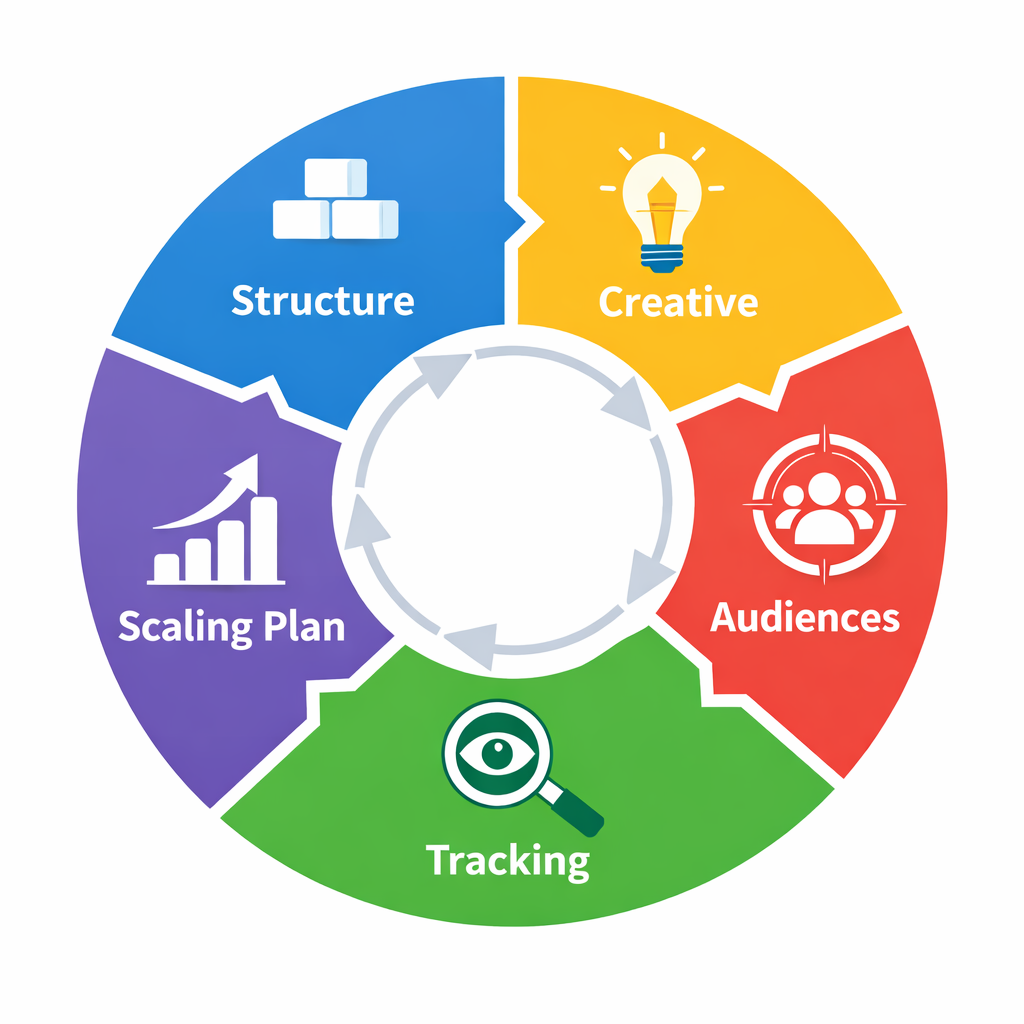
1. Structure That Helps You Grow
The way you set up your campaign matters. It should allow for easy adjustments, clear data, and enough volume for Meta’s algorithm to learn.
A solid structure includes:
-
Several ad sets that target different audiences. These could include interest stacks, lookalikes, or broad targeting.
-
Logical consolidation of ad sets. Combine smaller ones that perform similarly to give each enough budget.
-
CBO (Campaign Budget Optimization), which works well when your ad sets are already tested and stable.
If you want a more tactical breakdown of this approach, How to Structure Facebook Campaigns for Rapid Testing and Iteration pairs well with this section.
Avoid building a campaign with ten tiny ad sets. That usually spreads your budget too thin and slows learning.
Also, don’t micromanage budgets hour by hour. Let the system optimize once the structure is sound.
2. Creative That Doesn’t Burn Out
When campaigns scale, creative quality becomes the main factor in success. The algorithm can only go so far without fresh, relevant ads.
Here’s what helps:
-
Creative variety. Don’t just create one ad in five colors. Build multiple angles, like product demos, customer stories, and lifestyle use.
-
Multiple formats. Use carousels, Reels, static images, and videos. Different placements reward different formats.
-
Fresh messaging. Speak to different motivations, such as speed, value, ease, or credibility.
For example, a fitness brand could run:
-
A short video showing how fast their app works;
-
A carousel of user transformations;
-
A still image of a personal trainer with a short tip.
If budget is tight, Creative Testing with Limited Budget: What’s Worth Prioritizing? offers practical guidance on what to test first.
3. Audiences That Actually Let You Scale
If your campaign only works with a small niche, you’ll struggle to scale. You need audiences that grow with you, without wasting budget.
Here’s how to approach it:
-
Start narrow, then go broad. Begin with tested interest or lookalike audiences. Expand once results stabilize.
-
Use smart exclusions. Prevent overlap between prospecting and retargeting campaigns.
-
Let Meta optimize. Broad targeting can work well when creative and tracking are strong.
If broad targeting underperforms, the issue is often creative or signal quality — not the audience. This idea is explored further in Audience Quality vs Quantity: What Drives Better Long-Term Results?
4. Clean Conversion Tracking
Tracking isn’t just about reporting. It determines how Meta optimizes delivery.
Make sure you’ve got this in place:
-
Pixel and CAPI setup. Both are needed to reduce data loss.
-
Standard events. Optimize for purchases, leads, or add-to-carts, not shallow actions.
-
Landing page consistency. The page should load fast and clearly match the ad.
If tracking is unstable, scaling becomes guesswork. The Complete Guide to Facebook Pixel Setup and Optimization is a solid reference here.
5. A Real Plan for Scaling Spend
Once everything else is working, how you increase spend determines whether performance holds or collapses.
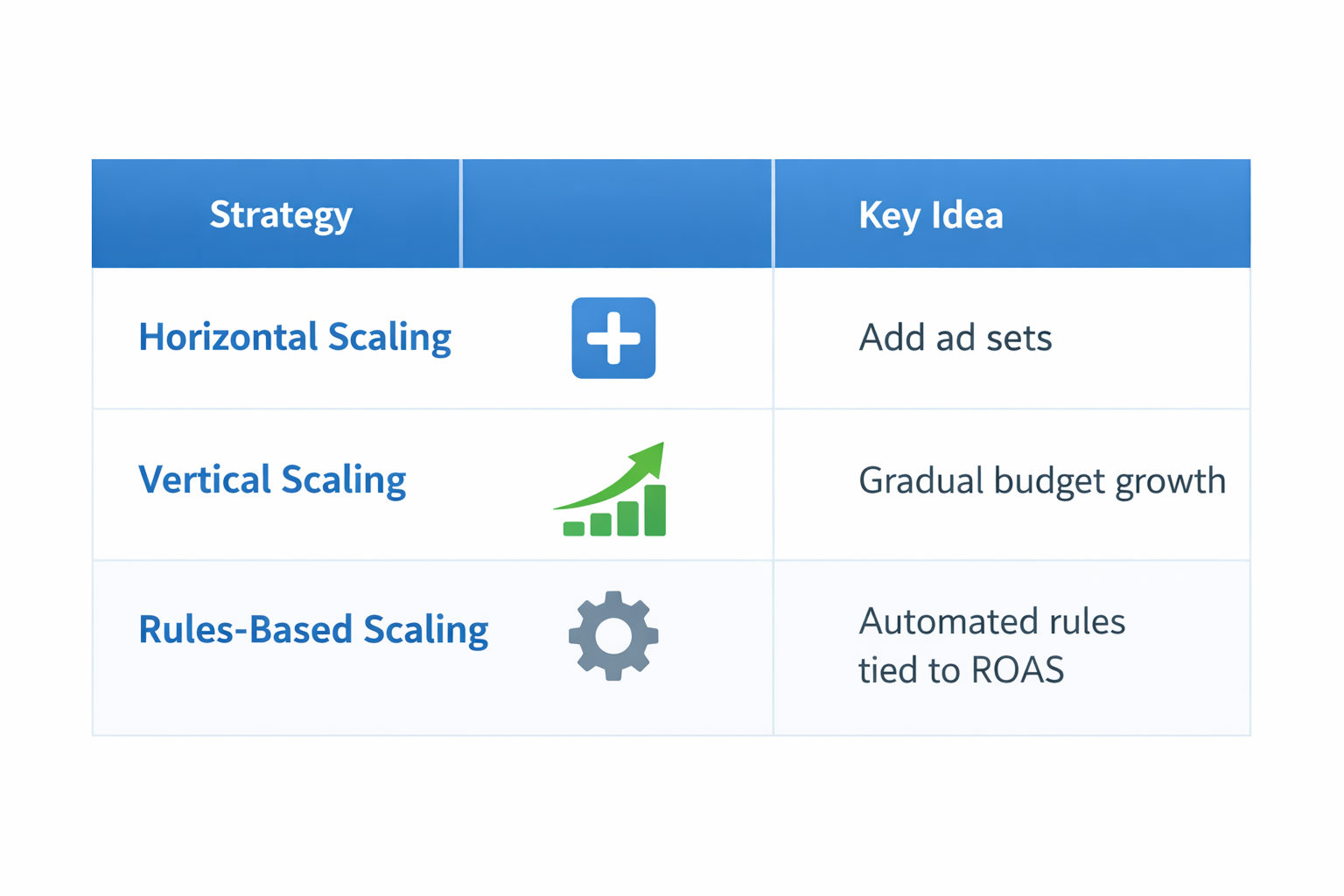
There are three main ways to do it:
-
Horizontal scaling. Add new ad sets with fresh audiences or creatives.
-
Vertical scaling. Increase budgets gradually, usually 20 to 30% every few days.
-
Rules-based scaling. Use automated rules tied to ROAS or CPA thresholds.
If you want to go deeper on maintaining results after growth, How to Optimize Facebook Ads for Continued Success After Scaling fits naturally here.
What Usually Goes Wrong
Even with a great foundation, campaigns can still stall or backfire during scale. Here’s why that happens — and what to watch for.
1. Scaling Too Soon
Many advertisers raise budgets after a day or two of strong results. But that’s not enough time for patterns to emerge.
What happens:
-
The campaign re-enters learning mode;
-
ROAS becomes unstable;
-
Spend outpaces quality data.
What to do instead:
Wait until performance is consistent for at least 3–5 days. Look at more than just results — check if they’re repeatable.
2. Constant Manual Changes
It’s tempting to tweak campaigns daily, but frequent edits interrupt learning and reset optimization.
Examples include:
-
Pausing and restarting ad sets;
-
Changing budgets aggressively;
-
Replacing creatives without testing first.
Why it's a problem:
You prevent the algorithm from gathering enough data. This leads to erratic delivery and unpredictable results.
Fix:
Use automated rules to scale or pause ads based on performance. Only make manual edits when backed by data — not impulse.
3. Ignoring the Offer
Even perfect ads can’t fix a weak offer. If your product or service doesn’t meet audience expectations, conversions will suffer.
Red flags:
-
High clicks, but no conversions;
-
Low add-to-cart or checkout rates;
-
Poor lead quality despite good CPL.
Solution:
Test the full funnel — from ad to page to post-click experience. Ask: Is the offer actually valuable? If not, fix that before scaling.
4. Only Scaling One Part of the Funnel
Many brands increase ad budgets but forget to support the rest of the customer journey.
What this looks like:
-
Outdated landing pages;
-
Underdeveloped retargeting layers;
-
No post-purchase nurture.
Result:
More clicks don’t turn into more sales. You hit a performance ceiling.
What to do instead:
Refresh your funnel alongside your ads. Add new creatives, build mid-funnel content, and update your retargeting sequence.
5. Misreading the Data
Not all metrics point to success. High CTR doesn’t mean your campaign is profitable.
Common mistakes:
-
Chasing impressions or reach without ROAS;
-
Ignoring CAC or lifetime value;
-
Relying on in-platform metrics only.
What to do instead:
Analyze the full customer journey. Watch metrics like purchase rate, average order value, and funnel drop-offs — not just clicks.
Final Thoughts
Scaling isn’t about hacks or quick wins. It’s about building a system that holds up when pressure increases.
That system needs:
-
A strong structure;
-
Clear, accurate tracking;
-
Fresh, durable creative;
-
Audiences that expand with purpose;
-
A smart, steady budget plan.
When those parts work together, growth becomes a process — not a gamble.