With the year coming to a close, advertisers are looking closely at remaining budgets. December isn’t just about clearing spend — it’s about maximizing opportunity. Done right, a smart allocation of your leftover ad budget can create momentum for Q1, unlock valuable audience data, and even boost your year-end numbers.
Here are the most effective, expert-backed ways to strategically spend your remaining December ad dollars.
1. Prioritize High-Intent Retargeting Campaigns
The fastest way to turn remaining budget into revenue is by focusing on bottom-funnel users.

Rather than expanding reach blindly, retarget those who have:
-
Added items to cart but didn’t convert;
-
Spent considerable time on product or pricing pages;
-
Opened emails or clicked past ads but took no action;
-
Viewed key product demo or explainer videos.
These audiences are warmed up and can often convert at a lower CPA than top-funnel traffic. Platforms like Meta allow highly granular custom audiences, and if you need a refresher on strategy, check out this guide on how to set up effective Facebook retargeting.
Pro tip: Segment by time decay. Users who engaged within the last 7 days should receive more aggressive bids and timely creative.
2. Run Controlled Creative Tests with Q1 in Mind
If you're still calibrating your Advantage+ setup, December is also a smart time to fine-tune it before scaling. You can learn how to get more from your setup in this breakdown on optimizing Advantage+ campaign budgets.
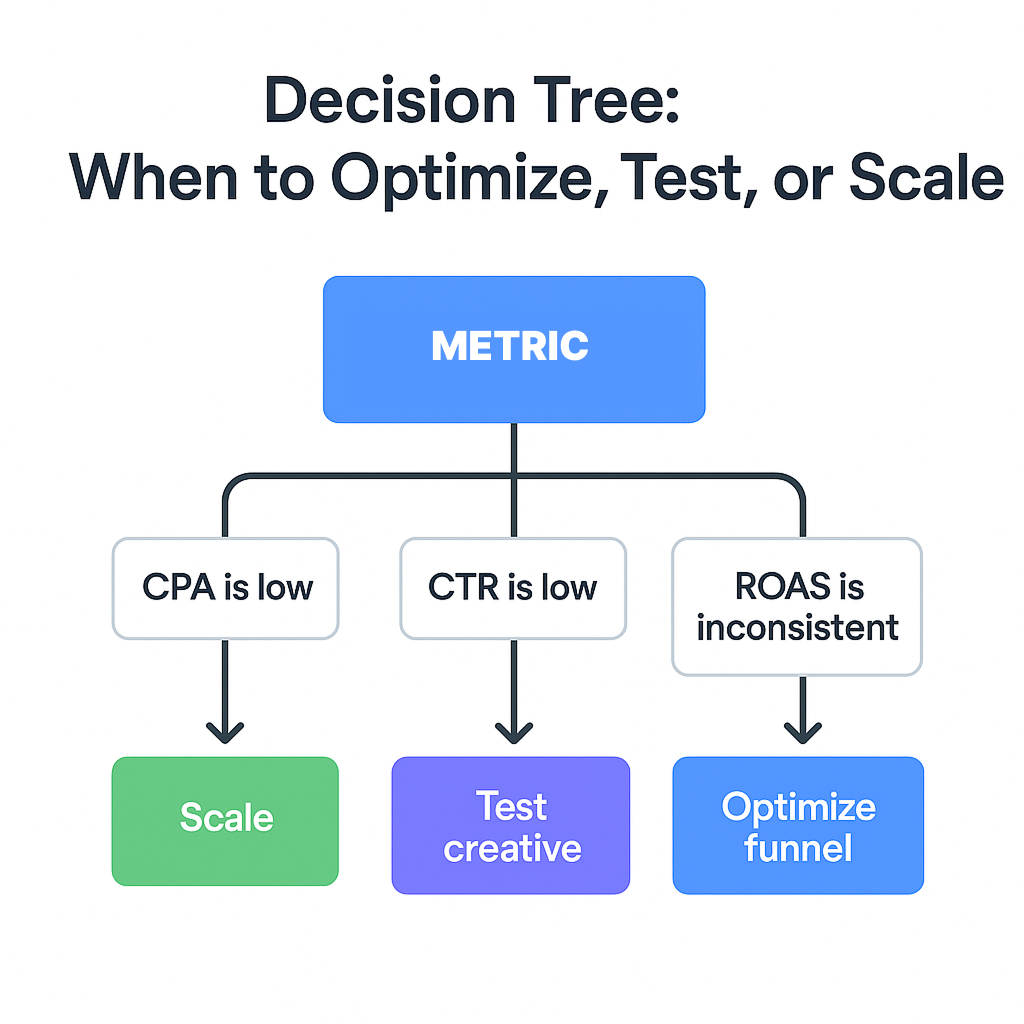
December is high-traffic, high-noise. But that makes it a great time to run controlled experiments.
Use leftover budget to:
-
Test new hooks and copy angles that you plan to scale in Q1;
-
Try different creative formats — video, carousels, reels, or even dynamic formats;
-
Experiment with UGC or testimonial-based ads to build trust fast.
Many advertisers make the mistake of testing only in quiet months. But real stress-testing happens when the ad environment is competitive. If you need to scale content production fast, this resource on AI text and image generators can help you expand your testing library efficiently.
3. Refine and Expand Your Target Audiences
Audience testing is also a great way to turn last-minute spend into strategic insights. If you’re not using automation to shift budget between audiences based on performance, check out this guide on budget optimization rules, which can reduce manual intervention while improving ROAS.
Budget remainders are perfect for targeting diagnostics. Identify what’s been working, then double down. But also, take time to clean up or refine your audience logic.
Here are a few quick wins:
-
Review performance by audience segment — not just campaign or creative;
-
Run split tests between custom audiences and lookalike variations;
-
Use December traffic to build audience pools for January retargeting.
If your ad sets show delivery issues, it's often due to overly narrow segmentation or limited signals. This article explains what to do when Facebook warns your ad set may get zero delivery.
Also worth reviewing: this foundational breakdown of Facebook ad targeting, which can help refine your logic for the final month of the year.
4. Fuel Your Mid-Funnel Instead of Just Top-of-Funnel
Some of your most valuable audiences this month are still in research mode. As shown in this analysis of seasonal buying cycles, many people who browse in November convert later — often mid-to-late December when urgency peaks.
To capitalize on this behavior, use November data to inform December ad targeting.
Not everyone is ready to buy — especially in December, when buyer psychology is complex.
Rather than going all-in on broad reach, use your budget to build up the middle of the funnel. Think about:
-
Building educational landing pages (e.g., product comparisons, FAQs);
-
Driving traffic to high-value blog content or buyer guides;
-
Creating ad sequences that transition users from interest to consideration.
This strategy feeds Q1 conversion potential while still driving measurable December performance. If you need inspiration on building a structured approach, this article explains why your Facebook campaign needs a mid-funnel strategy.
5. Tune Your Attribution and Analytics Infrastructure
You can also automate your spend adjustments based on campaign health. If you haven’t already implemented rules-based budget automation, see this detailed approach to automated budget allocation.
If you’re already ahead on acquisition and can’t scale profitably further, invest in infrastructure.
That includes:
-
Cleaning up your UTM parameters and naming conventions;
-
Setting up server-side tracking or improving attribution tools;
-
Testing new conversion windows and post-purchase attribution logic.
A good starting point is performing a structured campaign review. If you haven’t done this yet, here’s what to include in your first Facebook ad campaign audit — a checklist that can help you uncover missed opportunities and inefficiencies.
Many brands overlook this in December, but January planning should start with clear, reliable data. Use this quieter planning window to fix what your media team has been flagging all year.
Final Thoughts: Spend with Strategic Intent
Spending your remaining budget should never be about “using it up.” It should be about creating momentum and clarity.
Whether that’s through conversion wins, testing insights, or stronger audience targeting — make each dollar do something measurable.
By focusing on short-term performance and long-term infrastructure, you can close the year in control — and enter Q1 with a sharper, faster ad strategy.