

Facebook advertising offers sophisticated targeting, automation, and optimization. Yet despite these advantages, many campaigns struggle to gain traction. Marketers often jump straight into:
-
Audience targeting
-
Creative production
-
Budget allocation
-
Campaign structure
While these elements matter, performance issues usually start earlier — before the campaign ever goes live.
According to industry research, nearly 42% of advertisers say their Facebook campaigns fail to meet performance benchmarks in the first 30 days, often due to setup and measurement issues rather than creative quality.
The Most Overlooked Step: Defining a Single, Testable Conversion Goal
The most commonly missed step in Facebook campaign launches is clearly defining and validating a single, primary conversion goal before setup.
Many campaigns are launched with vague or competing objectives:
-
Traffic and conversions in the same campaign
-
Multiple conversion events selected at once
-
Optimization events that don’t match business outcomes
Facebook’s algorithm performs best when it is trained on one clear action. Without this clarity, delivery becomes inefficient and learning phases are prolonged or reset.
Why This Matters More Than Creative or Targeting
Facebook’s delivery system optimizes based on the event you choose. If that event is unclear, poorly tracked, or low-quality, the algorithm cannot learn effectively.
Key data points support this:
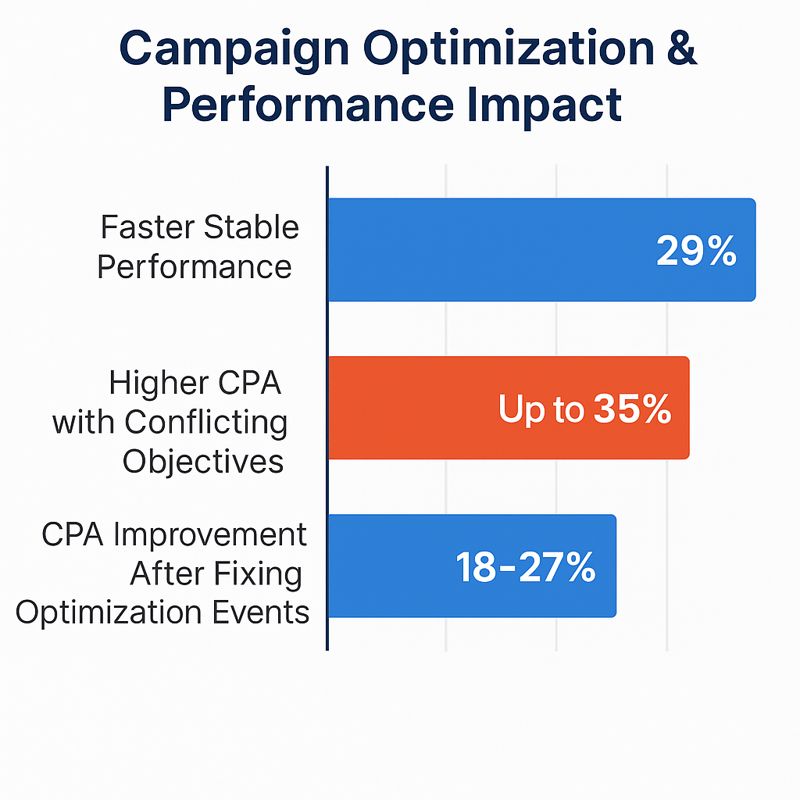
Comparison of key performance impacts when campaigns are optimized for a single conversion goal versus conflicting objectives, and the average CPA improvements after correcting optimization events
-
Campaigns optimized for a single conversion event reach stable performance 29% faster on average
-
Ad sets with conflicting objectives show up to 35% higher CPA compared to focused setups
-
Facebook recommends at least 50 conversion events per week per ad set to exit the learning phase reliably
Common Mistakes When Choosing a Conversion Goal
Even experienced advertisers make mistakes at this stage:
-
Optimizing too high in the funnel
Choosing clicks or landing page views when the real goal is a purchase or lead. -
Optimizing too low in the funnel without volume
Selecting purchases or qualified leads without enough weekly volume to train delivery. -
Changing optimization events mid-learning
Resetting the learning phase repeatedly and causing unstable results. -
Using unvalidated tracking events
Launching campaigns before confirming events fire correctly across devices and browsers.
How to Choose the Right Conversion Goal Before Launch
A reliable pre-launch process includes:
1. Map the Funnel to One Primary Action
Decide what success means for this campaign phase:
-
Awareness phase → Landing page view
-
Consideration phase → Lead or content registration
-
Revenue phase → Purchase or qualified lead
Each campaign should focus on one action only.
2. Validate Tracking Before Spending Budget
Before launch:
-
Confirm events fire correctly in real-time
-
Test across mobile and desktop
-
Verify attribution windows align with buying behavior
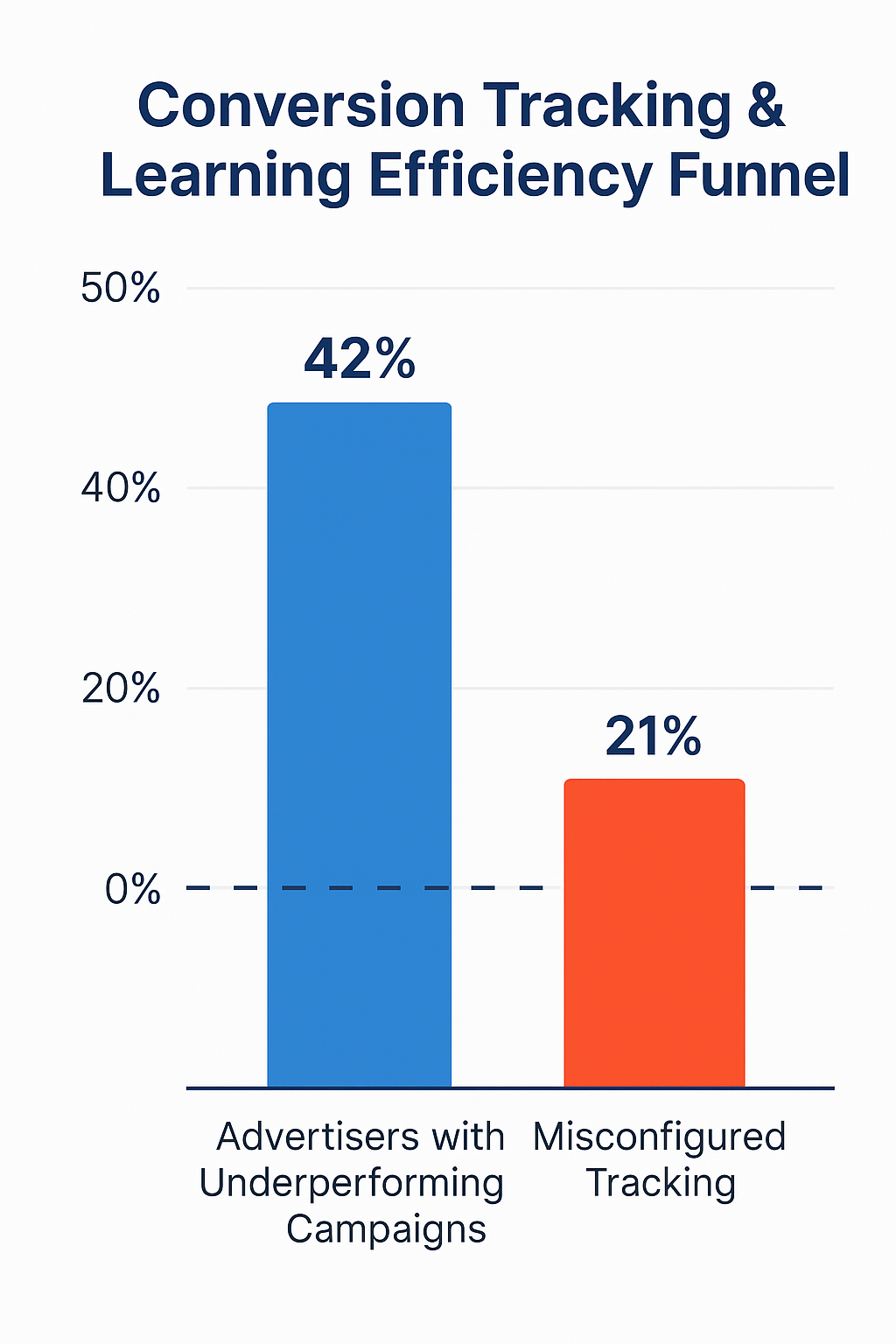
Data shows that misconfigured conversion tracking affects up to 21% of Facebook ad accounts, leading to incorrect optimization signals.
3. Ensure Sufficient Event Volume
If you cannot generate enough conversions weekly:
-
Move one step higher in the funnel
-
Consolidate ad sets
-
Increase audience size
This improves learning stability and reduces wasted spend.
The Hidden Cost of Skipping This Step
When conversion goals are unclear or misaligned:
-
Learning phases last longer
-
CPMs increase due to inefficient delivery
-
Budgets are spent training the algorithm on the wrong users
Advertisers who correct optimization events after launch report average CPA improvements of 18–27% within the first two weeks — without changing creatives or budgets.
Building a Strong Foundation for Every Campaign
Before launching any Facebook campaign, ask:
-
What single action defines success?
-
Can this action be tracked accurately?
-
Will it generate enough data for optimization?
Answering these questions upfront creates a foundation that allows creatives, targeting, and budgets to perform as intended.
Related Articles You May Find Useful
Final Thoughts
Successful Facebook campaigns are rarely the result of last-minute optimizations. They are built on clear signals, clean data, and disciplined setup decisions. Defining a single, validated conversion goal before launch is the most overlooked — and most impactful — step you can take to improve results from day one.
