Digital advertising has undergone one of its most significant transformations in the past decade. As third-party cookies phase out and consumer privacy expectations rise, advertisers have shifted toward identity targeting—an approach that relies on verified audience identifiers rather than probabilistic signals. This shift allows brands to reach real people instead of broad, unreliable segments.
Identity targeting is no longer experimental. It has become a foundational strategy across industries, especially as platforms enhance their audience-matching capabilities and advertisers pursue performance-driven campaigns.
Why Identity Targeting Is Rising Now
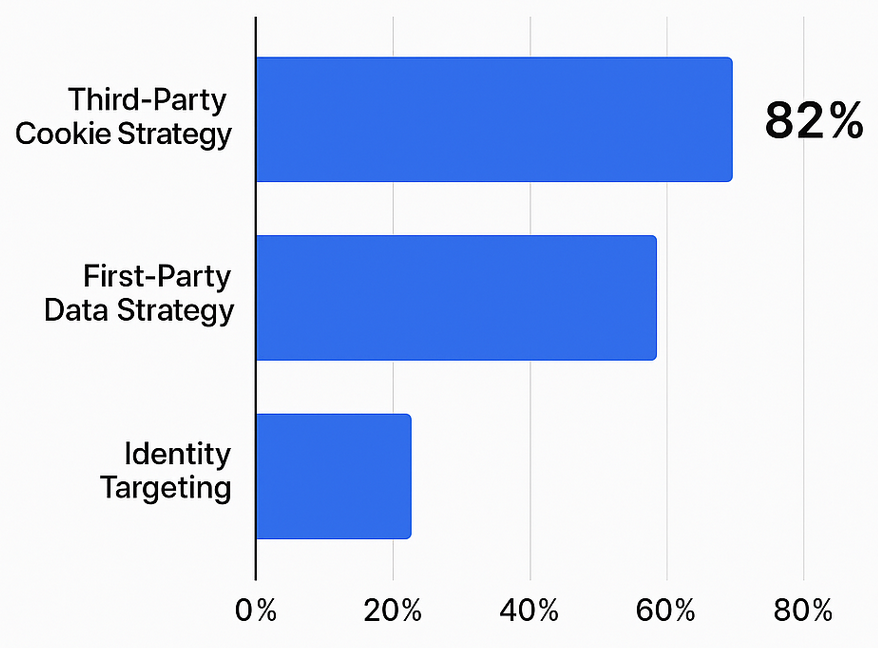
Most high-growth advertisers are moving away from third-party cookie reliance toward first-party and identity-driven strategies
Several industry shifts have accelerated the adoption of identity-based strategies:
-
Decline of Third-Party Cookies: Research shows that over 75% of global users browse on environments where third-party cookies are restricted, pushing advertisers toward durable identifiers.
-
Higher Demand for Measurable ROI: Performance marketers report a 28% improvement in attribution accuracy when campaigns use identity-based signals over traditional behavioral targeting.
-
Platform-Level Enhancements: Major social platforms have increased the accuracy of audience matching, in some cases achieving match rates between 60% and 80% for high-quality data.
The Power of Deterministic Data
Identity targeting relies heavily on deterministic data—emails, phone numbers, and hashed identifiers that directly link to known individuals. This method contrasts with the older probabilistic approach, which estimates identities based on device or behavioral patterns.
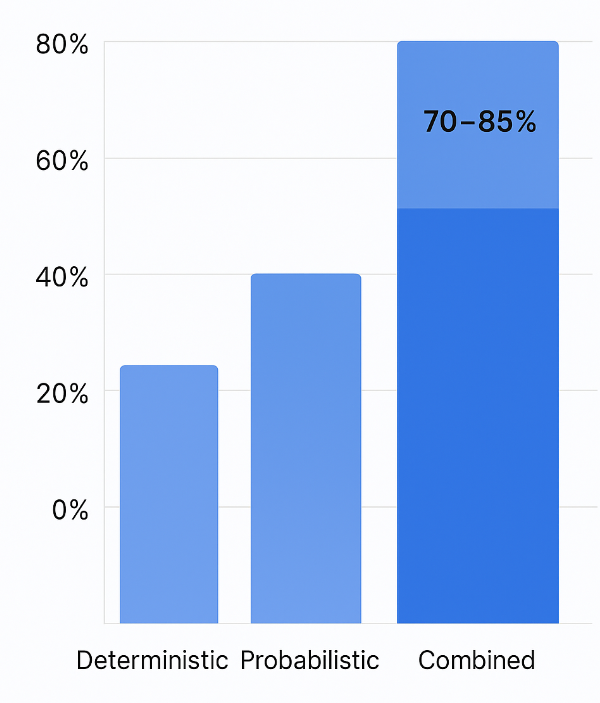
Deterministic data offers several benefits:
-
Higher accuracy: Advertisers can expect up to 2–3× higher match reliability.
-
More efficient spend: Reports show that brands reduce wasted impressions by 20–35% when using verified identifiers.
-
Improved personalization: Personalized ads outperform generic ads by as much as 40% in click-through rate.
Privacy and Compliance as Core Drivers
Modern consumers care deeply about how their data is used. According to recent surveys, 79% of users say they are more likely to trust brands that clearly communicate data practices.
Identity targeting supports this by operating within permission-based frameworks. Instead of relying on passive data collection, advertisers connect with audiences who have consented, strengthening trust and driving higher engagement.
How Identity Targeting Improves Campaign Performance
Advertisers embracing identity strategies report improvements across the entire funnel:
-
Higher relevance: Ads feel more tailored and timely.
-
Better measurement: Because identifiers persist across devices, performance metrics become more accurate.
-
Stronger retargeting: Verified identities allow for more consistent re-engagement.
A recent benchmark indicates that campaigns built on identity data achieve:
-
Up to 36% lower cost per acquisition, and
-
A 22% increase in conversion rate compared to traditional segment-based efforts.
Real-World Applications
Identity targeting is already widely used in:
-
B2B prospecting, where verified work emails increase audience accuracy.
-
Ecommerce remarketing, where customer lists outperform lookalikes.
-
Cross-platform ad consistency, enabling unified messaging across social, search, and email.
Preparing for the Future
Identity targeting represents the future of digital advertising. As platforms continue to restrict third-party data, brands that adapt early will gain a competitive advantage.
To prepare:
-
Invest in first-party data collection.
-
Prioritize consent-driven data strategies.
-
Test identity-based campaigns across multiple channels.