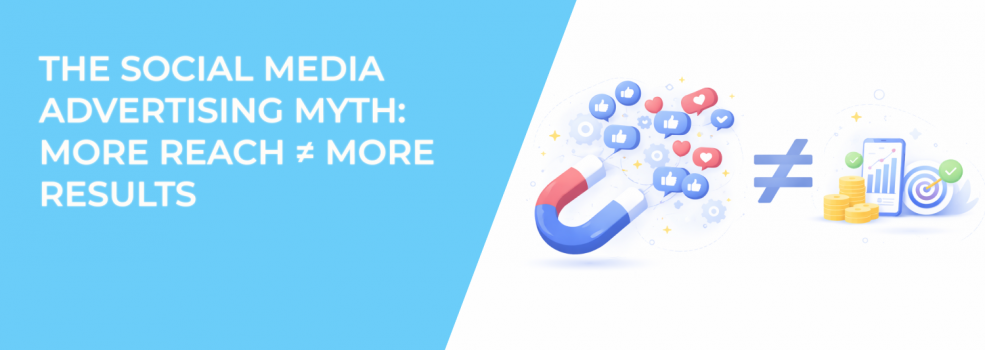
Many businesses still believe that more reach means better ad performance. It’s a common assumption — and an expensive mistake.
Social media platforms like Facebook, Instagram, TikTok, LinkedIn, and YouTube make it easy to reach thousands or even millions of people. But reach is not the same as results. Just because people saw your ad doesn’t mean they cared, clicked, or bought.
Let’s unpack why reach is overrated, what really drives results, and how to avoid wasting your ad budget.
Why reach seems like a win — but isn’t
Large reach numbers look impressive in reports. It’s exciting to say “500,000 people saw our ad.” But without real engagement or conversions, it’s just a big number.
The problem? Social platforms are designed to optimize for the cheapest outcome based on your goal. If your goal is "reach," the platform will show your ad to anyone it can — for the lowest cost possible.
That’s how you end up with:
-
Low-quality views, often from users who don’t fit your ideal customer profile;
-
High bounce rates, where users click but leave immediately;
-
Flat sales, even when impressions and clicks go up.
Example:
An online course creator runs a video ad on Instagram, targeting broadly by age and interest. The ad gets 150,000 views in 3 days. But only 6 people sign up for the free webinar. The reach looks great. The results? Not so much.
Reach without strategy = budget burn
A common mistake is assuming that reach equals awareness, and that awareness leads to purchases. That’s not always true.
People might see your ad while multitasking, scrolling at night, or just not paying attention. They don’t engage. They don’t remember you. They don’t convert.
This happens when:
-
You use "reach" or "awareness" as your campaign objective but don’t follow up with retargeting;
-
You rely on interest-based targeting with no exclusions;
-
Your ad creative is flashy but not clear (lots of motion, no message);
-
You don’t measure what happens after the click.
Learn how to diagnose these issues in What to Do When Your Facebook Ads Aren’t Reaching the Right Audience.
So, what should you measure instead?
You need to focus on what users do, not just what they see. Results come from behavior, not exposure.
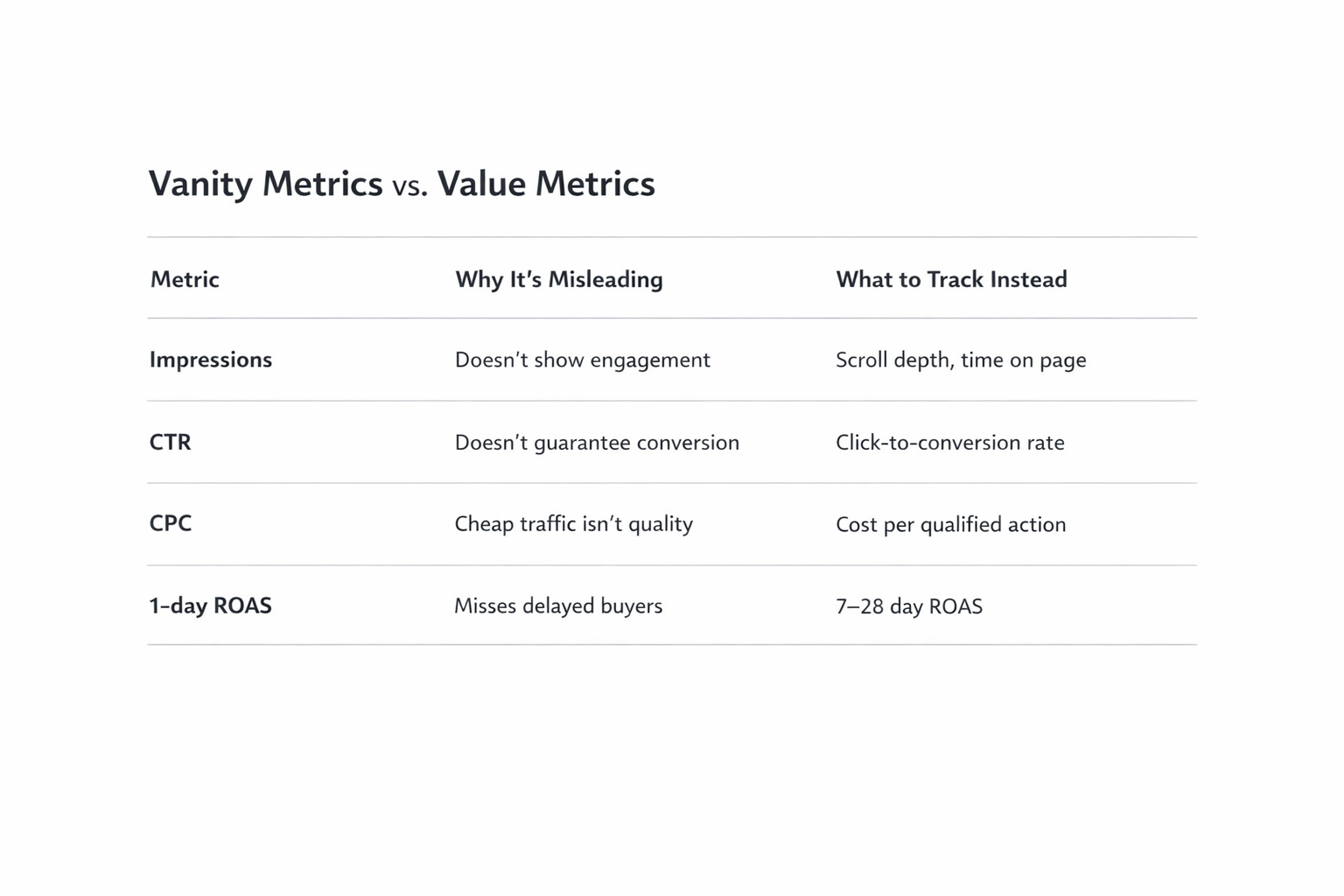
Key metrics to track instead of reach:
1. Click-to-conversion rate
Don’t stop at CTR. Ask: what percent of clicks actually turn into leads or purchases?
If you get 1,000 clicks but only 2 sales, something’s broken — either your landing page, offer, or targeting.
2. Cost per meaningful action
Measure cost per purchase, cost per add-to-cart, or cost per lead — not just CPC.
This shows whether your budget is driving business value.
3. 7-day or 28-day ROAS (return on ad spend)
Look beyond day-one results. Many users buy days later. If you only track same-day conversions, you may kill ads that are actually profitable.
4. Engaged view or scroll depth
On platforms like YouTube or TikTok, track how long users watched. On your website, use heatmaps or scroll depth tools to see how far users get.
This article on analyzing Facebook ad performance beyond CTR and CPC offers a good deep dive into these smarter metrics.
What actually drives results on social media?
Instead of chasing reach, build a system that gets attention from the right people — and guides them to action.
Here’s what to focus on:
1. Audience quality
Broad targeting might get views, but it rarely gets results.
Start with high-quality audiences:
-
Email lists or past purchasers;
-
Visitors who engaged with your website or social profiles;
-
Followers of similar brands or communities (LeadEnforce can help build these on Meta platforms).
Then expand with lookalikes or platform-recommended groups after you get good data.
Learn how to apply this in Why High-Intent Audiences Convert Better Than Broad Ones .
2. Creative with a clear message
Flashy visuals aren’t enough. Your ad needs to explain what you do and why it matters — fast.
Example of a strong structure:
-
Problem: “Tired of slow shipping?”
-
Value: “We deliver in 2 days, guaranteed.”
-
Proof: “4,500+ 5-star reviews.”
-
Offer: “Try it today, 15% off.”
Match your message to the stage of the funnel. Don’t show product demos to people who don’t even know what your product is yet.
3. Retargeting and sequencing
Most people don’t buy after the first ad.
Follow up with retargeting that shows:
-
More details (e.g., features, testimonials);
-
Social proof (e.g., reviews, press quotes);
-
A reason to act now (e.g., limited offer).
Why scaling reach too early kills results
Scaling before you understand your best audience is a fast way to burn money. Bigger isn’t better until your funnel is solid.
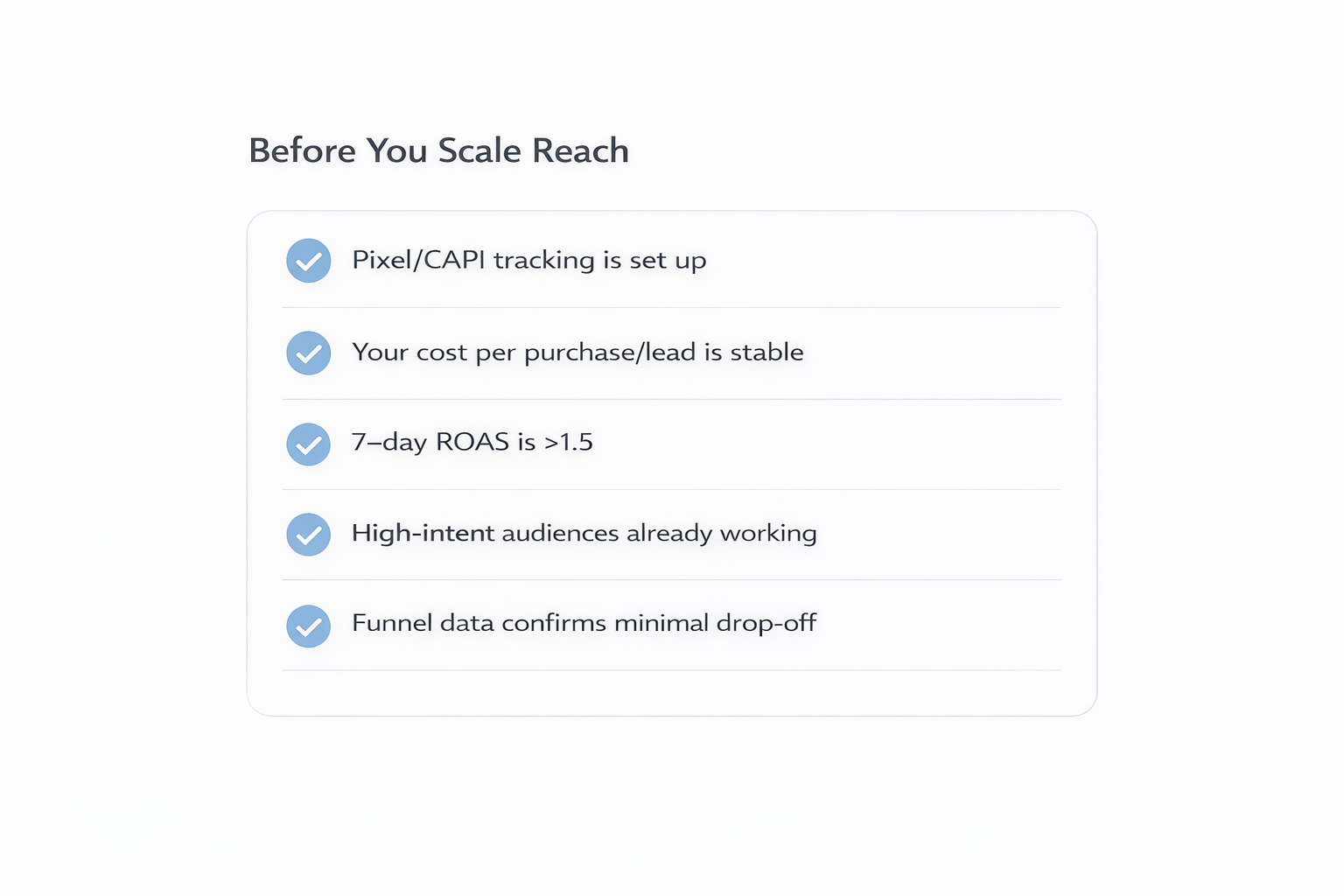
What to do before scaling reach:
-
Test multiple hooks and creatives to find what clicks;
-
Set up full-funnel tracking (UTMs, conversion events, server-side tracking);
-
Compare platform data with CRM or store data — check what actually leads to sales;
-
Look at 7-day and 28-day attribution, not just 1-day click;
-
Run small-budget A/B tests before increasing spend.
Not sure where the breakdown is? Read From Click to Conversion: Where Funnels Usually Break for practical guidance.
Final takeaway: reach is not the goal
Reach is easy to get. Real results take testing, data, and a plan. If you’re judging your ads by how many people saw them, you’re missing the point.
Instead, ask:
-
Are we attracting the right people?
-
Do they understand our offer?
-
Are they moving through the funnel?
-
Are we turning interest into revenue?
If the answer is no, it’s time to rethink what success looks like. Reach doesn’t pay the bills. Results do.