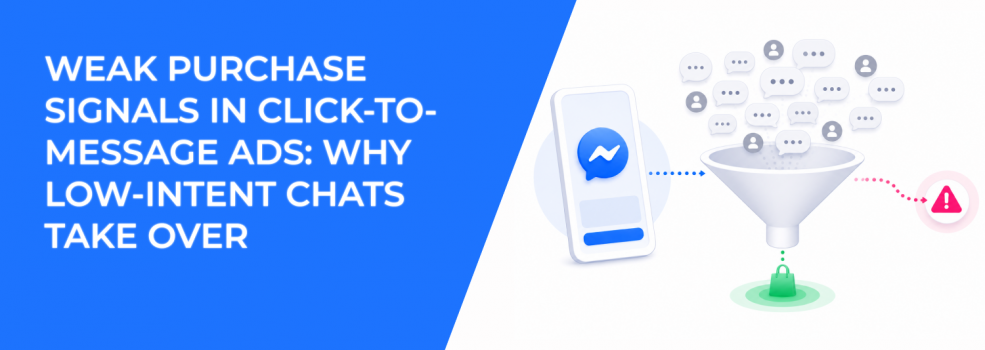
A click-to-message campaign cannot optimize for purchases it cannot see clearly. If purchase signals are delayed, missing, duplicated, or too rare, Meta has to work with weaker behavior.
That is when low-intent conversations start taking over. The campaign still delivers, but it spends more budget on people who are easy to engage instead of people likely to buy.
This problem is different from poor campaign structure. The issue here is data quality.
The core problem: Meta does not have enough clean purchase feedback
Purchase optimization needs a steady link between ad interactions, Messenger conversations, and final sales. Many advertisers do not have that connection.
The sale may happen in chat, over the phone, through a payment link, or after manual follow-up. If that purchase never returns to Meta as a clean event, the system cannot separate valuable conversations from empty ones.
In Ads Manager, this creates a confusing pattern. You may see traffic, replies, and maybe even decent click costs. But purchase volume stays too low for Meta to learn from.
This is one reason signal loss in digital ads hurts Messenger campaigns so much. The conversation happens inside a human sales flow, but the optimization system still needs machine-readable proof of value.
Why weak signals push spend toward softer actions
When purchases are unclear, Meta looks for other patterns around the campaign. These can include clicks, chat starts, replies, engagement, and landing-page behavior if a web step exists.
Those signals are easier to collect, but they are not equal to buying intent. A user can click because the offer is interesting. They can reply because the message is low effort. They can ask for the price and still have no budget.
Weak purchase signals usually create three delivery problems:
- The system overvalues fast responders. People who reply quickly create a visible pattern, even if they rarely buy.
- Budget flows toward cheap conversations. Low-cost actions can look efficient before sales quality is reviewed.
- Learning stays unstable. Small purchase volume makes each sale carry too much weight in delivery decisions.
This is why a campaign can look active without becoming profitable. Meta is not ignoring purchases. It simply does not have enough reliable purchase data to guide delivery.
The solution: strengthen the purchase signal before increasing budget
Before scaling a purchase-optimized Messenger campaign, check whether the campaign can actually pass back the right outcome.
For e-commerce, that may mean testing Pixel and Conversions API event quality. For service businesses, it may mean sending offline conversions from CRM stages. For appointment-based offers, it may mean tracking qualified booked calls instead of raw replies.
The goal is not to track everything. The goal is to send Meta the cleanest signal tied to business value.
If you are unsure whether your current setup is reliable, review the difference between Pixel vs CAPI. Weak browser-side tracking can miss events, especially when users move across devices or finish the sale outside the first session.
How to diagnose weak purchase data in Messenger campaigns
Do not judge signal quality by reply volume. Look at the gap between conversations and real outcomes.
Useful checks include:
- Compare conversations to completed purchases. If many chats never reach checkout, the signal pool is too noisy.
- Check event match quality. Poor matching makes it harder for Meta to connect buyers back to ad interactions.
- Review delayed sales. If users buy days later, attribution lag can make the campaign look weaker than it is.
- Separate qualified chats from casual replies. Sales teams should tag which conversations had real buying intent.
These checks are especially important before scaling. A campaign with weak signals can spend more without learning more. That is how CPA rises while the dashboard still shows activity.
Use lead quality checks before scaling spend as part of the pre-scale review. The campaign should prove that more spend creates better outcomes, not just more chat volume.
Final takeaway
Weak purchase signals make click-to-message campaigns drift toward low-intent conversations. Meta needs clean feedback to understand which chats produce revenue.
Before increasing budget, fix the signal path. Track purchases, qualified leads, booked calls, or another value-based outcome clearly. Once the system can see real value, purchase optimization has a much better chance of reducing wasted spend.