A large Instagram audience does not automatically create a strong advertising audience.
Many advertisers assume their followers represent their ideal buyers. Then campaigns launch and performance becomes unstable. CPC rises during scaling. Conversion quality drops. Retargeting pools grow while ROAS weakens.
The problem is usually not follower size. It is audience composition.
Follower insights can reveal useful patterns, but they can also create misleading targeting assumptions when engagement gets treated as proof of buying intent.
Instagram Engagement Does Not Always Reflect Purchase Intent
Organic Instagram behavior and paid conversion behavior are often very different.
An account may attract strong engagement because the content is educational, entertaining, controversial, or visually engaging. Those users help increase reach and interaction metrics, but they may never become customers.
This creates a common targeting problem inside Instagram campaigns.
You may see:
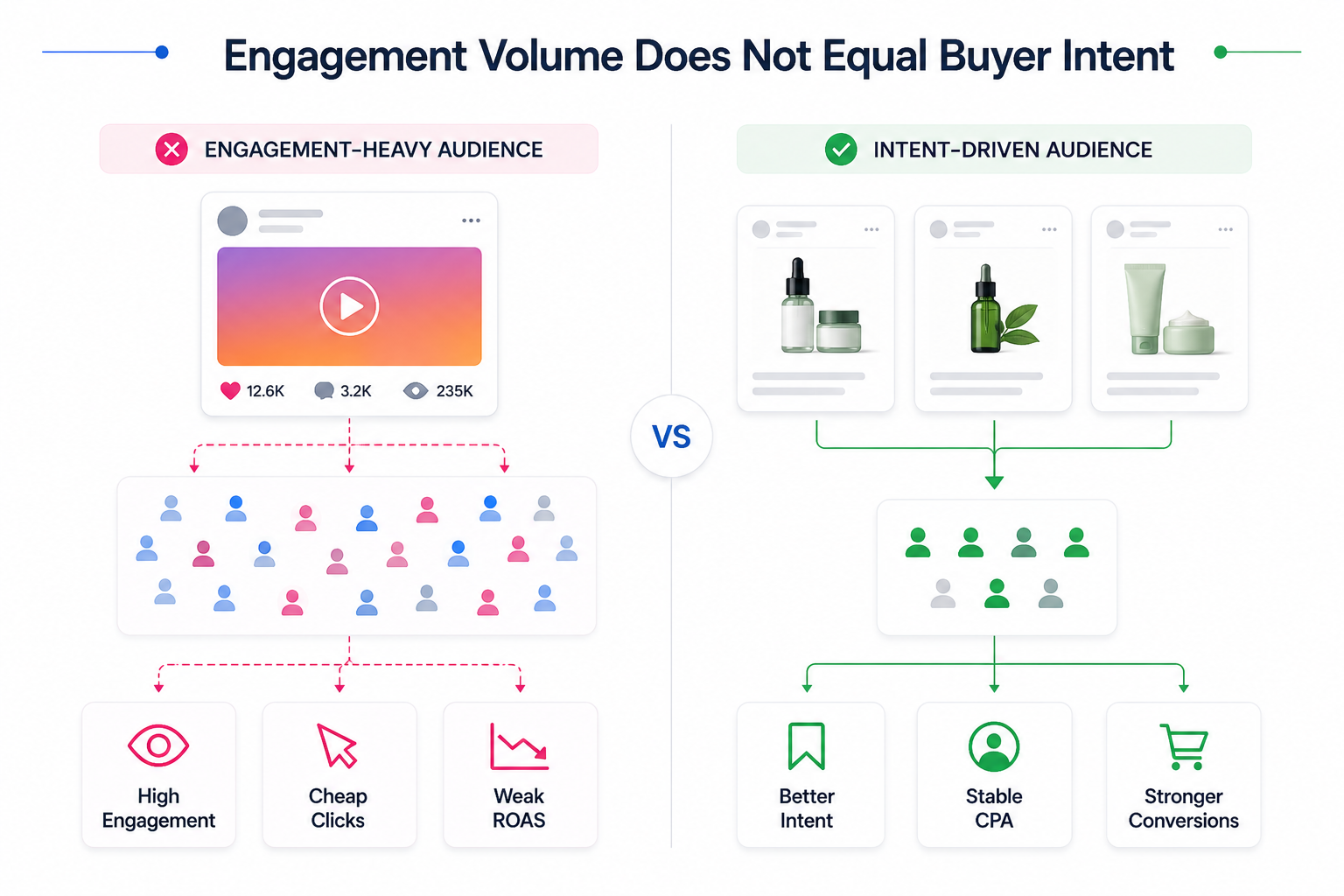
- High engagement with weak conversion rates.
- Large follower growth without revenue growth.
- Cheap clicks that rarely become qualified leads.
- Strong Reel performance with almost no downstream actions.
Those signals usually indicate audience quality problems rather than creative problems.
The account attracts attention successfully, but not necessarily commercial intent.
Follower Demographics Rarely Explain Why Campaigns Fail
Many advertisers review Instagram Insights and stop at age, gender, and location breakdowns.
That creates a shallow understanding of the audience.
Two users can belong to the same demographic group while behaving completely differently as buyers. One may actively compare products and revisit offers. The other may only consume content passively.
This becomes especially dangerous for:
- Educational creator accounts.
- Viral Reels pages.
- Trend-driven ecommerce brands.
- Personal brands with mixed audiences.
The follower profile looks healthy inside analytics dashboards, but the audience entering paid campaigns contains inconsistent buying intent.
That is why advertisers should not immediately turn Instagram followers into target audiences without filtering for stronger behavioral relevance first.
Some Instagram Followers Improve Reach While Hurting Campaign Efficiency
Meta’s optimization system learns from interaction patterns.
If campaigns inherit weak engagement signals from broad follower groups, delivery often shifts toward users who generate cheap activity instead of valuable actions.
This frequently happens when entertainment content attracts a wider audience than the actual offer.
For example, a SaaS company may publish educational marketing content that performs well with students, freelancers, and junior marketers. Those users increase engagement metrics, but the actual buyers may be agency owners or operators with completely different behavior patterns.
The campaign appears healthy during early delivery because CTR and CPC look efficient. Then lead quality declines once scaling begins.
That disconnect explains why many advertisers struggle to reach the right Instagram audience without broad targeting even when their follower metrics initially look strong.
Better Instagram Audiences Usually Come From Behavioral Filtering
The strongest ad audiences rarely come from all followers equally.
Performance improves when advertisers isolate users who repeatedly demonstrate stronger commercial behavior instead of treating all engagement the same way.
Several behaviors often correlate with stronger intent:
- Repeated interaction with product-focused content.
- Profile visits after educational posts.
- Story engagement tied to commercial offers.
- Consistent engagement across multiple buying-related topics.
Those patterns usually create cleaner optimization signals than broad engagement volume alone.
Follower quality matters more than follower quantity once campaigns begin optimizing toward conversions instead of reach.
How LeadEnforce Helps Build More Accurate Instagram Ad Audiences
This is where LeadEnforce becomes useful for advertisers struggling with weak Instagram audience quality.
Instead of relying only on Meta interests or broad demographic targeting, LeadEnforce helps advertisers target followers of specific Instagram accounts for Facebook and Instagram ads.
That changes how audience building works.
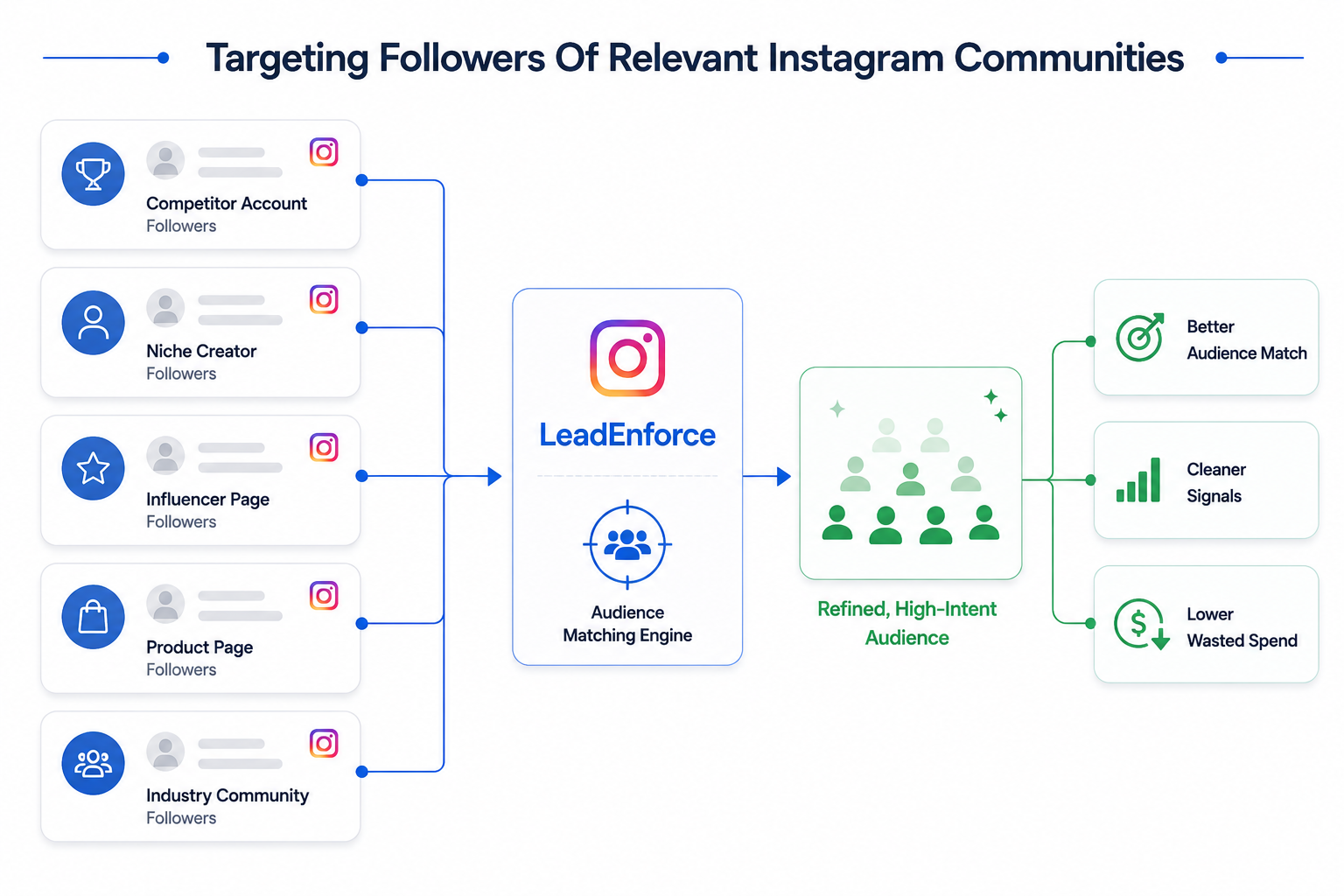
A business can build audiences around:
- Competitor Instagram accounts.
- Niche creators within a specific industry.
- Influencer communities.
- Product-focused Instagram pages.
- Highly relevant niche audiences.
This creates stronger audience alignment before campaigns begin scaling.
For example, a fitness supplement brand may target followers of highly specific fitness creators instead of using broad “fitness” interests inside Ads Manager. A B2B software company may focus on followers of niche operator communities instead of generic entrepreneur audiences.
That approach usually creates stronger behavioral consistency inside the audience pool because the targeting starts closer to existing intent patterns.
Advertisers looking to target Instagram followers for ads often use this strategy to reduce wasted spend from overly broad audience expansion.
Better Audience Inputs Usually Improve Campaign Stability
Meta performs better when audience inputs contain clearer behavioral direction.
Cleaner audience quality can help:
- Reduce wasted impressions.
- Improve conversion consistency.
- Stabilize CPA during scaling.
- Build stronger retargeting pools.
- Reduce low-intent traffic.
This does not guarantee immediate profitability. It simply gives Meta better optimization conditions from the beginning.
Campaign efficiency often improves when the system learns from more relevant behavioral clusters instead of mixed engagement audiences.
Final Takeaway
Existing follower insights do not automatically translate into strong Instagram ad audiences.
Many follower groups contain mixed-intent users who inflate engagement metrics without improving conversion quality. That creates unstable optimization patterns once campaigns begin scaling.
Better Instagram ad audiences usually come from filtering for behavioral relevance, commercial intent, and stronger category alignment instead of relying on follower size or surface-level engagement alone.