Reaching the right people on Instagram has become more complex as broad targeting options decline and competition intensifies. This guide explains how to build a high-intent audience strategy using data, behavioral signals, and structured prospecting methods that deliver measurable growth.
Instagram remains one of the most powerful acquisition channels for brands. With over 2 billion monthly active users globally and more than 500 million daily active Stories users, the platform offers enormous reach. However, reach alone does not guarantee performance.
Recent industry data shows that the average Instagram engagement rate across industries is approximately 0.6%–1.2%, depending on niche and format. That means 99% of impressions often generate no measurable interaction. Broad targeting, once a common strategy, now frequently leads to wasted impressions, lower engagement rates, and rising acquisition costs.
To generate qualified traffic and conversions, businesses must move beyond generic demographics and adopt structured, intent-driven targeting strategies.
This article explains how to reach the right Instagram audience without relying on broad targeting.
Why Broad Targeting Underperforms
Broad targeting typically relies on:
-
Age
-
Gender
-
Location
-
General interests
While these filters were once effective, algorithmic changes and increasing competition have reduced their precision. In saturated niches, broad campaigns often experience:
-
Higher CPMs due to competition
-
Lower engagement rates
-
Reduced conversion quality
-
Increased cost per acquisition
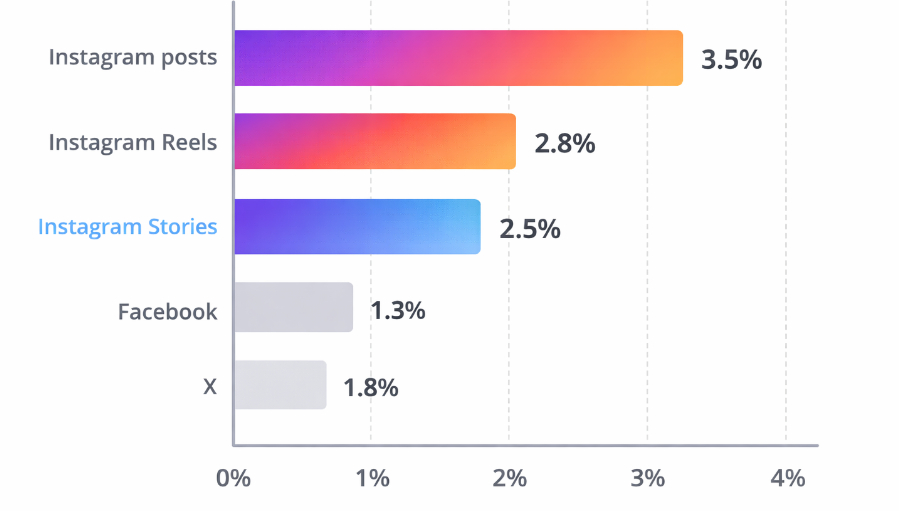
Average engagement rates for Instagram formats compared with major social platforms
According to recent performance benchmarks, campaigns using layered behavioral targeting can reduce cost per lead by up to 30–50% compared to wide demographic-only segmentation.
The key is specificity, not scale.
1. Identify High-Intent Audience Signals
Instead of targeting broad interests like “marketing” or “fitness,” focus on high-intent behaviors and niche signals.
Examples of high-intent signals include:
-
Followers of direct competitors
-
Users engaging with niche-specific hashtags
-
Profiles interacting with industry-specific content
-
Business accounts within a defined segment
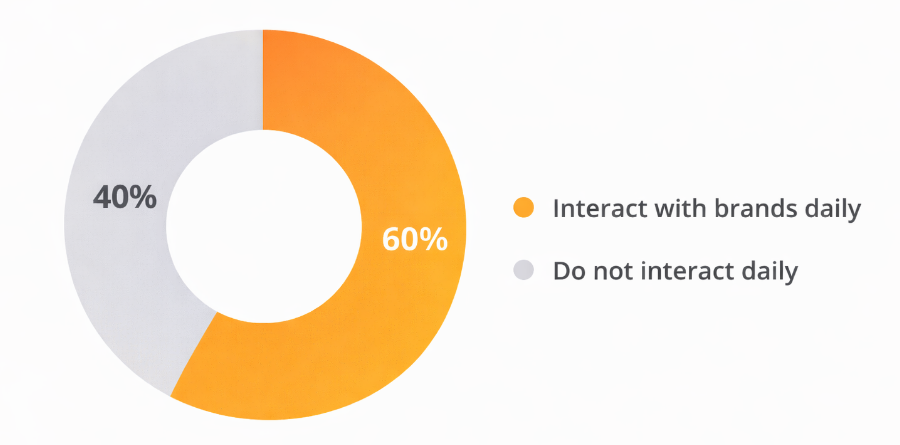
Percentage of Instagram users interacting with brands at least once per day
These signals indicate active interest rather than passive browsing.
Practical Framework
Define your audience by answering:
-
Who already buys solutions like yours?
-
Who publicly engages with those brands?
-
Which accounts attract your ideal customers?
Targeting users based on real interaction patterns dramatically increases relevance.
2. Use Competitor Audience Analysis
Competitor follower analysis is one of the most precise alternatives to broad targeting.
If a user follows multiple brands within your niche, the probability of purchase intent increases significantly.
For example:
-
SaaS founders often follow multiple startup tools
-
E-commerce brand owners follow platform providers
-
Marketing professionals follow automation software accounts
When you systematically identify and segment these audiences, you bypass cold traffic and focus on pre-qualified users.
Statistically, audiences built from competitor engagement frequently demonstrate 2–3x higher engagement rates compared to interest-based targeting groups.
3. Segment by Role, Not Just Industry
Targeting an industry is insufficient. You must identify decision-makers.
For example, instead of targeting:
-
“E-commerce”
Segment by role:
-
Founder
-
Head of Marketing
-
Performance Marketer
-
Agency Owner
Role-based targeting improves message alignment. Campaigns aligned with job responsibility often see conversion rate improvements of 20–40% compared to generic industry messaging.
Precision messaging requires precision segmentation.
4. Analyze Engagement Depth, Not Follower Count
Large audiences do not guarantee quality. Micro-segments often outperform mass exposure.
Key metrics to evaluate:
-
Engagement rate
-
Comment quality (generic vs. intent-driven comments)
-
Bio keywords indicating business ownership or specialization
-
Link presence in bio (suggesting commercial intent)
Accounts with smaller but highly engaged communities frequently convert at higher rates because they represent concentrated niche interest.
5. Layer Data for Advanced Filtering
The most effective strategies combine multiple filters:
-
Competitor followers
-
Business category
-
Geographic precision
-
Account activity level
-
Role-based indicators
Layering filters reduces noise and ensures you focus on qualified users instead of inflated vanity metrics.
Businesses that adopt multi-layered targeting often report:
-
Lower outreach rejection rates
-
Higher response rates in direct campaigns
-
Improved ROI from paid amplification
6. Align Content With Targeting Precision
Targeting without content alignment fails.
If your audience is highly specific, your messaging must reflect:
-
Their pain points
-
Their maturity level
-
Their industry language
-
Their growth stage
According to content performance studies, personalized messaging can increase engagement by up to 80% compared to generic brand content.
Precision targeting must be matched with precision communication.
7. Monitor, Measure, Refine
Effective audience building is iterative.
Track:
-
Engagement rate per segment
-
Profile visits
-
Direct responses
-
Conversion rate per audience cluster
Eliminate underperforming micro-segments and expand high-performing clusters.
Optimization should focus on quality density rather than total audience size.
Common Mistakes to Avoid
-
Targeting by interest alone
-
Ignoring competitor audiences
-
Overvaluing follower count
-
Using identical messaging for different roles
-
Scaling before validating segment performance
Avoiding these errors protects budget efficiency and improves long-term account performance.
Final Thoughts
Broad targeting belongs to an earlier stage of Instagram marketing. Today’s environment rewards specificity, behavioral insight, and structured segmentation.
Instead of asking, “How many people can we reach?” ask, “How many qualified decision-makers can we identify?”
When you focus on intent signals, competitor engagement, and layered filtering, Instagram becomes a precision acquisition channel rather than a brand awareness gamble.
High-quality audience identification is no longer optional. It is a competitive advantage.
Recommended Reading
-
From Cold Traffic to Qualified Leads: A Full-Funnel Blueprint
-
How Influencers and Creators Can Monetize Instagram Follower Audiences
These articles expand on competitor analysis, segmentation methodology, and performance optimization techniques discussed above.