Instagram has evolved from a visual storytelling platform into a powerful audience intelligence engine. With over 2 billion monthly active users worldwide and more than 90% of users following at least one business account, the platform offers access not just to visibility, but to structured market insight. Yet follower count alone is a vanity metric. The real advantage lies in converting raw followers into segmented, qualified target audiences that can be activated across sales and marketing channels.
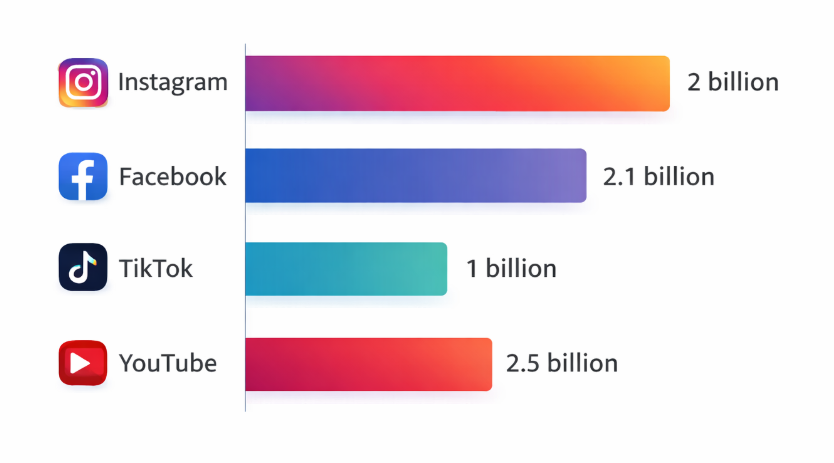
Comparison of monthly active user counts across major social platforms, highlighting Instagram’s 2 billion active users
This article outlines a systematic framework for turning Instagram followers into high-value target audiences.
Step 1: Move From Followers to Segments
A follower list is heterogeneous. Your first objective is segmentation.
Start by analyzing:
-
Engagement patterns (likes, comments, shares, saves)
-
Content interaction types (Reels vs. carousel posts vs. Stories)
-
Profile data (bio keywords, job titles, company names, geographies)
-
Behavioral signals (poll responses, DMs, link clicks)
Instagram’s internal insights show that Reels generate up to 22% more engagement than standard video posts. Engagement intensity often correlates with purchase intent or topical interest. Segment users based on interaction depth, not just presence.
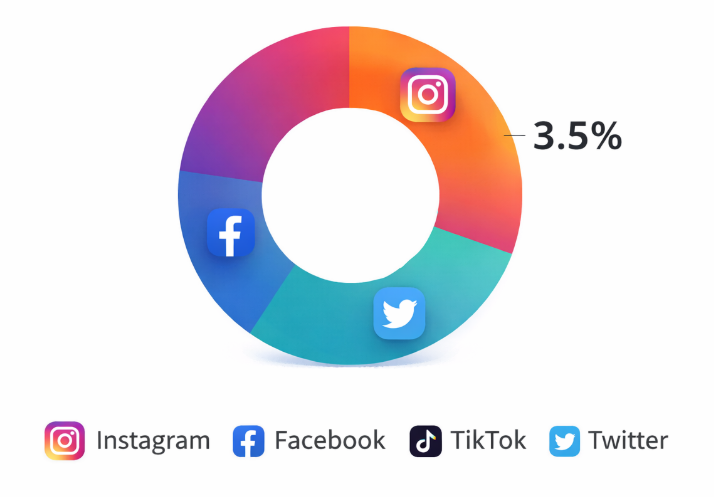
Average engagement rates across social networks, showing Instagram’s comparatively higher interaction level
Create micro-audiences such as:
-
Highly engaged prospects
-
Competitor-interacting users
-
Event or webinar responders
-
Users interacting with product-focused content
Segmentation converts passive followers into structured marketing assets.
Step 2: Enrich Follower Data for B2B Precision
If your business targets professionals, enrichment is critical. According to industry research, 68% of B2B marketers say audience data quality is their biggest challenge.
Extract publicly available profile data from followers and enhance it with:
-
Company identification
-
Industry classification
-
Job function and seniority mapping
-
Company size indicators
This transforms a username into a decision-maker profile. Once enriched, followers can be filtered by ICP (Ideal Customer Profile) parameters such as:
-
SaaS companies with 50–200 employees
-
Marketing directors in eCommerce brands
-
Founders in fintech startups
Precision dramatically improves campaign ROI. Studies show that segmented campaigns can generate up to 760% more revenue than non-segmented ones.
Step 3: Identify Buying Signals in Engagement Behavior
Not all engagement equals intent. The key is to interpret behavioral patterns.
High-intent signals include:
-
Saving product posts
-
Asking pricing-related questions
-
Watching Stories to completion
-
Repeated profile visits
-
Clicking bio CTAs
Instagram reports that 70% of shoppers use the platform for product discovery. When a user consistently interacts with product-centric content, that interaction becomes a predictive buying signal.
Score users based on engagement depth and frequency. Develop a simple weighted model:
-
Comment: 3 points
-
Save: 4 points
-
DM inquiry: 5 points
-
Link click: 5 points
Once a threshold is reached, move that user into a sales-ready audience pool.
Step 4: Build Lookalike and Retargeting Audiences
After structuring and enriching your follower base, use it to expand reach strategically.
Create custom audiences from:
-
High-intent followers
-
Engaged video viewers (50%+ watch time)
-
Users who interacted in the last 30 days
From these, generate lookalike audiences that mirror your most valuable segments. According to Meta advertising benchmarks, lookalike audiences based on high-value user pools can reduce cost per acquisition by up to 30% compared to broad targeting.
Retargeting also significantly increases conversion probability. Users exposed to retargeted ads are 70% more likely to convert than first-time visitors.
Step 5: Align Instagram Data With Your Sales Pipeline
The final step is operational integration.
Your structured Instagram audience should not remain isolated within social media analytics. Sync enriched and segmented profiles with your CRM or outbound tools to:
-
Launch personalized outreach
-
Prioritize sales calls
-
Customize email messaging
-
Trigger automated workflows
Cross-channel activation turns social engagement into measurable pipeline contribution.
Organizations that integrate social audience data into their CRM report up to 25% higher lead-to-opportunity conversion rates.
Step 6: Continuously Refine Audience Quality
Audience development is iterative. Monitor:
-
Engagement decay
-
Conversion rates per segment
-
Revenue attribution by micro-audience
Remove low-intent clusters and refine ICP filters quarterly. As algorithms and user behavior shift, segmentation logic must evolve.
High-performing teams treat Instagram followers as a dynamic dataset, not a static metric.
Common Mistakes to Avoid
-
Treating all followers as equal
-
Ignoring profile-level data
-
Focusing only on reach instead of qualification
-
Failing to sync social insights with sales systems
-
Overlooking competitor follower analysis
Avoiding these pitfalls ensures your audience becomes a strategic growth engine rather than a vanity metric.
Conclusion
Turning Instagram followers into target audiences requires structure, enrichment, intent analysis, and operational alignment. When executed correctly, your follower base becomes a segmented, revenue-oriented asset that supports both marketing efficiency and sales acceleration.
Follower growth builds visibility. Audience structuring builds pipeline.
Continue Reading
For deeper insight into social data activation and targeted outreach strategies, explore these related articles: