Facebook Ads (via Meta Ads Manager) allow advertisers to reach users based on demographics, interests, behaviors, and custom data. However, strict advertising policies and privacy regulations limit certain types of targeting. These limitations are designed to protect user privacy, prevent discrimination, and ensure ethical advertising practices. Failing to understand these restrictions can lead to rejected ads, account penalties, or wasted budget.
Below are the key categories of audiences you cannot directly target with Facebook Ads.
1. Individuals Based on Sensitive Personal Attributes
Facebook prohibits targeting users based on sensitive personal characteristics. These include:
-
Race or ethnicity
-
Religious or philosophical beliefs
-
Political affiliation or ideology
-
Sexual orientation or sexual life
-
Medical conditions or health status
For example, advertisers cannot create ads specifically aimed at people with diabetes, users belonging to a particular religion, or individuals identifying with a specific political ideology.
Why this matters: According to Meta policy disclosures, ads that imply knowledge of sensitive attributes are among the most frequently rejected categories, accounting for a significant portion of disapproved ads globally.
2. Children Under 13
Facebook does not allow users under the age of 13 on its platform. As a result, advertisers cannot target this age group under any circumstances.
Additionally, targeting options for teenagers (ages 13–17) are heavily restricted. Advertisers cannot use interest-based targeting for this group and are limited mostly to age, gender, and location.
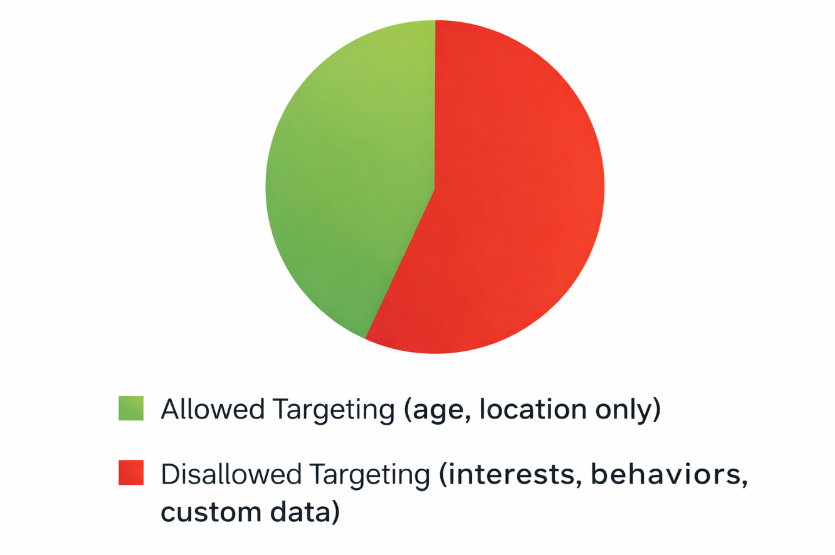
Allowed vs disallowed targeting criteria for under-18 audiences on Facebook Ads
Useful statistic: Industry reports show that over 40% of ad targeting options available for adults are restricted or unavailable when advertising to users under 18.
3. Individuals Identified by Personal Data Without Consent
Advertisers cannot target people using personal data obtained without explicit user consent. This includes:
-
Purchased email lists
-
Scraped phone numbers
-
Third-party data collected without proper authorization
Custom Audiences must be built from data that users have knowingly provided, such as website visitors who accepted cookies or customers who opted in to communications.
Compliance insight: Data privacy regulations such as GDPR and CCPA have increased enforcement. In recent years, companies have faced fines totaling billions of dollars globally for improper data usage in advertising.
4. People in Housing, Employment, or Credit Protected Classes
When running ads related to housing, employment, or credit (known as Special Ad Categories), Facebook severely limits targeting options. You cannot target or exclude users based on:
-
Age
-
Gender
-
ZIP code
-
Detailed demographic or interest data
These restrictions exist to prevent discrimination and ensure equal access to opportunities.
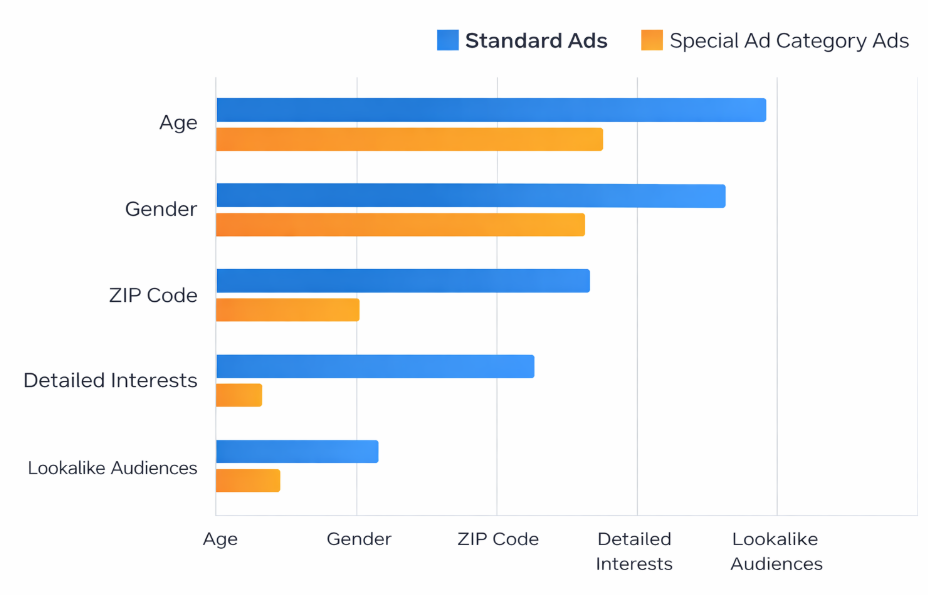
Comparison of available targeting options in Standard Facebook Ads vs Special Ad Category Ads
Useful statistic: After the introduction of Special Ad Categories, advertisers reported an average reduction of 30–50% in available targeting options for affected campaigns.
5. Users Based on Past Financial Hardship or Criminal History
Facebook does not allow targeting people based on:
-
Debt status
-
Credit score
-
Bankruptcy history
-
Criminal records or past offenses
Ads cannot suggest that the advertiser knows or assumes such information about a user.
6. People Who Have Explicitly Opted Out
Users who opt out of ad personalization, tracking, or specific advertiser interactions cannot be targeted using certain data-driven methods. This includes users who:
-
Disable ad personalization
-
Decline cookies or tracking permissions
-
Opt out of Custom Audience matching
With growing privacy awareness, opt-out rates are increasing, reducing the size of addressable audiences for many advertisers.
How to Advertise Effectively Within These Limits
Although some audiences are off-limits, advertisers can still succeed by:
-
Using broader, interest-based targeting that avoids sensitive attributes
-
Focusing on high-quality creative and messaging
-
Leveraging lookalike audiences built from compliant first-party data
-
Testing multiple audience segments to find scalable performance
Suggested Reading
To deepen your understanding of Facebook advertising and audience strategies, consider these related articles:
Conclusion
Knowing whom you can’t target with Facebook Ads is essential for building compliant, effective campaigns. By respecting platform rules and user privacy, advertisers can avoid penalties while still reaching meaningful audiences at scale. Understanding these limitations is not a constraint—it’s a foundation for sustainable advertising success.