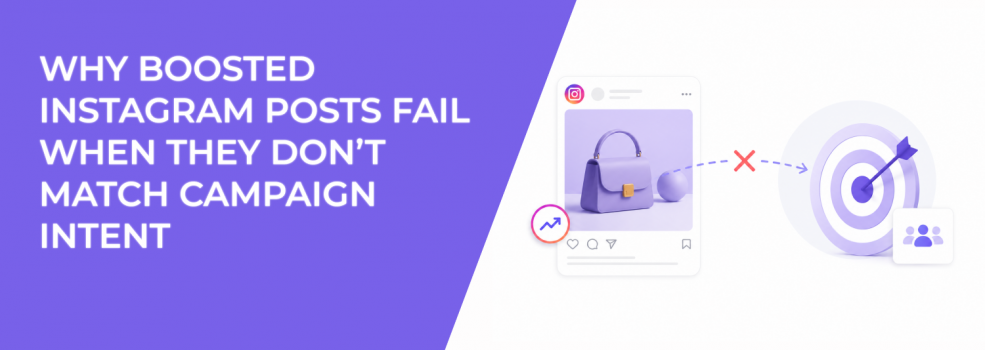
Many boosted Instagram posts fail even when the original content performs well organically.
The problem is usually not the budget, audience size, or even the creative quality itself. The real issue starts when advertisers boost content that attracts the wrong type of engagement for the campaign objective.
A post can collect likes, comments, and shares while sending weak buying signals to Meta’s delivery system.
Once paid spend enters the campaign, performance starts breaking.
Why Engagement Signals Often Conflict With Campaign Intent
Instagram users engage with content for different reasons.
Some posts generate reactions because they are entertaining. Others work because they look visually satisfying inside the feed. Certain Reels create curiosity without creating any commercial intent.
That becomes dangerous when the campaign objective is purchases, leads, or qualified traffic.
Meta studies the behavioral patterns attached to the post before delivery expands. If the content mainly attracts passive engagement, the algorithm starts finding more users with similar low-intent behavior.
This often creates a misleading performance pattern inside Ads Manager:
- CTR stays high.
- CPC remains cheap.
- Traffic volume grows.
- Conversion rate drops.
The campaign appears healthy at the surface level while ROAS quietly deteriorates.
This is one reason experienced advertisers try to spot demand before launching campaigns instead of boosting content based only on visible engagement.
How Meta Optimizes Around the Wrong Instagram Behavior Signals
Meta’s delivery system reacts heavily to early engagement behavior.
If the boosted post initially receives interactions from users unlikely to convert, the platform starts optimizing toward those same patterns. The algorithm interprets those users as the “correct” audience for future delivery.
A common example looks like this. A skincare brand posts a satisfying texture Reel that performs well organically. Users watch it because the visuals are relaxing and trendy. The advertiser then boosts the Reel for purchases.
The campaign generates large traffic volume but weak sales because the original engagement came from entertainment behavior, not buying intent.
The problem compounds during scaling.
Weak conversion feedback reduces Meta’s confidence in the campaign, which often increases CPM and destabilizes delivery.
This is closely connected to why clicks don’t equal demand in paid social campaigns.
Why Cheap Instagram Traffic Can Still Produce Weak ROAS
Low CPC does not automatically mean strong campaign efficiency.
Many boosted Instagram posts attract inexpensive traffic because the content generates broad engagement easily. Meta can distribute those posts cheaply across large user pools.
But inexpensive traffic becomes expensive when users do not convert.
This creates several operational problems:
- CPA rises despite healthy engagement metrics.
- Retargeting pools fill with weak traffic.
- Sales data becomes inconsistent.
- Scaling efficiency collapses faster.
Some advertisers continue increasing spend because the top-level metrics still look positive.
Meanwhile, the campaign keeps optimizing toward low-intent engagement clusters instead of qualified buyers.
How To Choose Instagram Posts That Match Conversion Intent
The safest boosted posts usually show commercial behavior before paid budget enters delivery. Experienced advertisers look for signals such as:
- comments asking about pricing or availability
- profile visits relative to impressions
- outbound clicks from organic traffic
- saves connected to product research behavior
- audience interactions related to purchase decisions
These signals indicate that the post attracts users with stronger buying intent.
A conversion-focused post does not need viral engagement. It needs the correct engagement pattern.
This is why advertisers who understand how to align your offer with the right Facebook ad campaign objective often scale more efficiently than advertisers chasing broad engagement numbers.
Final Takeaway
Boosted Instagram posts fail when the content attracts behavior that conflicts with the campaign objective.
Organic engagement alone does not tell Meta who is likely to convert. If the original post generates passive or entertainment-driven interactions, paid delivery often amplifies the wrong audience signals.
The strongest boosted campaigns usually begin with Instagram content that already demonstrates clear commercial intent before budget enters the system.