
Many campaigns fail not because of poor creatives or targeting, but because they are launched into markets that are not ready—or not interested. Demand validation helps you confirm that people are actively searching, discussing, or engaging with solutions like yours.
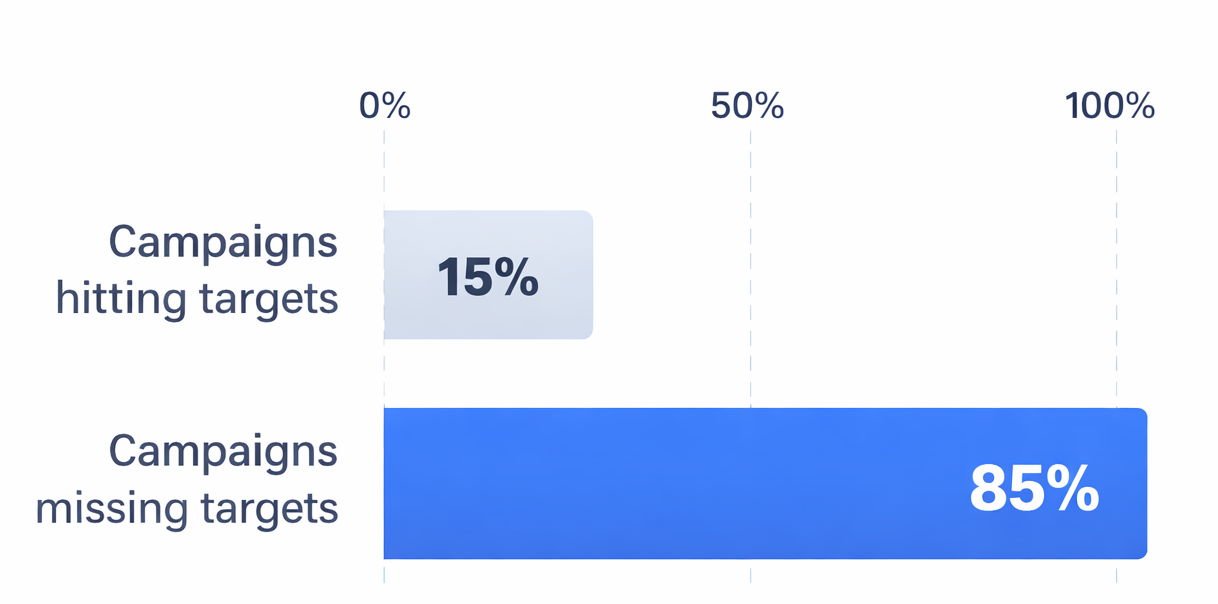
Percentage of marketing campaigns that do not achieve their goals, highlighting the importance of validating demand before launch
According to multiple industry analyses, up to 42% of startups fail due to lack of market need. While this statistic is often associated with startups, the same principle applies to paid campaigns: without demand, even perfectly optimized ads struggle to convert.
Validating demand before launch allows you to:
-
Predict conversion potential more accurately
-
Allocate budget to high-intent segments
-
Reduce wasted impressions and clicks
-
Shorten the optimization period after launch
Signal #1: Audience Size Is Growing, Not Static
A healthy market shows signs of growth. Before launching campaigns, examine whether the audience you plan to target is expanding.
Key indicators include:
-
Increasing interest in related topics over time
-
Growth in community discussions or content engagement
-
Rising engagement levels within defined audience segments
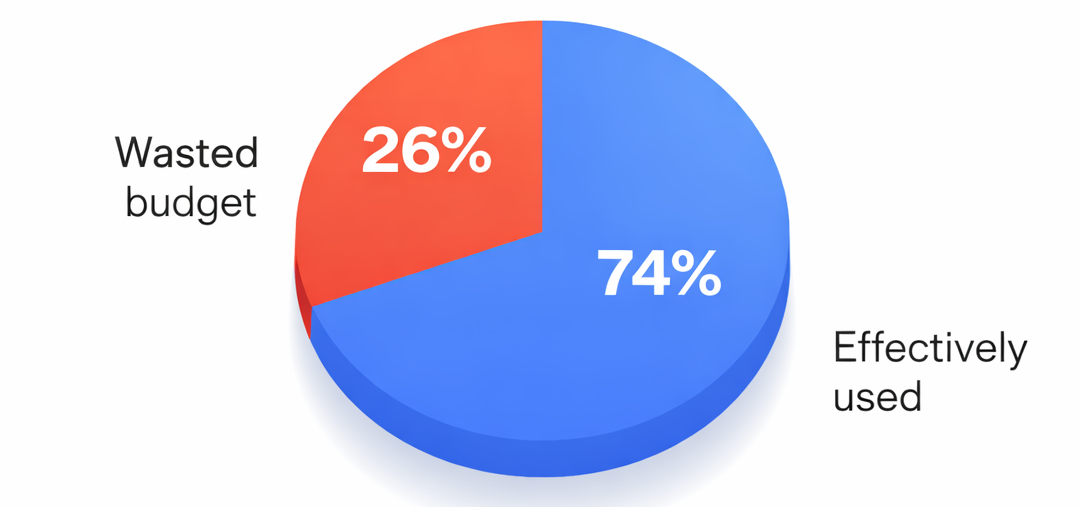
Portion of marketing budgets wasted on ineffective channels without proper demand validation
Markets with stagnant or shrinking audience sizes often lead to higher acquisition costs over time. Studies in digital advertising performance show that campaigns targeting expanding audiences can see 25–40% lower cost per acquisition compared to static segments.
Signal #2: Behavioral Intent Beats Demographics
Demographics describe who people are, but behavior shows what they are ready to do. High-demand markets exhibit consistent behavioral signals such as:
-
Engagement with competitor content or offers
-
Interaction with problem-aware educational content
-
Repeated exposure to similar solutions
Research across paid social platforms indicates that behavior-based audiences convert up to 2.3× better than demographic-only targeting. This gap becomes even more pronounced in competitive markets where demographics are broad but intent is narrow.
Signal #3: Competitive Saturation Without Fatigue
Competition alone is not a red flag—fatigue is. High-demand markets often have many advertisers, but creatives, offers, and messaging continue to evolve.
Look for:
-
Frequent creative refreshes by competitors
-
Consistent ad activity over long periods
-
Multiple angles tested for the same problem
If competitors are still investing heavily after months, it suggests the market continues to produce returns. On average, profitable advertisers maintain campaigns 3–5× longer in markets with sustained demand compared to experimental niches.
Signal #4: Early Engagement Predicts Downstream Performance
Before scaling spend, test demand with small-budget campaigns optimized for engagement rather than conversions.
Metrics that matter at this stage:
-
Click-through rate relative to platform benchmarks
-
Cost per engagement trends
-
Comment quality and relevance
Data from paid social benchmarks shows that ads with above-average early engagement are 60–80% more likely to achieve profitable conversion rates after optimization.
Signal #5: Retargeting Pools Build Quickly
Strong demand reveals itself when retargeting audiences grow faster than expected. If your warm audiences accumulate rapidly—even with limited spend—it indicates strong market interest.
Across multiple advertising platforms, retargeting campaigns convert 2–3× higher than cold traffic. Fast-growing retargeting pools amplify this advantage and signal readiness for scale.
Common Demand Validation Mistakes
Avoid these frequent errors before launching campaigns:
-
Mistaking curiosity for buying intent
-
Relying on one signal instead of multiple
-
Launching at full budget without validation tests
-
Ignoring qualitative feedback from early engagement
Demand is rarely confirmed by a single metric. It emerges from consistent patterns across audience behavior, competition, and engagement data.
Turning Demand Signals Into Confident Launches
When multiple signals align—growing audiences, strong behavioral intent, sustained competition, and early engagement—you gain a clear green light to launch with confidence.
Campaigns built on validated demand typically:
-
Exit the learning phase faster
-
Achieve lower volatility in performance
-
Scale more predictably over time
Demand validation is not about delaying action—it is about launching with clarity.
Recommended Reading
If you found this article useful, you may also want to explore: