You launched a campaign. People clicked. They added items to their cart. Then… they left.
Sound familiar?
If you're running ads on Facebook or Instagram, this is one of the most frustrating problems to face. You’re paying to get people to your site — and they’re getting all the way to checkout before bailing.
Let’s walk through why this happens, and what you can change.
It's not always the ad. It's what happens after the click.
When someone adds to cart and drops off, it means your ad and product worked. The problem is usually in the checkout flow.
Many advertisers look at top-of-funnel performance like click-through rate (CTR) or cost per click (CPC). But if you only measure clicks and not conversions, you miss where things are breaking.
The real issues tend to be small — and easy to fix.
1. Total cost surprises kill trust
Buyers aren’t just price-sensitive — they’re surprise-sensitive.
Most people are okay with your product price. They just don’t like unexpected charges.
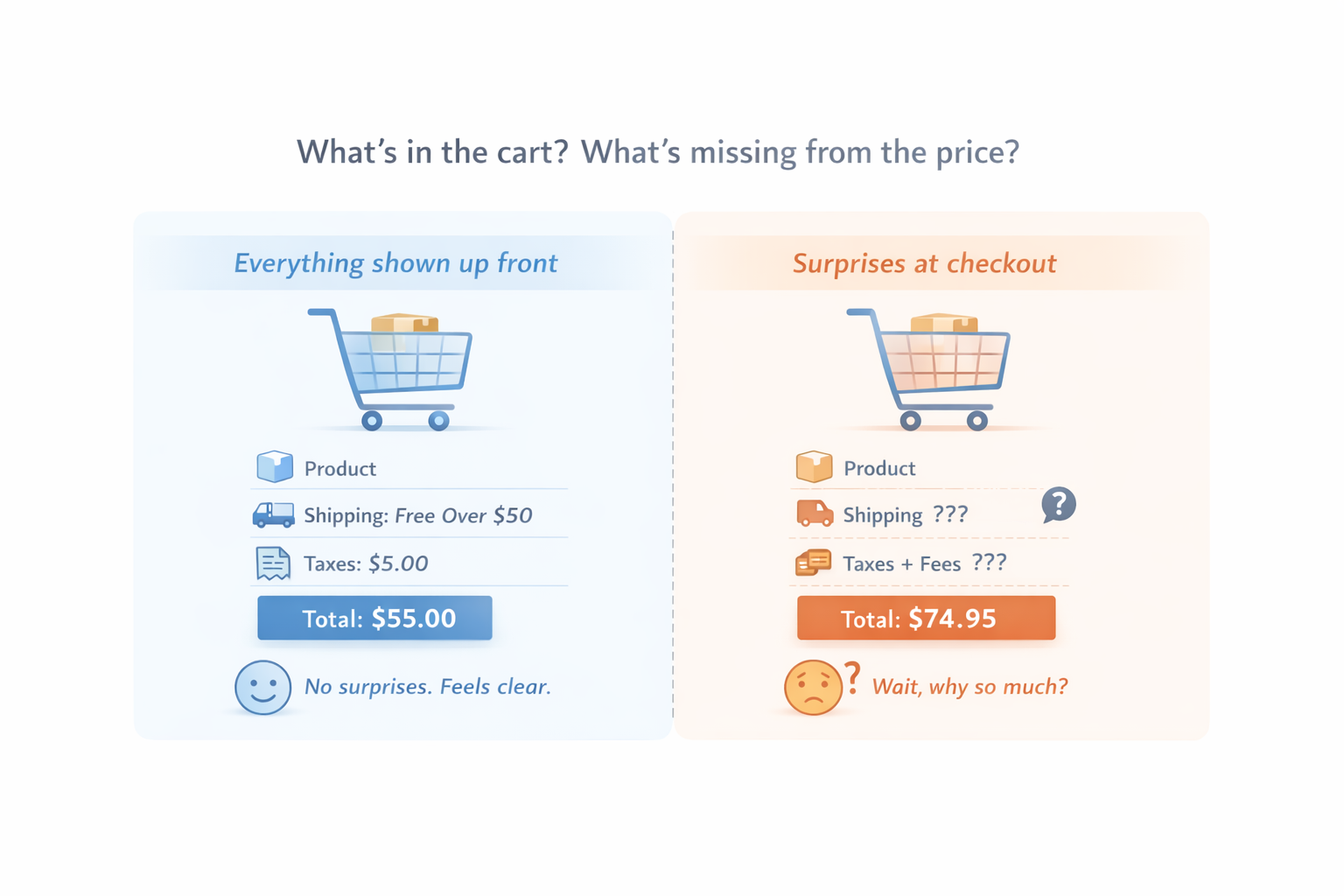
Common examples:
-
Shipping costs that appear at the last step.
-
Taxes that weren’t mentioned before.
-
Random handling fees with no explanation.
These make your offer feel less honest, even if it's standard.
Quick fix: Be upfront. Show “full price with shipping” earlier in the process. Let users calculate totals on product pages. Or, offer free shipping thresholds in the ad — like “Free shipping over $50.”
For more help making your landing page easier to trust and convert, read this article on how to optimize your e-commerce landing page.
2. You ask users to sign up too early
People don’t want another account.
If they have to register before checking out, many will just close the tab. Even social login buttons don’t solve it — they just delay the moment of friction.
Instead:
-
Let people check out as guests.
-
If you need an account, ask for it after the purchase.
-
Or explain why it’s helpful (e.g. “Track your order easily”).
If you’ve ever wondered why your campaign looks strong on the surface but doesn’t convert, here’s a detailed breakdown on how post-click friction ruins otherwise great ad performance.
3. Trust disappears right when it matters most
The closer people get to paying, the more careful they become. Especially if they’ve never bought from you before.
This is the moment where buyers ask:
-
Will I actually get what I paid for?
-
Is this store even real?
-
What happens if I need to return something?
You don’t need to go overboard — but a few subtle trust cues help:
-
Short review from a real customer.
-
Refund or cancellation policy next to the “Place Order” button.
-
Small security badges or payment icons.
4. Your mobile checkout doesn’t feel smooth
Most traffic comes from mobile. But many checkout pages still feel like they were made for desktop.
Even a second of lag or a weird form can make someone give up. Especially if they’re on the move.
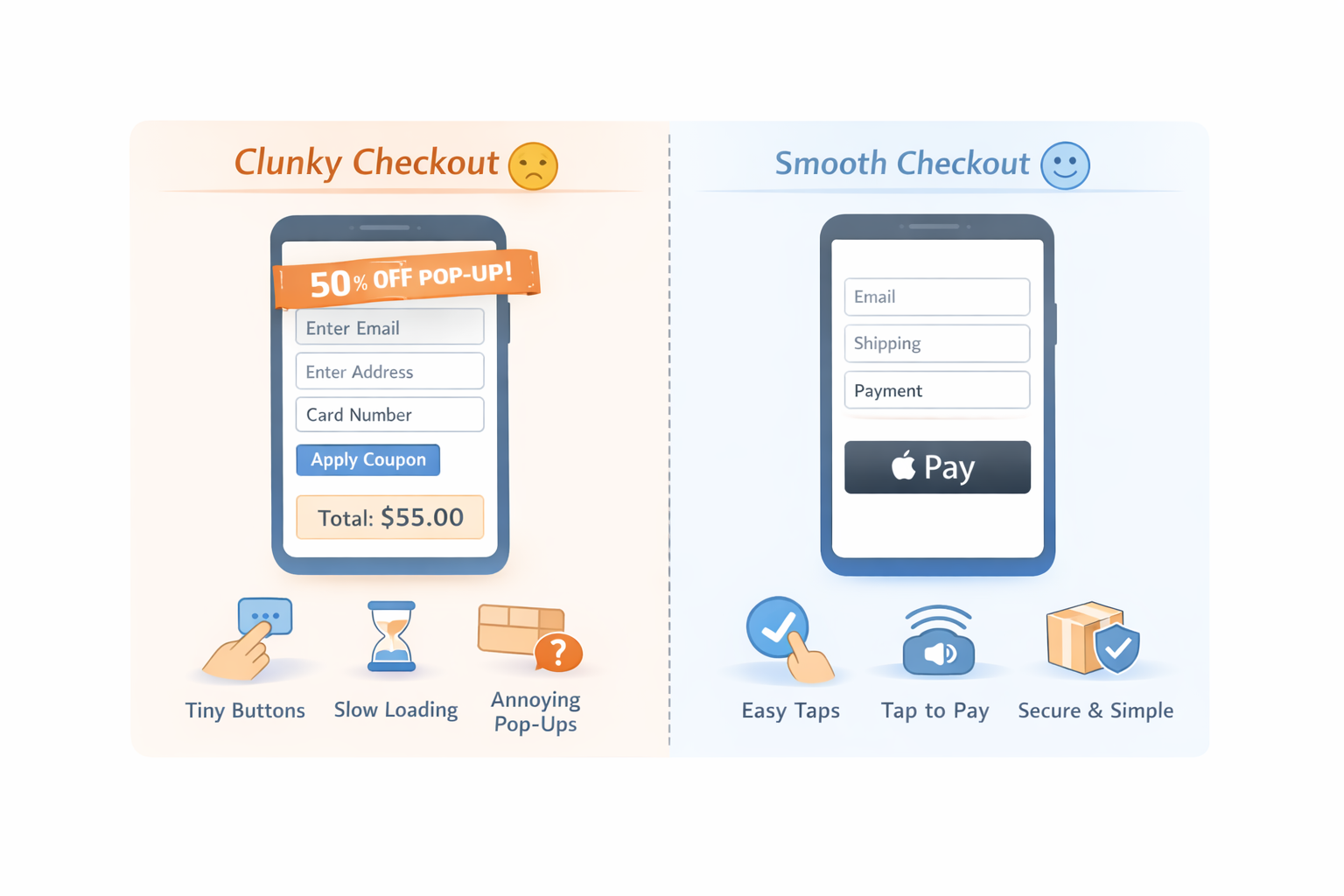
Watch for:
-
Buttons that don’t respond right away.
-
Payment fields that don’t autofill.
-
Pages that reload or glitch when selecting shipping.
Tip: Run test purchases on different devices. You’ll quickly see what’s clunky. For more mobile-friendly ideas, check this piece on why your mobile landing page may be killing conversions.
5. People aren't sure what happens after they click “Buy”
This one's easy to miss. If buyers aren’t 100% sure what happens next, they often freeze.
They might wonder:
-
Will I get an email?
-
When will it ship?
-
Can I cancel?
Fix it with microcopy:
Add a short line right below the final button:
-
“We’ll email your receipt right away.”
-
“Shipping starts within 24 hours.”
-
“You can cancel anytime before it ships.”
This takes 10 seconds to add and removes a big blocker.
Want to win those lost sales back?
Let’s say they still bounce. You don’t have to lose them forever.
You can follow up with smart retargeting — and there’s a right way to do it.
Generic “Come back!” ads rarely work. What works better:
-
Show the specific product they abandoned.
-
Use urgency: “Only 3 left in stock”.
-
Offer a reason to return: free shipping, reviews, or a limited-time discount.
This guide on how to use Facebook retargeting to recover lost carts breaks it down step-by-step.
Final takeaway: reduce anxiety, not just steps
If someone adds to cart and reaches checkout, they wanted to buy. They didn’t leave because of the ad — they left because something small made them hesitate.
That hesitation could come from price surprises, a clunky mobile flow, or a lack of trust. Fixing these issues is often cheaper than running new ads. And it works faster too.
Start by asking: What would you want to know before clicking “Buy”? Then, make that info obvious, calm, and easy to see. That’s how you recover abandoned sales — and spend less getting the next ones.