You launch your ad campaign and wait. A day goes by. Still nothing. Shouldn’t you be seeing results already?
Not quite. On platforms like Facebook and Instagram, ad performance builds slowly — and that’s by design. These systems are built to learn over time, not give instant results. The slow start doesn’t mean your campaign is failing.
Let’s break down why this happens, what’s going on behind the scenes, and when it’s worth making changes.
What’s really going on when you launch an ad?
Your ad enters a learning system — not just a delivery machine
When you launch a campaign, Meta doesn’t instantly know who’s most likely to buy. It starts by testing different audience segments and measuring early responses. This is where most advertisers get impatient — but it’s a critical phase.
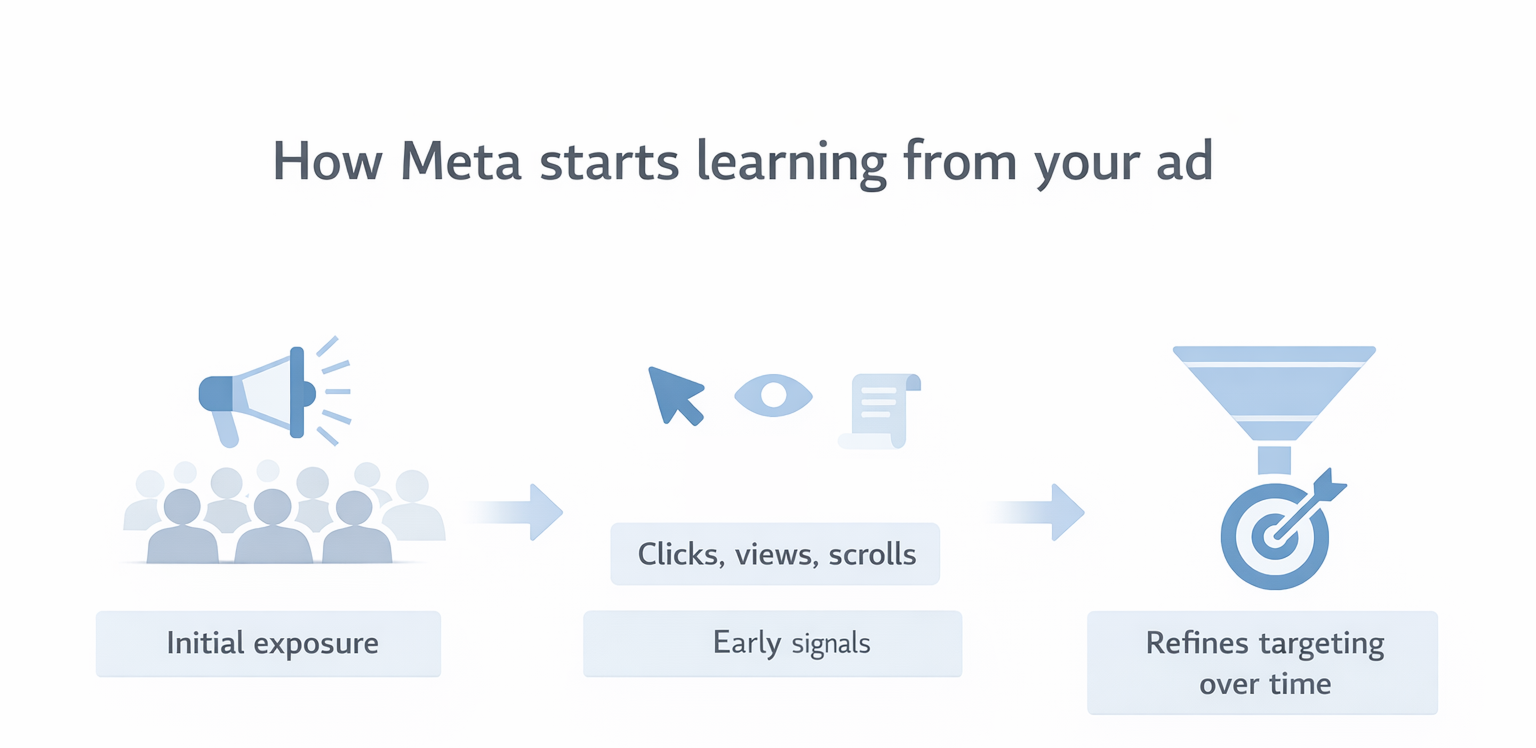
In the early days, the system:
-
Shows your ad to a wide slice of your audience,
-
Watches how people react — clicks, views, scrolls,
-
Uses that data to adjust delivery and prioritize stronger signals.
Even if you tell the system to optimize for purchases, it often uses lighter signals like clicks or time on site at first. These are easier to collect quickly, even if they don’t always match final outcomes. That’s why the first few days rarely reflect your campaign’s true potential.
Learn more about this process in How to Use the Facebook Ads Learning Phase to Your Advantage.
People take time to buy — even if the ad is good
Another reason results don’t show up right away is because most people don’t buy the first time they see something. Buying behavior, especially online, often stretches across multiple touchpoints.
Here’s what that might look like:
-
Someone sees your ad on Instagram and clicks to learn more,
-
A few days later, they Google your brand or product,
-
Then they sign up for your emails or revisit the site,
-
Finally — maybe days later — they decide to buy.
This is normal. If you check your campaign results too early, you're only seeing the first steps — not the whole journey.
Why the feedback loop takes time
1. The algorithm needs enough data to find patterns
The system can’t optimize well based on one or two clicks. It needs volume to see what’s working. That’s why smaller or slower campaigns take longer to improve.
For example:
-
If your product sells once per 1,000 impressions, Meta may need 10,000 impressions to understand which users are most likely to buy,
-
If your audience is very narrow, the algorithm can’t test different segments and has less room to improve.
Until enough data comes in, Meta is basically guessing. That’s why performance often looks weak early on — it hasn’t figured things out yet.
For practical benchmarks, read How Long Facebook Ads Should Run Before Judging Results.
2. Too much testing at once can slow everything down
It’s good to test different creatives, audiences, and placements — but too much at once splits your budget too thin. That means each variation gets less data, and learning takes longer.
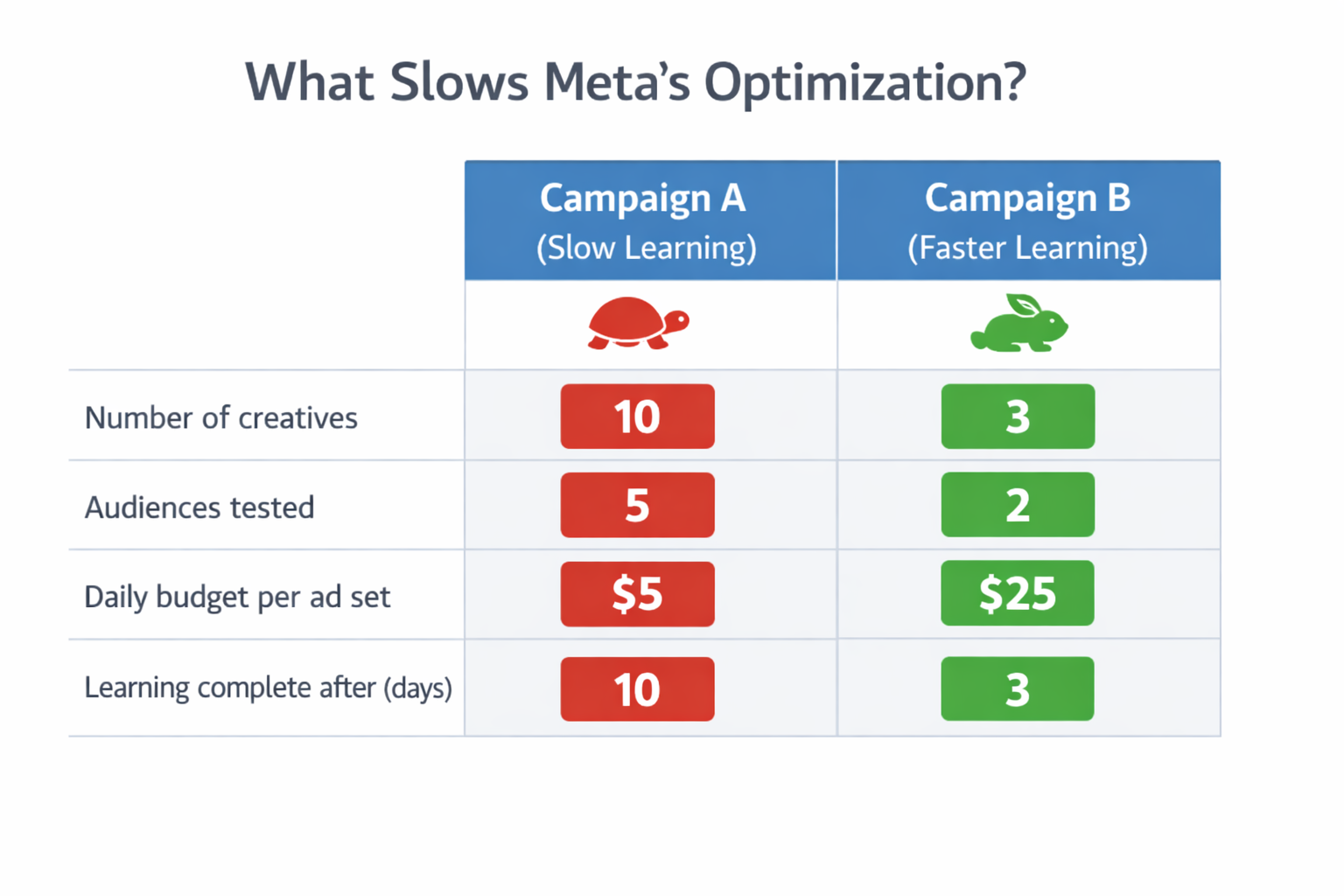
Let’s say you launch a campaign with:
-
5 creative versions,
-
3 different audience groups,
-
4 placements (like Feed, Reels, Stories, and Audience Network).
That’s 60 different combinations. If your budget is spread across all of them, each one gets only a small slice. Meta can’t learn quickly from that. You’ll see faster results if you test fewer things at once, and rotate your experiments in phases.
When a slow start means something’s wrong
Not every delay means your ad needs more time. Sometimes, the lack of results points to a deeper issue. It’s important to know when to step in and fix things.
Here are a few red flags to watch for after 3 to 5 days:
-
Very low impressions, even though the campaign is active,
-
Click-through rates consistently below 0.5%,
-
Zero conversions from ads that are getting lots of clicks,
-
Sudden drops in delivery without any recent edits.
If you see any of these, don’t wait. These aren’t just slow results — they’re signs your setup needs work. In these cases, it makes sense to adjust your creative, audiences, bids, or budget.
Read this diagnostic guide: Why Facebook Ads Performance Declines Over Time (and How to Prevent It).
How to get results faster — without rushing the system
Even though ads take time to work, there are smart ways to speed up useful learning and improve results earlier in the campaign.
1. Optimize for faster events if purchases are slow
If you’re selling something that takes time to decide on — like a subscription service or higher-priced product — try optimizing for steps that happen earlier in the customer journey.
Good examples include:
-
Add to cart,
-
Start checkout,
-
Lead form submissions.
These actions happen more frequently and help the algorithm learn faster. Once you collect enough of these signals, you can switch to optimizing for purchases.
2. Make sure your budget supports learning
A campaign can’t improve if it’s underfunded. If each ad set only gets a few dollars a day, you won’t collect enough data to evaluate performance properly.
To support learning:
-
Focus your budget on fewer ad sets,
-
Try to hit at least 50 conversion events per week in each ad set (Meta’s recommended minimum),
-
Avoid frequent changes — every big edit resets learning and slows momentum.
3. Use retargeting to make your first touch count more
You can’t control when someone decides to buy — but you can stay in front of them until they do. Retargeting helps make up for delayed decisions and long buying cycles.
Smart retargeting campaigns can:
-
Re-engage people who visited your site but didn’t convert,
-
Follow up with users who clicked your ad but dropped off,
-
Deliver messages in sequence to build trust over time.
Need help here? See Meta Ads Attribution: What to Know About Windows, Delays, and Data Accuracy.
Key takeaway
Ads don’t work instantly — because real buyers don’t behave instantly. Meta’s systems are built to learn from real behavior, and that takes time.
What looks like “bad performance” is often just the start of a longer journey. Instead of rushing to turn things off, focus on reading the right signals. Know when to give it space — and when to make smart changes.
If you approach things the right way, your ad will not only start working — it will keep improving over time.