Facebook Ads performance feels stable in calm markets. In competitive niches, the same campaigns swing wildly week to week. Costs spike, results drop, and scaling becomes unpredictable.
This volatility is not random. It is structural, and it comes from how Meta’s auction behaves under pressure.
How Competition Changes Auction Mechanics
Meta runs a real-time auction for every impression. In quiet niches, fewer advertisers compete for the same user. In competitive niches, many advertisers bid on identical audiences.
That concentration creates price instability.
Bid Density Compresses Margins
When multiple advertisers target similar segments, bid density rises sharply. Small budget increases push CPMs up for everyone. One competitor doubling spend can shift auction prices within hours.
If you want a deeper breakdown of auction dynamics, read this guide to the Facebook Ad Auction and internal competition between ad sets.
High bid density creates three problems:
-
Rapid CPM inflation; auction clearing prices increase when more bidders enter the same pool.
-
Reduced delivery consistency; learning resets happen faster when performance fluctuates.
-
Lower scaling headroom; marginal cost per additional lead rises quickly.
The system rewards stability. Competitive niches remove that stability.
Audience Saturation Accelerates Fatigue
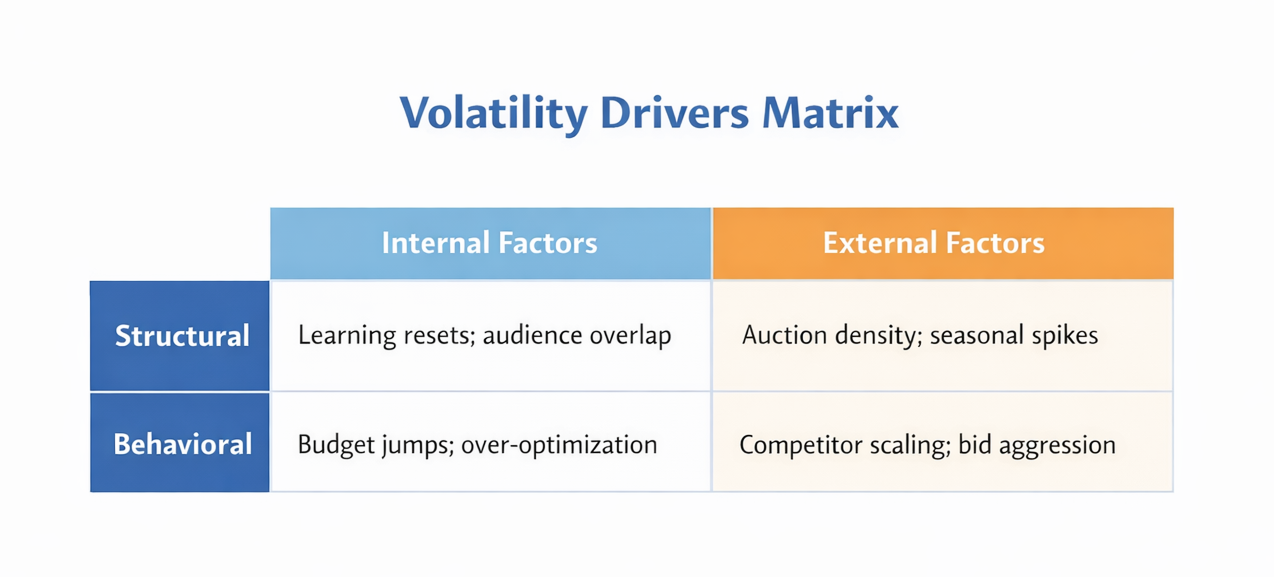
In competitive markets, the same users see similar ads repeatedly. Frequency climbs faster than in broader markets. Performance drops earlier in the lifecycle.
This is closely tied to ad fatigue, which becomes more aggressive in crowded auctions. A detailed breakdown is covered in this article on how to avoid ad fatigue and maintain stable performance.
Saturation produces hidden volatility drivers:
-
Engagement decay; CTR declines after repeated exposure.
-
Relevance loss; lower engagement weakens predicted action rates.
-
Budget inefficiency; more spend is required to maintain volume.
When predicted action rates fall, effective CPM rises. The auction punishes declining engagement instantly.
Budget Behavior Amplifies Instability
Competitive niches often include aggressive scaling tactics. Advertisers increase budgets quickly when results look strong. That behavior destabilizes the auction further.
Meta’s system reacts to budget shifts.
Abrupt Scaling Disrupts Learning
Large budget increases change delivery patterns. The algorithm explores new pockets of the audience. Performance during that exploration phase fluctuates.
This effect is especially visible when scaling without structure. For a more systematic approach, see how to scale Facebook Ads without losing profit margin.
Common triggers include:
-
Doubling daily budgets after a few strong days; the system expands targeting depth.
-
Launching duplicate ad sets to scale faster; internal overlap raises self-competition.
-
Turning campaigns off and on; learning resets and auction positioning shifts.
In competitive niches, these moves amplify volatility. Other advertisers respond at the same time.
Competitor Reactivity Creates Short Cycles
Performance data is visible in platform dashboards. When one advertiser sees a drop, they adjust bids or budgets. Competitors often react within days.
This creates micro-cycles in the auction:
-
CPM spikes during aggressive scaling phases.
-
Short performance recoveries when weaker advertisers exit.
-
Sudden instability around seasonal pushes.
The result is a compressed cycle length. Stability windows shrink from months to weeks.
Creative Economics Under Pressure
Creative strategy matters more in competitive niches. Minor differences in engagement change auction outcomes. The system prioritizes ads with stronger predicted action rates.
That turns creative performance into a volatility driver.
Incremental Creative Decay Has Larger Impact
In less competitive markets, a 10 percent CTR drop may be manageable. In competitive niches, that drop can erase margin. Higher bid density magnifies small creative declines.
Creative decay affects:
-
Auction rank; lower engagement reduces total value in the auction formula.
-
Effective CPC; weaker predicted action rates increase required bids.
-
Spend efficiency; the same budget buys fewer high-intent impressions.
For a deeper look at long-term creative decay, review this breakdown of why Facebook Ads performance declines over time.
The auction does not reward average creative. It rewards relative advantage.
Creative Convergence Reduces Differentiation
In mature niches, many advertisers use similar angles. The same pain points appear across ads. Offers start to look identical.
Convergence creates three structural effects:
-
Lower novelty; users ignore repetitive messaging.
-
Narrow differentiation; predicted action rates cluster tightly.
-
Increased sensitivity; minor creative shifts move performance significantly.
When performance clusters tightly, ranking differences become fragile. Small changes produce outsized swings.
Data Feedback Loops Tighten
Competitive niches often have smaller profit margins. Advertisers optimize aggressively toward short-term metrics. That narrows targeting and increases auction overlap.
Feedback loops tighten around high-value segments.
Narrow Optimization Increases Overlap
When advertisers optimize strictly for lowest CPL, they often converge on similar audiences. High-converting segments become crowded quickly. Auction pressure intensifies inside those segments.
This pattern is closely related to audience duplication issues explained in why audience overlap hurts Facebook Ad performance.
Examples include:
-
Retargeting heavy website visitors only; limited pool with high intent.
-
Optimizing for high-value conversions exclusively; reduced event volume.
-
Excluding broad segments prematurely; shrinking exploration space.
This concentration raises cost volatility. It also reduces algorithmic flexibility.
Signal Loss Amplifies Variability
iOS tracking limits and attribution gaps reduce signal quality. In competitive niches, weak signals create larger performance swings. The algorithm relies on predicted behavior more heavily.
Lower signal clarity leads to:
-
Inconsistent learning phases; slower stabilization.
-
Broader delivery variance; more fluctuation in daily results.
-
Misleading short-term metrics; noise looks like trend.
Volatility increases when prediction replaces confirmed feedback.
How to Reduce Volatility in Competitive Niches
You cannot remove competition. You can structure campaigns to absorb instability. The goal is to widen stability windows and protect margin.
Diversify Auction Exposure
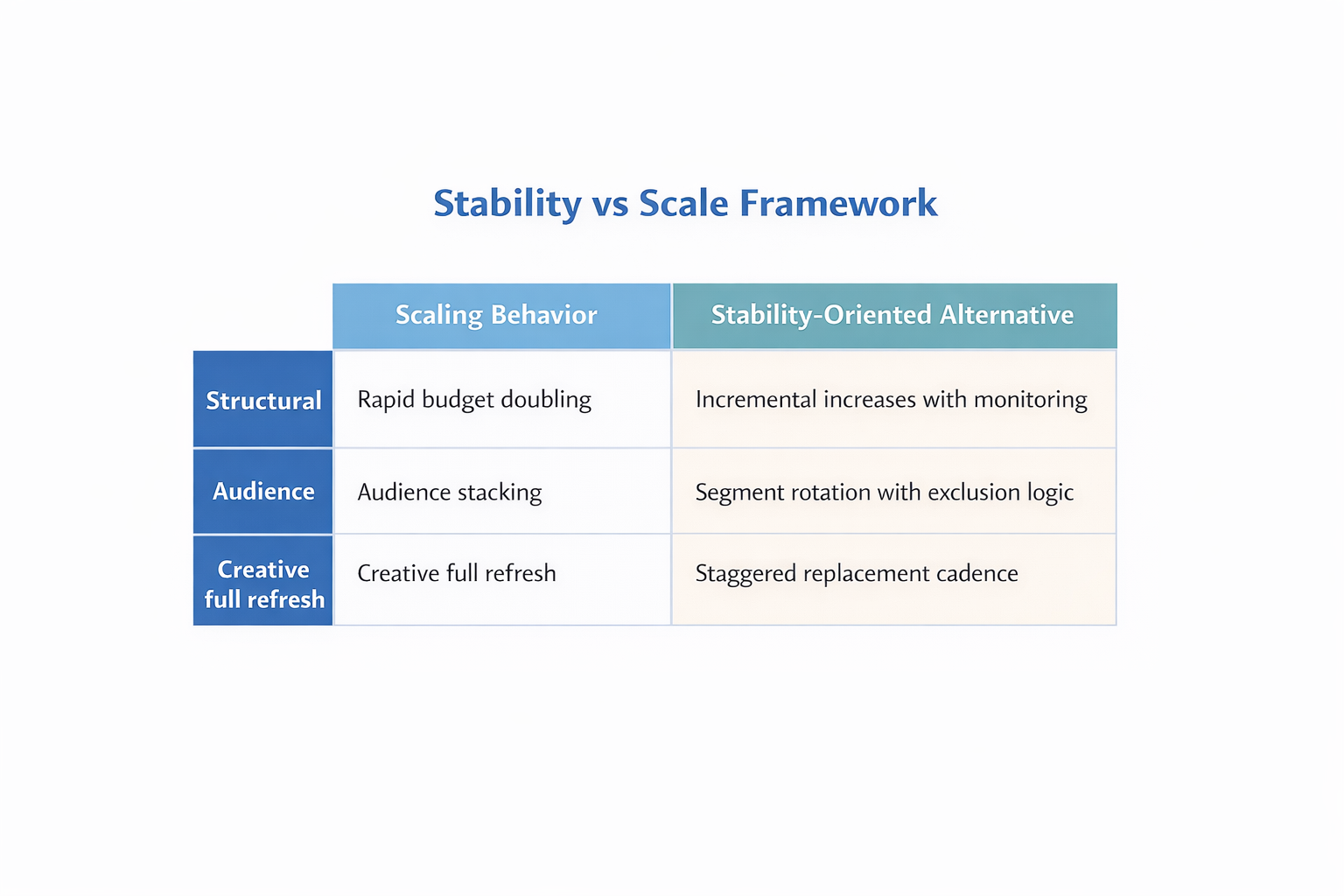
Avoid concentrating spend in one narrow audience. Spread delivery across segments with different competitive intensity.
Practical actions include:
-
Running broader lookalikes alongside high-intent segments; this reduces dependence on crowded pools.
-
Maintaining prospecting even when retargeting performs better; it balances cost structure.
-
Using campaign budget optimization carefully; monitor internal allocation shifts.
Diversification lowers sensitivity to single-audience shocks.
Stabilize Budget Changes
Scaling should follow predictable increments. Abrupt increases destabilize learning in competitive auctions.
Use structured adjustments:
-
Increase budgets by controlled percentages; allow several days for stabilization.
-
Avoid duplicating ad sets for scaling; internal overlap increases auction friction.
-
Keep campaigns active; prevent learning resets from frequent pauses.
Consistency improves delivery reliability.
Refresh Creative Based on Data, Not Panic
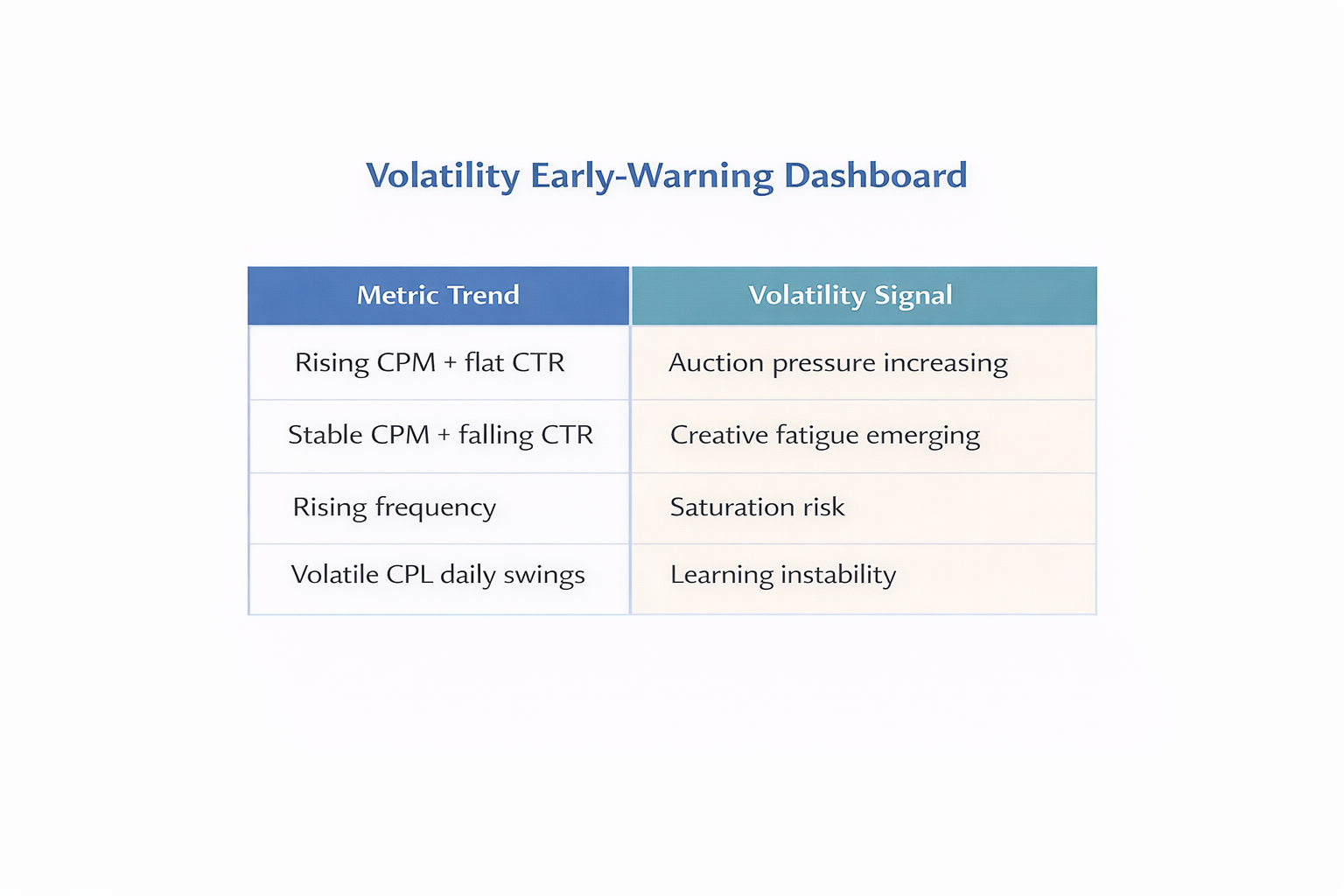
Creative changes should respond to trend data, not single-day drops. In volatile niches, daily swings are common. Overreacting increases instability.
Build a disciplined process:
-
Monitor rolling averages; track seven-day and fourteen-day trends.
-
Replace underperforming creative gradually; avoid full resets.
-
Test differentiated angles; avoid repeating market clichés.
Differentiation reduces direct auction competition.
Conclusion
Facebook Ads volatility rises when competition concentrates budgets, audiences, and creative approaches. Auction mechanics amplify small differences under pressure. Budget behavior and narrow optimization tighten feedback loops.
Understanding these structural drivers changes how you respond. Instead of chasing daily metrics, you design for stability. Competitive niches reward disciplined systems, not reactive tactics.