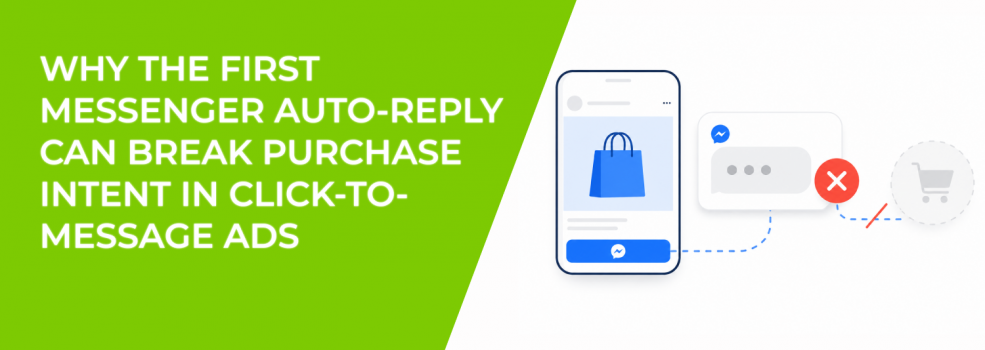
A click-to-message ad can create real buying intent before the user ever opens Messenger. The creative shows the offer, the CTA invites a direct conversation, and the user taps because they expect a fast next step.
The problem starts when the first auto-reply does not match that intent.
A weak first reply can turn a sales-ready user into a passive chatter. It can also make the campaign look healthy in Ads Manager because replies still come in. Under the surface, the chat flow is losing the buyer at the exact point where the sales journey should become easier.
The problem: A generic first reply resets the buyer’s intent
Many Messenger flows open with a neutral message like “Hi, how can we help you?” or “Thanks for reaching out.” That sounds polite, but it does not continue the offer from the ad.
The user clicked because of a specific promise. It might have been a discount, a quote, a product recommendation, a free consultation, or a limited booking slot. When the first reply ignores that context, the user has to explain why they clicked.
That creates unnecessary work.
This is where many advertisers misread performance. They see a strong click-to-message rate and a decent reply volume. But when they check sales, bookings, or qualified leads, the numbers do not move. The first reply has created a break in the journey.
This is a classic post-click problem. The ad did its job, but the next step failed to carry the user forward. If you want to diagnose this more broadly, review your post-click optimization before changing budgets or audiences.
Why the first message affects CPA and lead quality
Messenger campaigns often make weak flows look better than they are. A user can reply with one word, ask a vague question, or tap a quick response. That still creates activity inside the chat.
But activity is not the same as purchase intent.
When the first auto-reply is too broad, it usually creates three problems:
- It increases low-value replies. Users answer because the message is easy, not because they are closer to buying.
- It slows the path to the next action. A buyer who wanted a price, slot, demo, or checkout link now has to ask for it manually.
- It gives sales teams weaker conversations. Reps spend more time asking basic questions that the flow could have handled immediately.
This can raise CPA even when CPC looks stable. The campaign may still attract clicks at a reasonable cost, but fewer of those clicks become qualified conversations. The waste appears after the click, not inside the ad auction.
That is why click-path analysis matters. You need to see whether the first Messenger response moves the user toward a sale or sends them into a vague support-style conversation.
Real scenario: The ad sells urgency, but the chat opens slowly
Imagine a local clinic running a click-to-message ad for same-week appointments. The ad says, “Book a consultation this week.” The user clicks because they want availability.
Then the Messenger reply says, “Hi, thanks for messaging us. What can we help you with?”
That reply forces the user to restate the offer. Some will do it. Many will not.
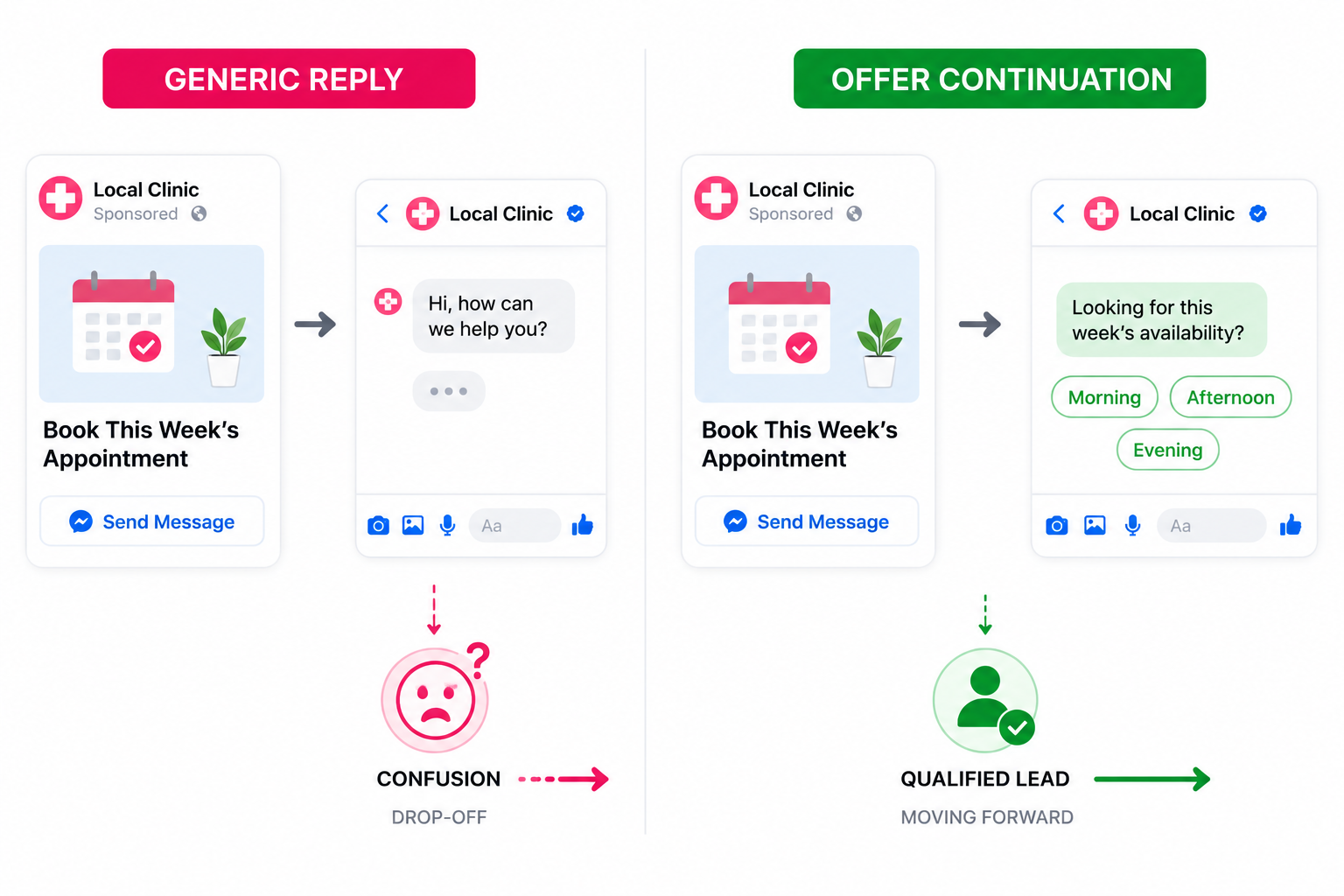
A stronger first reply would say: “Thanks for asking about this week’s consultation slots. Are you looking for morning, afternoon, or evening availability?”
This version does three things at once. It confirms the ad promise, keeps the user on the booking path, and asks a simple question that sales can use. It does not feel aggressive, but it does not waste the first interaction.
The solution: Make the first reply continue the ad promise
Your first Messenger message should feel like the next sentence after the ad. If the ad promotes a quote, the chat should start the quote process. If the ad promotes a product recommendation, the chat should ask the one question needed to recommend the right option.
Do not start from zero.
A strong first reply usually includes:
- A clear reference to the offer. Mention the exact reason the user clicked, so the conversation feels continuous.
- One low-friction next step. Ask one question that moves the user closer to price, booking, product fit, or checkout.
- A visible route to conversion. Make it clear whether the next step is a call, quote, product link, demo, or purchase.
- No open-ended support language. Avoid turning a sales conversation into a help desk thread.
For example, instead of “How can we help you?”, use “Want the price for the package shown in the ad?” Instead of “Tell us more,” use “Which option are you interested in: starter, pro, or custom?”
Small wording changes can change the whole quality of the conversation.
How to check whether your first reply is hurting performance
Look beyond the reply count. A high number of replies does not prove that the first message is working.
Check the first three messages in real conversations. Look for repeated confusion, users asking “what is this about?”, or people dropping after the first automated question. Those are signs that the chat did not connect with the ad.
You should also compare first-message responses by ad angle. If one ad promises a quote and another promises advice, each one may need a different opening message. Sending all traffic into the same generic flow can blur user intent and make results harder to read.
This is where many funnels break after the click. The traffic is not always the issue. The handoff from ad to Messenger is often where the buyer loses direction. For a broader diagnosis, review where funnels usually break after the click.
Final takeaway
The first Messenger auto-reply is not a greeting. It is the first conversion step after the click.
If it repeats the ad promise, asks one useful question, and points toward the next action, it can protect purchase intent. If it opens with generic support language, it can turn strong clicks into weak conversations.
Fix the first reply before assuming the audience, creative, or campaign objective is the problem.