Running Instagram ads can feel like shouting into the void — money goes out, but conversions stay flat. If you’ve ever looked at your Instagram ad results and wondered why the numbers aren’t adding up, you’re not alone. Many businesses launch campaigns with good intentions, only to be met with high costs, low engagement, and few sales.
But poor results don’t mean Instagram ads don’t work. It means something in your setup needs fixing. This guide breaks down the most common reasons Instagram ads underperform — and how to turn things around.
Weak targeting: talking to the wrong people
Even the best ad will fail if it’s shown to the wrong audience. Poor targeting is the number one reason ads underdeliver.
Instead of trying to reach everyone, focus on reaching the right people — those most likely to buy from you.
Here’s how to fix it:
-
Use interests that match actual buying behavior: Don’t just target "fitness." Try more specific signals like "home gym equipment buyers" or "Peloton fans."
-
Build lookalike audiences from buyers: Upload your customer list or website visitors. Then create a lookalike audience to reach people similar to your actual buyers.
-
Target followers of relevant Facebook Groups or Instagram accounts: These users already engage with your niche — such as fans of competing brands or interest-based communities.
Example: Instead of targeting "beauty enthusiasts," a skincare brand targeted members of acne support groups. CTR doubled, and cost-per-lead dropped by 40%.
Still not sure if your targeting is the issue? Learn how to spot misalignment between your audience and offer.
Boring, confusing, or mismatched creatives
Instagram is visual. If your creative doesn’t catch attention instantly, people scroll past.
But good visuals are not just about looking pretty — they need to communicate value, fast.
What to look out for:
-
Your ad doesn’t match the offer: If you're promoting a discount, the creative should show that — visually and in the text.
-
Stock photo overload: Generic images feel fake. Instead, use product shots, user-generated content, or behind-the-scenes footage.
-
No clear focal point: The viewer should know what the ad is about in the first second. Use contrast, motion, or bold text overlays (in moderation) to draw attention.
If your visuals aren’t converting, review the most common Instagram ad design mistakes and how to fix them.
Wrong format for your message
Instagram offers several ad formats — each with a different purpose. Choosing the wrong one can quietly sink your campaign.
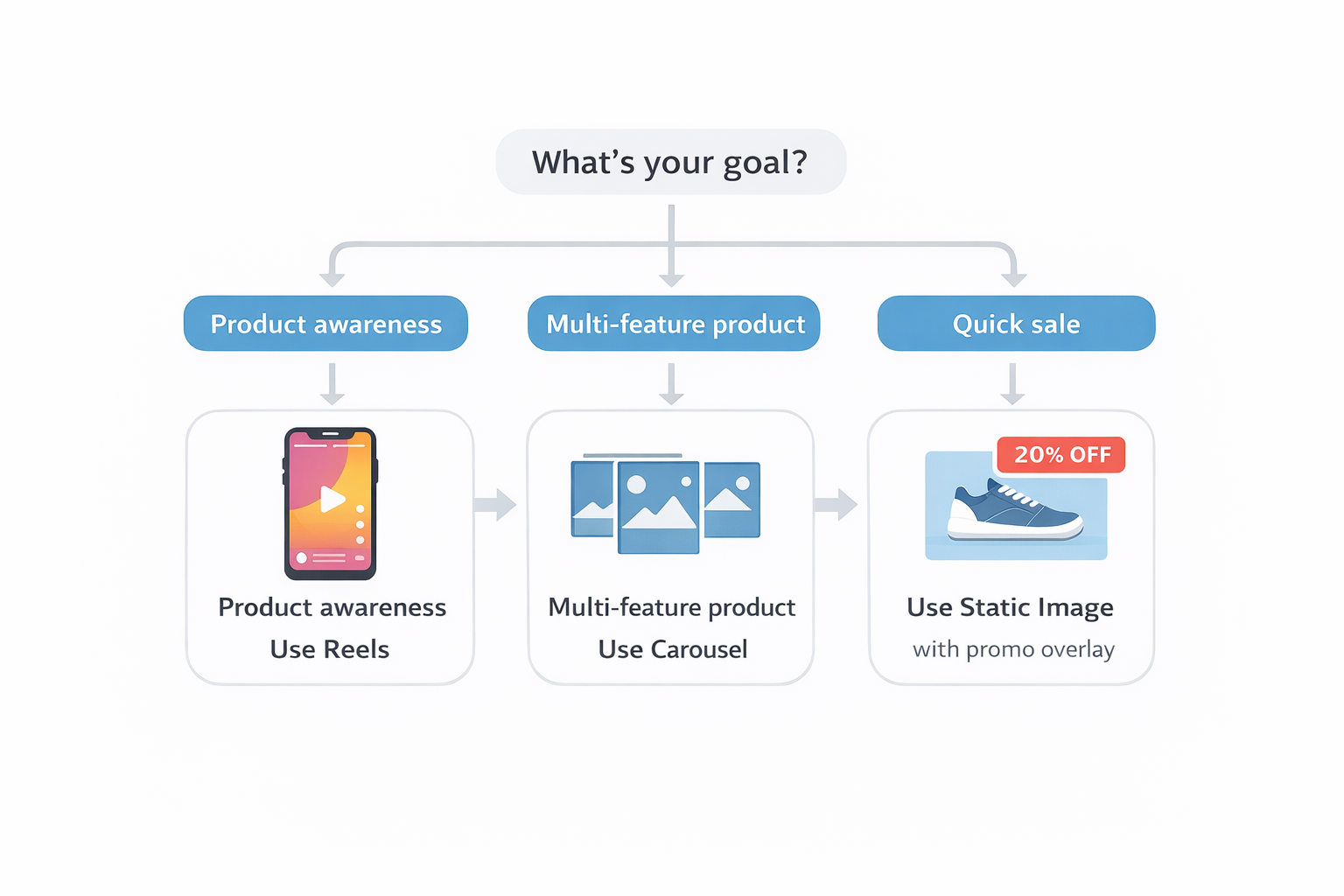
Let’s break it down:
-
Photo ads: Simple and clean. Best for single-product promotions or brand awareness. Keep copy short.
-
Carousel ads: Great for storytelling or showcasing product features. Each card should offer value on its own.
-
Video ads: Ideal for showing results, product demos, or quick tips. Keep them under 15 seconds for feed, 6 seconds for stories.
-
Story/Reels ads: Use vertical formats. Start with motion or a face. Add swipe-up CTAs or product tags.
Tip: Re-use your best organic Reels as ads. If something already performs well on your feed, it’s likely to work as an ad too.
Need help choosing the best format? See what drives real sales in Instagram ads for online stores.
You’re not testing — you're guessing
If you’re only running one version of your ad, you’re not optimizing — you’re gambling.
Testing is how you find what works before spending big.
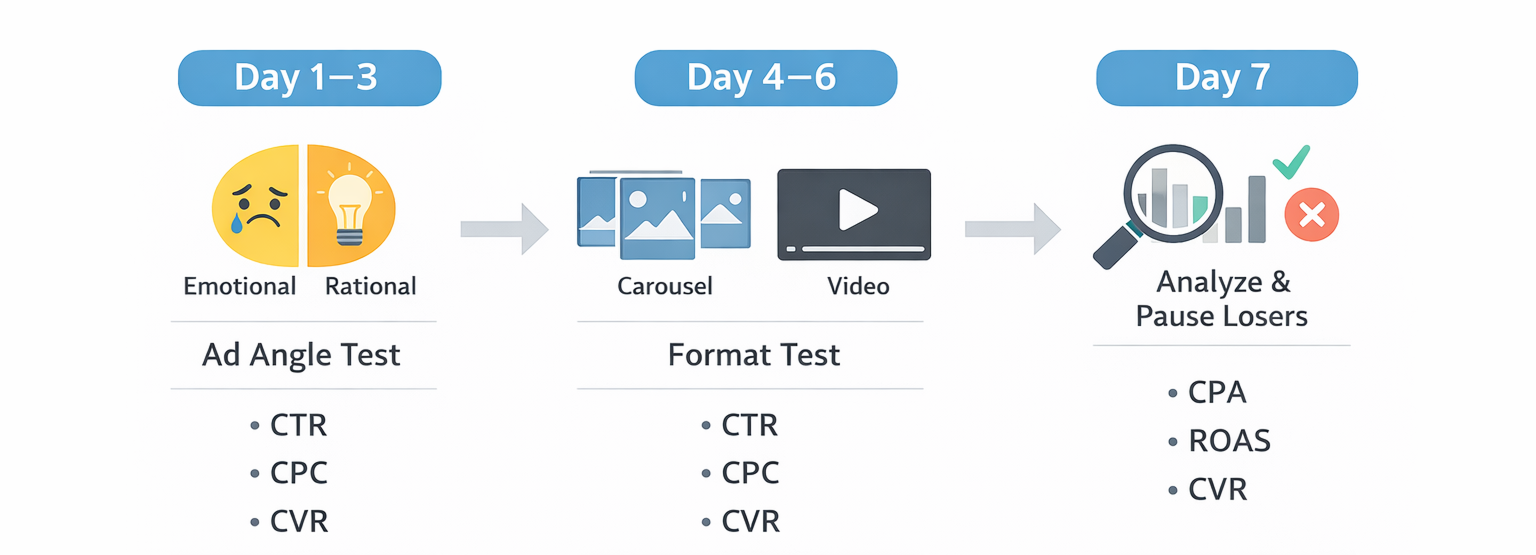
Try this simple structure:
-
Day 1–3: Test two ad angles, like "emotional pain point" vs. "practical benefit."
-
Day 4–6: Test different formats, like video vs. carousel.
-
Day 7: Analyze results and keep the winner.
Even with a small budget ($10–20/day), structured testing reveals what actually drives clicks and conversions.
Pro tip: Keep variables controlled. Don’t test new copy and a new image at once — you won’t know what made the difference.
If you're not sure what to test first, this guide on running clean A/B tests can help.
Low budget, wrong bidding, or both
It’s easy to assume your ad is bad when in reality, your budget or bidding strategy is holding you back.
Here’s what might be happening:
-
Low budget = no learning: If Instagram doesn’t get enough data, it can’t optimize. Start with at least $20/day per ad set for testing.
-
Too many ads in one set: Spreading $10 across five ads gives each one only $2. That’s not enough for a fair test.
-
Automatic bidding confusion: Sometimes, Meta’s automated bidding chooses volume over quality. If you care more about conversions than impressions, test manual bidding or cost caps.
Your landing page turns people away
Clicks are only half the battle. If users land on your site and bounce, you're paying for nothing.
Watch out for these issues:
-
Slow load time: Use tools like GTmetrix or PageSpeed Insights. Aim for under 3 seconds.
-
Not mobile-friendly: Instagram traffic is mobile-first. Buttons must be tappable, text readable, and images responsive.
-
Confusing CTA: What do you want users to do? Don’t bury it. Use one clear CTA — "Shop now," "Get 20% off," or "Book your spot."
Example: A wellness brand saw high CTRs but no sales. Their mobile site was cluttered, with no clear CTA. After redesigning with one bold "Try Now" button and fewer distractions, conversion rates jumped by 60%.
Looking for more ideas? Check out these 7 landing page tips for better conversion rates.
You’re measuring the wrong metrics
Many advertisers shut down ads too early — often because they only look at short-term data.
Here’s what to check instead:
-
7-day click, not 1-day click: Especially for higher-priced products, people need time. Use longer attribution windows.
-
Delayed purchases: Use server-side tracking (like Meta’s CAPI) to capture conversions that happen after users leave the app.
-
Quality signals: Engagement rate, saves, comments, and landing page scroll depth all tell you whether the ad is resonating — even if purchases are slow.
Bonus fixes that go beyond the basics
Once you’ve handled the fundamentals, try these more advanced tactics:
-
Use post IDs from organic winners: Instead of creating a new ad, boost a high-performing organic post. It already has social proof — likes, shares, comments — which can lower CPMs.
-
Retarget viewers of your Reels: Create a custom audience of users who watched 50%+ of your Instagram Reels. Then run a follow-up ad with a product offer.
-
Exclude “clicky” but non-buying audiences: Use exclusions in Meta Ads Manager to remove people who click often but never purchase.
Final thoughts: fix, don’t guess
If your Instagram ads are underperforming, it’s not a reason to give up — it’s a signal to investigate.
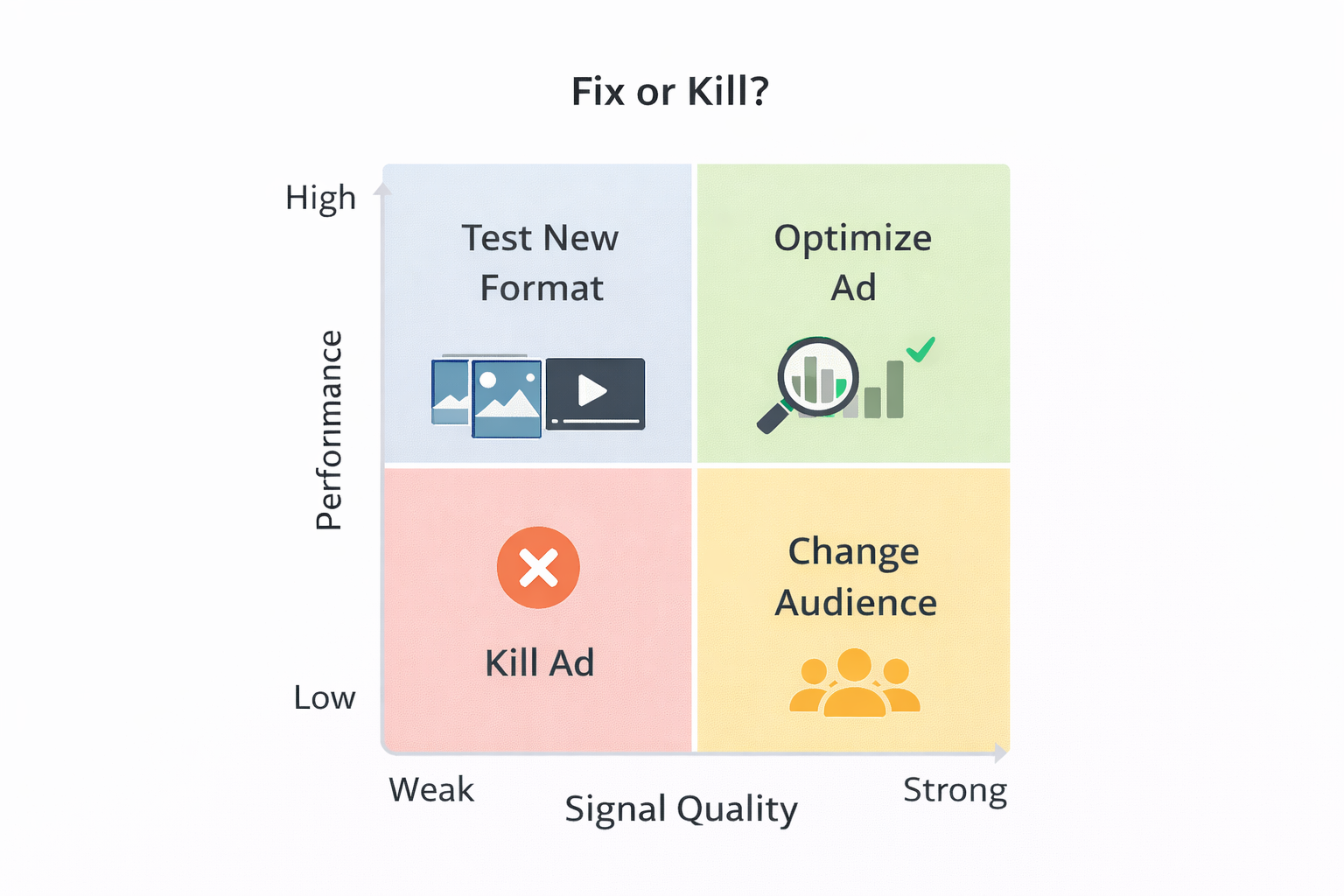
Start by checking:
-
Are you targeting the right audience?
-
Are your visuals made for mobile — not desktop?
-
Are you testing or just hoping?
-
Is your budget too small to gather data?
-
Is your landing page helping — or hurting — conversions?
Instagram ads work when they’re set up with intention. With better targeting, stronger creative, smarter testing, and clear goals, you can turn even a struggling campaign into one that delivers.
It’s not just about running more ads. It’s about running smarter ones.