You run the same video creative across Instagram and Facebook. On Instagram, it generates strong engagement and solid watch time. On Facebook, performance drops.
The targeting is similar. The budget is consistent. The outcome is different because the environment is different.
This is not a creative failure. It is a context mismatch.
Your hook is shaped by platform context
A video hook is never judged in isolation. It is judged inside a feed, within a specific user mindset, and under a distinct delivery model.
Instagram feels fast and highly visual. Facebook feels more conversational and text-oriented.
The first three seconds are interpreted differently on each platform. That difference affects scroll behavior, retention, and distribution. If you want a broader comparison of intent and performance dynamics, review Instagram Ads vs Facebook Ads: Performance Differences.
User intent is not the same across placements
Instagram users expect visual stimulation and rapid pacing. Facebook users expect updates, links, and discussions.
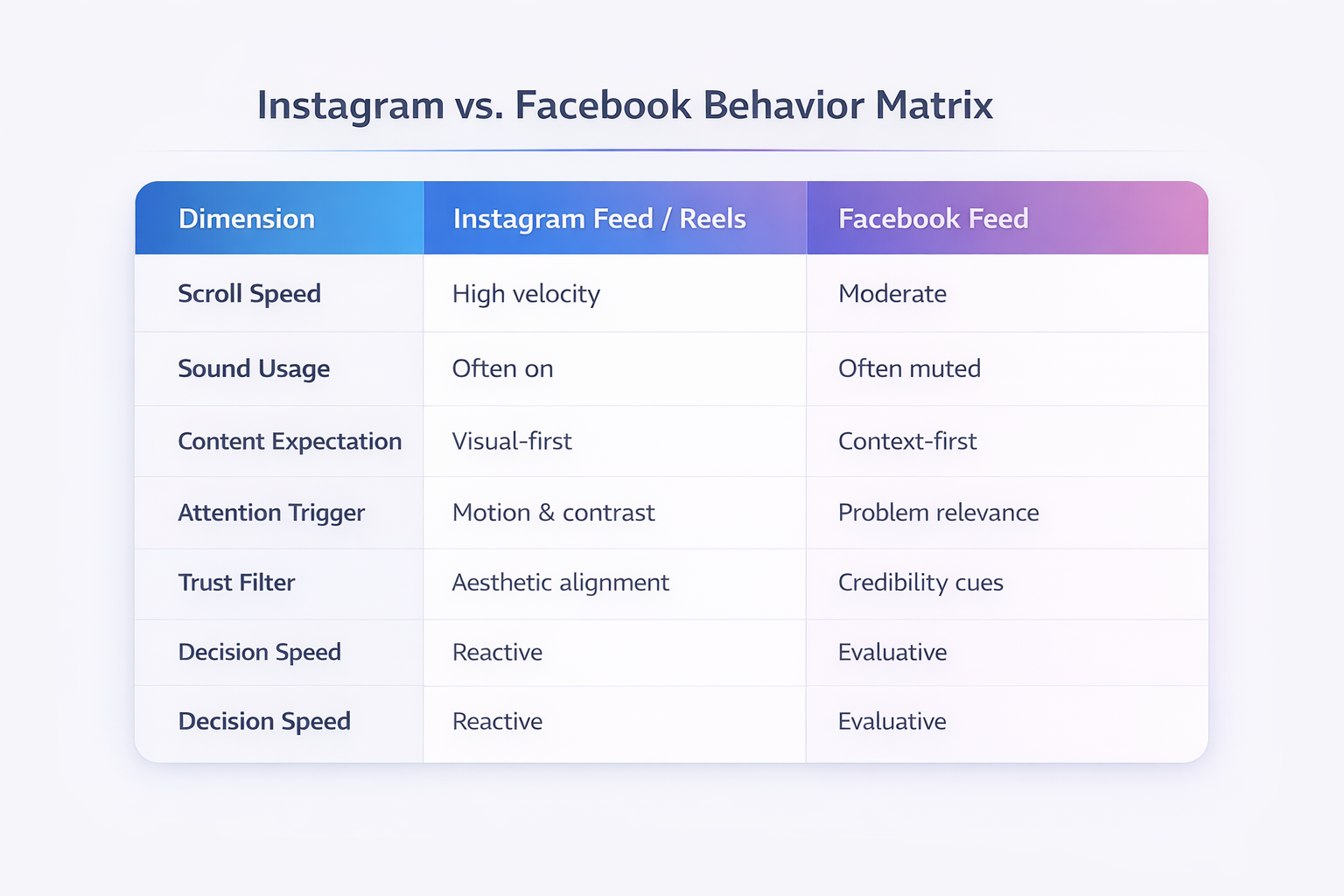
That shift in intent directly affects hook performance.
-
Instagram users scroll quickly and respond to motion; bold visuals and dynamic framing interrupt the feed effectively.
-
Facebook users scroll more deliberately; they look for relevance cues before committing attention.
-
Instagram audiences respond strongly to aesthetic appeal; Facebook audiences respond more to clear problem statements.
-
Instagram content is often consumed with sound; Facebook feed video is frequently watched muted.
Example: fitness coaching campaign
A fitness coach launches a video that opens with a dramatic body transformation and energetic music. On Instagram, the hook performs well, driving strong three-second views and profile visits.
On Facebook, watch time declines sharply. Users scroll before understanding the value of the message.
The coach tests a Facebook-specific intro that begins with a clear on-screen question: “Struggling to lose weight after 35?”. Retention improves because the problem is stated immediately.
The offer remains the same. The framing aligns with platform expectations.
Feed composition changes attention patterns
Instagram feeds are dominated by visual content. Video competes primarily with other videos and images.
Facebook feeds mix video, text posts, links, and comment threads. Users frequently pause to read before watching.
When your hook relies solely on fast movement or visual surprise, it may underperform in a feed where text-driven posts compete for attention. Placement strategy plays a role here, as explained in All Placements Aren’t Equal: Where Your Facebook Ads Perform Best.
Example: B2B SaaS product
A SaaS company promotes a demo with fast UI animations and bold typography in the first seconds. On Instagram, the dynamic opening attracts marketers who are accustomed to visual content.
On Facebook, the same video struggles. Users scroll past because the value proposition is not immediately clear.
The company tests a revised Facebook intro. The first frame includes a clear statement: “You are wasting 20% of your ad budget on cold traffic.” Watch time and link clicks increase because the message is anchored in a specific problem.
The visual quality did not change. The clarity improved.
The algorithm weighs signals differently
Instagram frequently amplifies content that generates rapid engagement signals. Saves, comments, and early interactions influence distribution.
Facebook places greater weight on watch time and downstream actions such as link clicks or conversions.
If your hook creates curiosity but fails to sustain attention, Instagram may still scale it. Facebook may reduce delivery after weak retention signals.
This pattern is closely related to broader cross-platform behavior shifts discussed in Why the Same Ad Performs Differently Across Meta Platforms.
Example: ecommerce product reveal
An ecommerce brand uses a suspense-based hook. The product result appears after five seconds.
On Instagram Reels, users wait for the reveal, and completion rates remain acceptable.
On Facebook feed, drop-off occurs before the result appears. Users expect faster clarity.
The brand tests a Facebook version that shows the final result in the opening frame and then explains how it works. Retention improves because expectations are met earlier.
To evaluate properly, monitor placement-level metrics:
-
Instagram: three-second views, hook hold rate, replays, saves.
-
Facebook: average watch time, 25 percent retention, outbound clicks.
-
Cross-platform: cost per landing page view and post-click behavior.
Blended reporting often hides placement-specific weaknesses. For deeper insight into how creative structure influences outcomes, see How to Structure a High-Converting Facebook Ad: Hook, Body, CTA.
Style influences perceived credibility
Instagram allows more stylized and visually intense creative. Facebook audiences tend to be more skeptical of overtly promotional aesthetics.
Heavy captions, exaggerated gestures, and aggressive typography may feel native on Instagram Stories. In Facebook feed, the same approach can resemble low-trust advertising.
Example: local renovation service
A renovation company runs a vertical video with large animated captions and rapid transitions. Instagram engagement is strong, with direct inquiries.
On Facebook, negative reactions increase and watch time declines.
The company tests a calmer Facebook version that opens with a simple before-and-after image and a short problem-focused headline. Negative feedback drops and click-through rate improves.
Perception affects retention. Retention affects delivery.
Format and cropping affect message clarity
Instagram prioritizes vertical video. Facebook feed supports vertical, square, and landscape formats.
If your hook depends on vertical framing with key details near the edges, it may not translate well in other placements.
Always review safe zones, thumbnail behavior, and how sponsored labels compress the frame before scaling a creative.
A strong hook can fail if essential information is partially hidden.
Audience composition may vary by placement
Even when using the same campaign structure, delivery often skews differently across placements.
Instagram delivery frequently leans younger. Facebook delivery often includes older segments.
If your hook relies on fast editing, slang, or meme references, older Facebook users may disengage quickly.
Review placement-specific data regularly, including age distribution, device breakdown, and frequency. Creative performance is tied to audience context.
How to adapt without full re-production
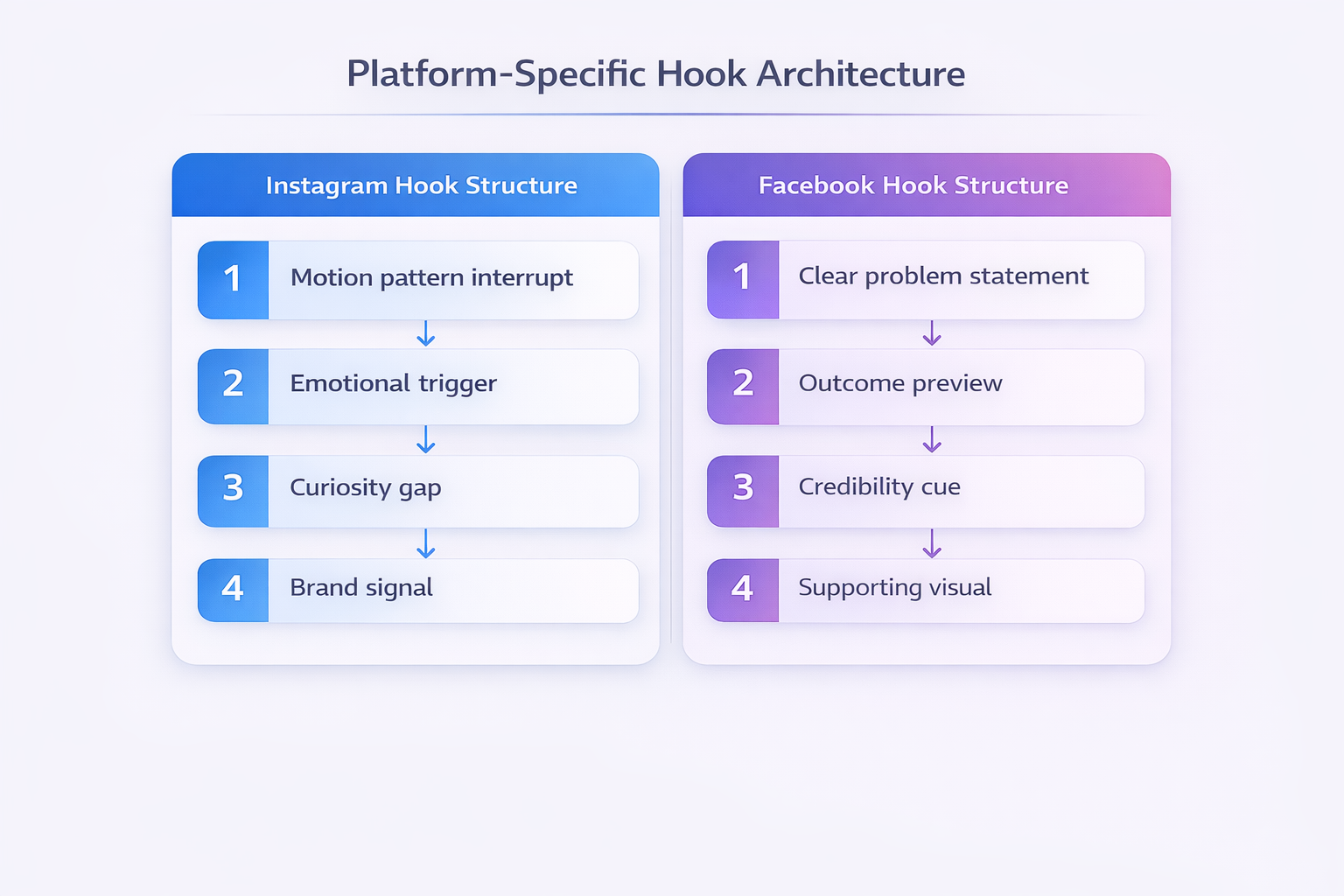
You do not need entirely separate videos. You need placement-aware introductions.
Maintain the core message and adjust the opening sequence to fit each platform’s expectations.
Practical workflow
-
Identify the strongest visual or claim in your existing video.
-
Build two opening variants using that element.
-
Create a faster, visually driven intro for Instagram.
-
Create a clearer, problem-focused intro for Facebook.
-
Upload them as separate creatives and analyze results independently.
Measure hook hold rate and watch time by placement before making broader decisions.
The underlying issue
Your hook succeeds on Instagram because it matches the pace and expectations of that environment. It fails on Facebook because it does not align with how users consume content there.
Instagram rewards speed and visual intensity. Facebook rewards clarity and relevance.
The creative did not stop working. It stopped fitting the platform.