Account-Based Marketing (ABM) has evolved from a niche enterprise tactic into a mainstream B2B growth strategy. According to industry research, over 70% of B2B organizations now run some form of ABM program, and companies with mature ABM initiatives report up to 20% higher win rates compared to non-ABM approaches. At the same time, paid social has become a dominant B2B distribution channel, with LinkedIn alone reaching more than 1 billion professionals globally.
When executed correctly, paid social amplifies ABM by enabling precise account targeting, controlled message sequencing, and scalable personalization. This article provides a structured framework for launching and optimizing an ABM strategy powered by paid social.
Why Combine ABM and Paid Social?
Traditional demand generation casts a wide net and filters leads later. ABM reverses the process: identify high-value accounts first, then concentrate budget and messaging around them.
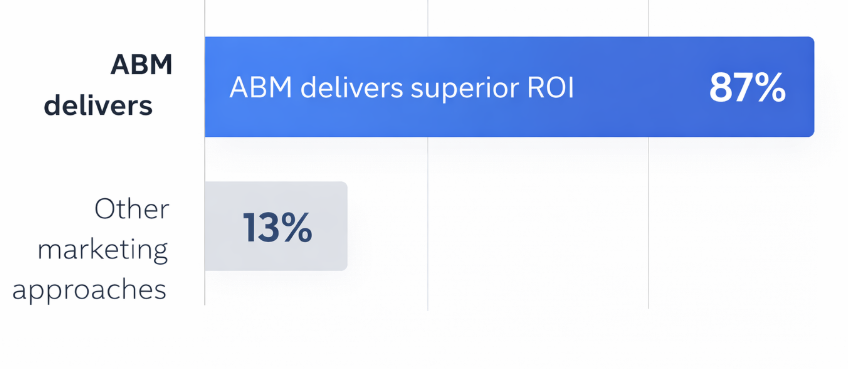
Percentage of marketers who report higher ROI from ABM compared with other marketing strategies
Paid social supports this model through:
-
Account-level targeting (company lists, matched audiences)
-
Role-based segmentation (job title, seniority, function)
-
Sequential storytelling via retargeting
-
Real-time performance measurement
Research shows that 87% of marketers say ABM outperforms other marketing investments in terms of ROI. Meanwhile, B2B buyers typically consume 6–10 pieces of content before engaging with sales. Paid social ensures that your message consistently reaches decision-makers within priority accounts throughout that journey.
Step 1: Define and Segment Target Accounts
Effective ABM starts with a clearly defined Ideal Customer Profile (ICP). Your ICP should include:
-
Industry and vertical
-
Company size and revenue range
-
Geographic region
-
Technology stack (if relevant)
-
Buying triggers and growth signals
Segment accounts into tiers:
-
Tier 1: Strategic, high-value accounts (1:1 personalization)
-
Tier 2: Clustered accounts with shared characteristics (1:few)
-
Tier 3: Broader list with scalable messaging (1:many)
Paid social budgets and creative depth should align with these tiers.
Step 2: Build Matched Audiences
Most major social platforms allow direct account targeting through:
-
Company name uploads
-
CRM list integration
-
Website-based retargeting
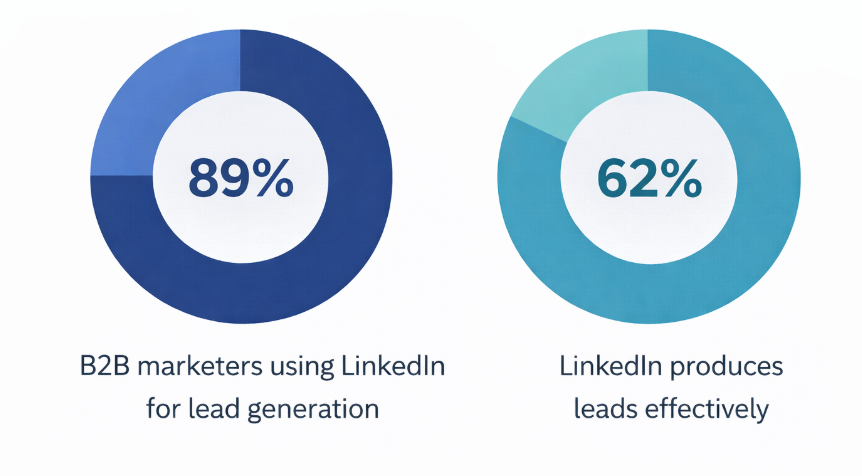
Adoption and effectiveness of LinkedIn as a paid social channel for B2B lead generation
The objective is to ensure ads are served exclusively to stakeholders within selected accounts. Combine account targeting with role filters such as:
-
C-level executives
-
VP/Director-level decision-makers
-
Influencers and technical evaluators
This layered targeting significantly reduces wasted spend and improves message relevance.
Step 3: Align Messaging with Buying Stage
ABM requires stage-specific communication. Paid social campaigns should reflect the buyer’s journey:
Awareness Stage
Goal: Introduce problem framing and category authority.
Ad formats:
-
Thought leadership content
-
Industry reports
-
Short educational videos
Consideration Stage
Goal: Demonstrate capability and differentiation.
Ad formats:
-
Case studies
-
Product walkthroughs
-
Webinar invitations
Decision Stage
Goal: Drive conversion and sales interaction.
Ad formats:
-
Demo offers
-
ROI calculators
-
Executive briefings
Sequential retargeting ensures that accounts exposed to awareness content are later served consideration and decision-stage ads.
Step 4: Personalize at Scale
Personalization is central to ABM success. However, true 1:1 creative for every account is rarely scalable. Instead, use structured personalization layers:
-
Industry-specific value propositions
-
Role-specific messaging angles
-
Dynamic ad copy referencing vertical pain points
According to surveys, 80% of B2B buyers are more likely to engage with brands that provide personalized experiences. Even moderate personalization can increase click-through rates by 20–30% compared to generic ads.
Step 5: Integrate with Sales Workflows
ABM is not purely a marketing initiative. Sales integration is essential.
Best practices include:
-
Real-time account engagement alerts
-
Coordinated outreach after high-intent ad interactions
-
Shared dashboards tracking account progression
Organizations with strong sales-marketing alignment achieve 19% faster revenue growth and 15% higher profitability on average. Paid social engagement signals should directly inform outbound sales prioritization.
Step 6: Measure What Matters
Traditional paid social metrics (CTR, impressions) are insufficient for ABM.
Focus on account-centric KPIs:
-
Account engagement rate
-
Coverage within target accounts
-
Pipeline generated per account tier
-
Deal velocity
-
Win rate by exposed vs. non-exposed accounts
Advanced measurement may include incrementality testing to isolate the impact of paid social on account progression.
Budget Allocation Strategy
ABM with paid social often requires reallocating budget from volume-based lead generation toward quality-driven account coverage.
Recommended framework:
-
40%: Tier 1 accounts (deep personalization, high frequency)
-
35%: Tier 2 clusters
-
25%: Tier 3 scalable campaigns
Monitor frequency caps carefully. High-value accounts may require repeated exposure, but excessive frequency can cause fatigue.
Common Mistakes to Avoid
-
Targeting accounts without validating ICP fit.
-
Running generic creative across all segments.
-
Measuring success purely by leads instead of pipeline.
-
Failing to align campaign timing with sales outreach.
-
Underestimating creative refresh requirements.
ABM campaigns often require longer optimization cycles compared to standard paid campaigns. Patience and data discipline are critical.
Technology Stack Considerations
An effective ABM paid social program typically includes:
-
CRM integration
-
Marketing automation platform
-
Audience enrichment tools
-
Multi-touch attribution analytics
The goal is to create a closed-loop system where paid social engagement informs broader account strategy.
Final Thoughts
Account-Based Marketing combined with paid social provides a scalable framework for targeting high-value accounts with precision. When properly executed, it improves pipeline quality, shortens sales cycles, and increases win rates.
Success depends on disciplined segmentation, structured personalization, cross-functional alignment, and account-level measurement.
Organizations that treat paid social as an integrated ABM activation channel — rather than a standalone lead engine — position themselves for sustainable B2B growth.