
Audience segmentation has evolved from basic demographic filtering to multi-dimensional value modeling. Today’s high-performing campaigns rely on granular rule sets that evaluate user intent signals in real time. Two of the most powerful dimensions for value rule segmentation are geography and device.
When applied correctly, these dimensions can significantly increase return on ad spend (ROAS), reduce cost per acquisition (CPA), and enhance personalization across the funnel.
This article explores how advanced value rule segmentation by geography and device works, why it matters, and how to implement it effectively.
Why Geography Still Matters in Performance Marketing
Geographic segmentation is no longer limited to country-level targeting. Advanced rule-based models incorporate multi-layer geographic signals, including:
-
Country
-
Region/state
-
City
-
ZIP/postal code
-
Urban vs. rural classification
-
Time zone alignment
Key Statistics
-
According to industry benchmarks, campaigns optimized at the regional level can improve conversion rates by 20–30% compared to country-level targeting.
-
Mobile commerce conversion rates in Tier 1 cities are often 1.5x–2x higher than rural averages.
-
Localized messaging can increase engagement rates by up to 40%.
Strategic Use Cases
-
Tier-Based Value Rules
Assign higher bid multipliers to metropolitan regions with proven higher lifetime value (LTV). -
Demand Density Optimization
Increase budget allocation in high-demand ZIP clusters. -
Geo-Intent Triggers
Activate high-value rules when users are located near physical stores or service coverage areas.
By layering geographic insights into value rules, marketers shift from generic targeting to location-aware revenue optimization.
Device-Based Segmentation: Beyond Desktop vs. Mobile
Device segmentation is no longer binary. Advanced rule systems evaluate:
-
Device type (desktop, mobile, tablet)
-
Operating system (iOS, Android, Windows)
-
Browser type
-
Connection type (WiFi vs. cellular)
-
Device price tier (high-end vs. budget devices)
Performance Insights
-
Mobile accounts for over 60% of global web traffic, yet desktop users often show 20–40% higher average order values.
-
iOS users typically demonstrate higher in-app purchase rates compared to Android users in several verticals.
-
High-end device users frequently correlate with stronger purchasing power and higher LTV.
Advanced Device Rule Applications
-
Value Weighting by Device
Apply higher bid values to devices with historically higher LTV. -
Cross-Device Journey Mapping
Recognize that users may research on mobile but convert on desktop. -
Connection-Based Rules
Trigger richer landing experiences for users on WiFi connections while serving lightweight variants to cellular users.
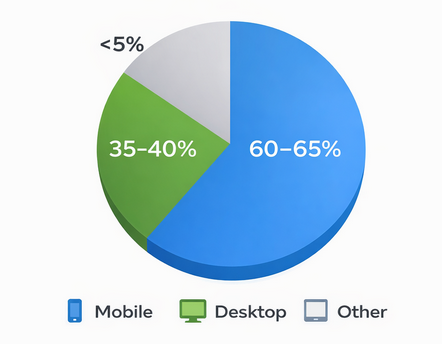
Distribution of global web traffic by device type in 2025, highlighting mobile dominance over desktop traffic
Effective device segmentation ensures that value rules reflect actual purchasing behavior rather than traffic volume alone.
Combining Geography and Device for Predictive Value Modeling
The real advantage emerges when geography and device data are combined into compound rules.
Example of Advanced Rule Stacking
High-value rule activation if:
-
User is located in a Tier 1 metro area
-
Device is high-end iOS
-
Browsing during peak local conversion hours
This layered segmentation enables predictive modeling that approximates intent before conversion occurs.
Impact on Key Metrics
Organizations implementing multi-dimensional value rule segmentation typically observe:
-
15–35% improvement in ROAS
-
10–25% reduction in CPA
-
18–30% increase in conversion rate
-
Higher average order value from premium device and urban clusters
These improvements stem from prioritizing audiences with statistically higher monetization probability.
Implementation Framework
To deploy advanced segmentation effectively, follow a structured framework:
1. Audit Historical Performance Data
Analyze performance by:
-
Geography at multiple levels
-
Device type and OS
-
Combined geo-device performance clusters
Identify statistically significant performance gaps.
2. Create Tiered Value Scores
Assign value multipliers based on:
-
LTV by region
-
Conversion rate by device
-
AOV by geo-device combination
3. Apply Rule Automation
Use automated rule engines to:
-
Adjust bids dynamically
-
Activate/deactivate campaigns by threshold
-
Scale high-performing geo-device clusters
4. Monitor Statistical Significance
Ensure sufficient sample size before applying aggressive scaling. Avoid overfitting to short-term fluctuations.
Common Mistakes to Avoid
-
Over-segmenting without sufficient traffic volume.
-
Ignoring cross-device attribution effects.
-
Applying uniform bid multipliers without validating LTV differences.
-
Neglecting seasonal geographic performance shifts.
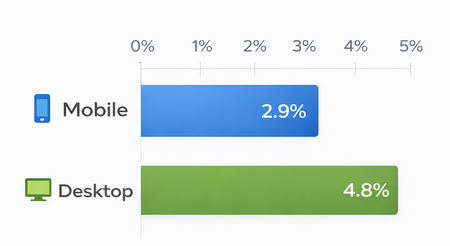
Comparison of average conversion rates for desktop and mobile devices, illustrating higher desktop conversion performance despite mobile traffic volume
Segmentation should enhance clarity, not introduce operational complexity without measurable gain.
Future Outlook: AI-Driven Geo-Device Optimization
Machine learning systems increasingly automate value rule prioritization. Instead of static rules, predictive algorithms evaluate:
-
Real-time intent signals
-
Behavioral scoring
-
Historical geo-device conversion patterns
As privacy regulations reshape data access, first-party behavioral modeling combined with contextual geographic and device signals will become even more critical.
Conclusion
Advanced value rule segmentation by geography and device transforms campaign optimization from reactive bid adjustments into proactive value modeling.
By layering regional demand signals with device-based purchasing patterns, marketers can:
-
Allocate budget more efficiently
-
Prioritize high-intent audiences
-
Increase lifetime value acquisition
-
Improve overall campaign scalability
In competitive digital environments, granular value rule segmentation is no longer optional—it is foundational to sustainable performance growth.
Further Reading
For deeper insights into audience targeting and performance optimization, explore: