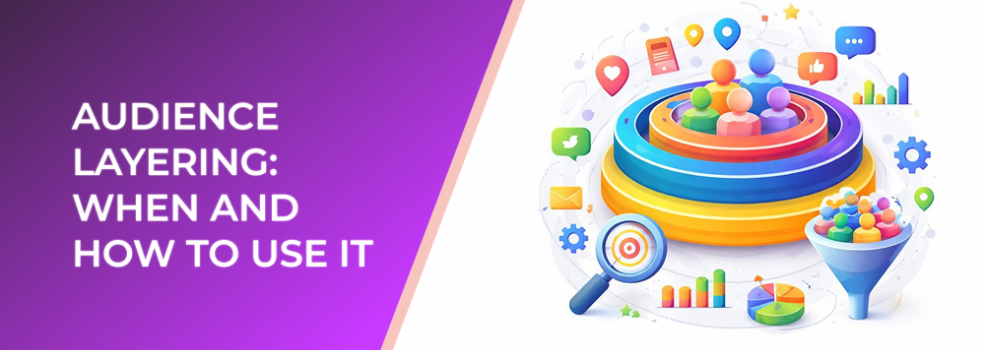
Audience layering is a targeting strategy where multiple audience attributes are combined to narrow or refine who sees your ads. Instead of relying on a single signal—such as an interest or a demographic—you stack multiple conditions to reach people who meet all (or several) of your criteria.
For example, rather than targeting:
-
People interested in fitness
You might layer:
-
People interested in fitness
-
AND who are part of specific online communities
-
AND who have shown recent engagement with similar brands
The result is a more precise audience that aligns closely with intent and relevance.
Why Audience Layering Matters
As advertising platforms continue to limit third-party data and expand automation, audience precision becomes harder to maintain. Layering helps regain control by:
-
Reducing wasted impressions
-
Improving message relevance
-
Increasing conversion efficiency
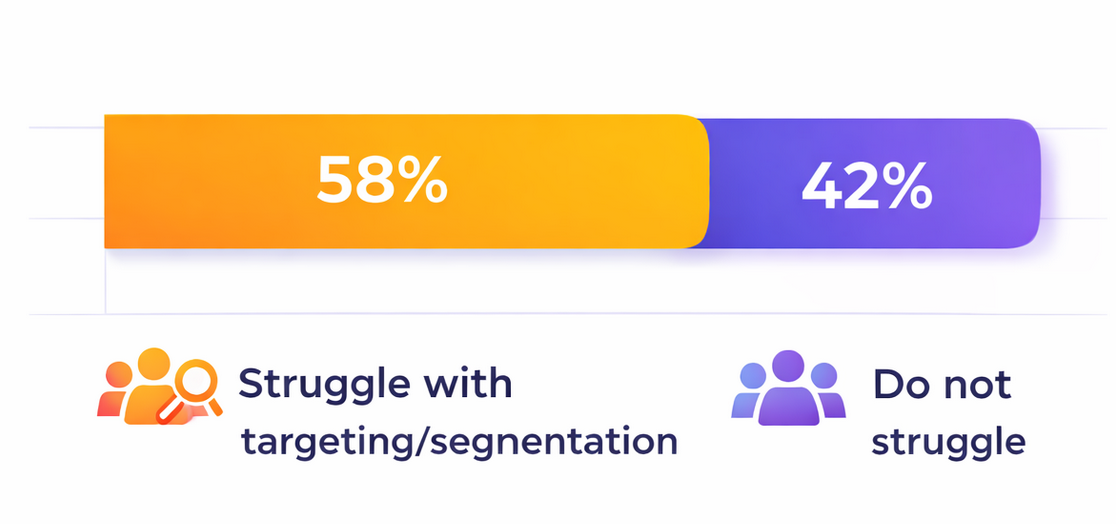
More than half of marketers struggle with audience targeting or segmentation
Industry benchmarks show that campaigns using layered targeting strategies can reduce cost per acquisition by 20–35% compared to broad or single-signal targeting. More importantly, layered audiences often demonstrate higher engagement quality, not just lower costs.
When to Use Audience Layering
Audience layering is not always the right approach. It performs best in specific scenarios.
1. High-Intent or High-Ticket Offers
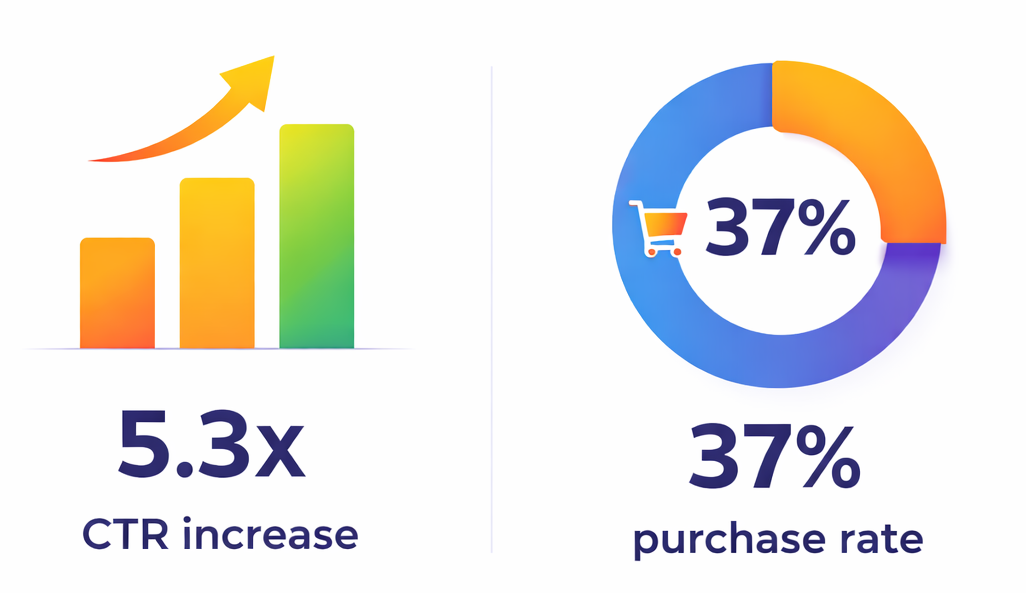
Targeted ads see up to 5.3× higher click-through rates and influence purchases from 37% of social media users
When your product or service requires consideration, trust, or higher spending, relevance matters more than scale. Layering ensures your ads reach people with both interest and contextual alignment.
Statistically, high-intent campaigns that apply at least two targeting layers see up to 2.1× higher conversion rates than interest-only campaigns.
2. Limited Budget Campaigns
If budget constraints prevent broad testing, layering helps concentrate spend on users most likely to convert. Smaller, qualified audiences often outperform larger but loosely defined ones.
Campaign audits consistently show that tightly layered audiences can generate 25–40% higher return on ad spend (ROAS) when daily budgets are limited.
3. Retargeting Expansion
Layering is especially effective when expanding retargeting pools. Adding contextual or behavioral layers helps you scale without drifting into low-quality traffic.
For example, layering previous site visitors with niche community membership or engagement behavior can maintain conversion rates while increasing reach.
When Not to Use Audience Layering
Layering can also become counterproductive if overused.
Avoid heavy layering when:
-
Launching a new campaign with no performance data
-
Testing new creatives or offers
-
Running awareness-focused objectives
Over-layering can shrink audiences too much, causing delivery issues and unstable performance. As a rule of thumb, if reach drops below sustainable levels, remove one layer and reassess.
How to Build Effective Audience Layers
Step 1: Start With a Strong Core Signal
Begin with your most reliable signal—this could be:
-
A proven interest
-
A behavioral segment
-
A known community or group affiliation
This core defines relevance.
Step 2: Add a Qualifier, Not a Filter
The second layer should improve quality, not eliminate scale. Examples include:
-
Engagement behaviors
-
Content interaction patterns
-
Related niche affiliations
Data from campaign benchmarks shows that adding one qualifier layer improves CTR by an average of 18%, while adding more than three layers often reverses gains.
Step 3: Monitor Audience Size and Frequency
Layered audiences require closer monitoring. Watch for:
-
Rising frequency
-
Declining reach
-
Increased CPMs
If frequency exceeds healthy levels without conversion growth, simplify the structure.
Measuring Success in Layered Campaigns
Success is not only about lower costs. Key indicators include:
-
Conversion rate lift compared to unlayered audiences
-
Engagement depth (time on site, repeat actions)
-
Stability of performance over time
In comparative tests, layered audiences deliver more consistent week-over-week performance, with volatility reduced by up to 30% compared to broad targeting strategies.
Final Thoughts
Audience layering is a precision tool, not a default setting. Used strategically, it helps advertisers align intent, context, and behavior into a single, high-quality audience. Used carelessly, it can restrict delivery and limit growth.
The most effective approach is iterative: start simple, add layers intentionally, and let performance—not assumptions—guide your decisions.