In B2B marketing, the terms demand generation and lead generation are often used interchangeably. However, they represent distinct strategies that serve different purposes within the buyer journey. Confusing the two can result in inefficient campaigns, misaligned teams, and lost revenue opportunities.
This article explains the differences between demand generation and lead generation, when to use each, and how to align them for sustainable growth.
What Is Demand Generation?
Demand generation is a long-term strategy focused on creating awareness, interest, and trust among potential buyers before they are actively looking to purchase.
It targets a broader audience and aims to educate the market about problems, solutions, and your category. Instead of capturing immediate conversions, demand generation builds brand familiarity and positions your company as a trusted authority.
Key Characteristics of Demand Generation
-
Focus on awareness and education
-
Targets early-stage buyers
-
Uses ungated content to maximize reach
-
Builds brand credibility and trust
-
Measured by engagement and pipeline influence
Common Demand Generation Tactics
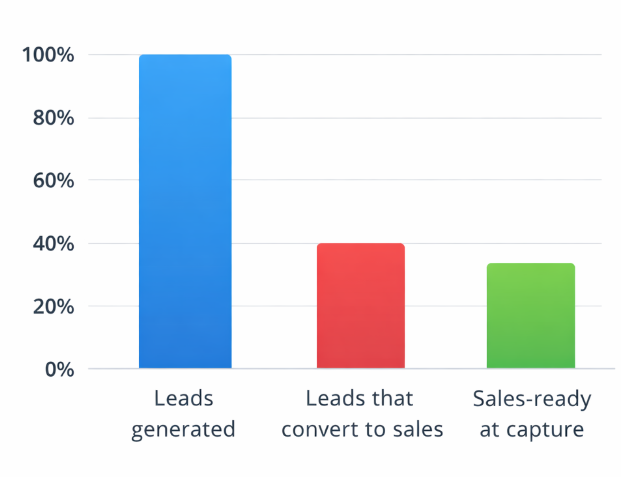
A large share of generated leads never convert, highlighting the gap between lead volume and lead quality
-
Thought leadership content
-
Webinars and virtual events
-
Social media campaigns
-
SEO and content marketing
-
Video marketing
Supporting Statistics
-
95% of B2B buyers are not in-market at any given time
-
Companies with strong brand awareness generate up to 2x more pipeline from inbound sources
-
Content marketing generates three times more leads than traditional marketing while costing 62% less
What Is Lead Generation?
Lead generation is a short-term, conversion-focused strategy aimed at capturing contact information from prospects who have already shown some level of interest.
It typically involves gated content, forms, and direct response campaigns designed to move prospects into the sales funnel.
Key Characteristics of Lead Generation
-
Focus on capturing contact information
-
Targets mid- to late-stage buyers
-
Uses gated assets and forms
-
Prioritizes conversion rates
-
Measured by lead volume and cost per lead
Common Lead Generation Tactics
-
Landing pages and forms
-
Paid advertising campaigns
-
Email capture campaigns
-
Downloadable resources (ebooks, whitepapers)
-
Retargeting campaigns
Supporting Statistics
-
68% of B2B companies struggle with lead generation
-
Only 27% of leads are sales-ready when first captured
-
Organizations that nurture leads generate 50% more sales-ready leads at 33% lower cost
Demand Generation vs Lead Generation: Key Differences
| Aspect | Demand Generation | Lead Generation |
|---|---|---|
| Goal | Build awareness and interest | Capture leads |
| Funnel Stage | Top of funnel | Middle to bottom of funnel |
| Content | Mostly ungated | Mostly gated |
| Audience | Broad and early-stage | More targeted and intent-driven |
| Metrics | Engagement, reach, pipeline influence | Leads, CPL, conversion rates |
How Demand Generation and Lead Generation Work Together
Demand generation and lead generation are not competing strategies—they are complementary.
Demand generation fills the top of the funnel by attracting and educating a wide audience. Lead generation then converts that interest into identifiable prospects who can be nurtured and passed to sales.
Without demand generation, lead generation campaigns often suffer from low conversion rates and high acquisition costs. Without lead generation, demand generation efforts may fail to produce measurable pipeline outcomes.
Integrated Approach
To maximize results, organizations should:
-
Build awareness first, then capture demand
-
Align marketing and sales teams around shared goals
-
Use data to identify high-intent audiences
-
Combine content strategies with targeted outreach
When to Prioritize Each Strategy
Prioritize Demand Generation When:
-
Entering a new market
-
Launching a new product or category
-
Experiencing low brand awareness
-
Building long-term pipeline
Prioritize Lead Generation When:
-
You have existing demand to capture
-
Sales teams need immediate pipeline
-
Running targeted campaigns for specific accounts
-
Optimizing conversion efficiency
Common Mistakes to Avoid
-
Treating lead generation as a substitute for demand generation
-
Over-relying on gated content too early in the buyer journey
-
Ignoring brand awareness metrics
-
Focusing only on lead volume instead of quality
-
Failing to nurture leads after capture
Best Practices for B2B Marketers
-
Invest in high-quality educational content
-
Use intent data to prioritize accounts
-
Balance paid and organic channels
-
Implement lead scoring and nurturing workflows
-
Continuously measure and optimize performance
Conclusion
Demand generation and lead generation serve different but equally important roles in B2B marketing. A balanced strategy that builds awareness while capturing and converting demand is essential for sustainable growth.
By understanding how these approaches differ—and how they complement each other—organizations can create more efficient marketing systems, improve lead quality, and drive consistent revenue growth.
Suggested Articles to Read Next