Prospecting is no longer a linear activity driven by manual outreach and static lists. Today’s high-performing teams rely on scalable frameworks that combine data intelligence, segmentation, automation, and continuous optimization. Without a structured system, prospecting efforts become inconsistent, inefficient, and difficult to expand.
A scalable prospecting framework ensures that pipeline generation is predictable, measurable, and adaptable as your business grows. According to industry research, companies with structured prospecting processes achieve up to 42% higher quota attainment and generate 30% more pipeline compared to those without standardized systems.
What Is a Scalable Prospecting Framework?
A scalable prospecting framework is a repeatable system designed to identify, prioritize, and engage potential customers at scale. It integrates data sources, targeting logic, messaging strategies, and automation tools into a cohesive process.
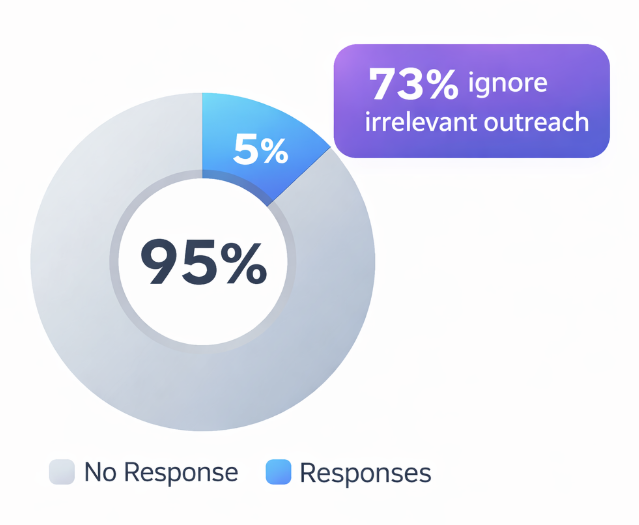
The majority of cold outreach fails to generate engagement, highlighting the importance of relevance and targeting
Key characteristics include:
-
Repeatability: Processes can be replicated across teams and markets
-
Flexibility: Ability to adapt to different segments and campaigns
-
Data-driven decision-making: Continuous improvement based on performance metrics
-
Automation: Reduction of manual effort without losing relevance
Organizations that adopt structured frameworks report up to 50% reduction in time spent on manual prospecting tasks and a 25% increase in response rates.
Core Components of a Scalable Prospecting System
1. Data Infrastructure and Audience Intelligence
Effective prospecting starts with high-quality data. This includes firmographic, technographic, and behavioral signals that help define your ideal customer profile.
Key data layers:
-
Firmographic data: Industry, company size, revenue
-
Technographic data: Tools and platforms used by prospects
-
Intent data: Signals indicating purchase readiness
-
Engagement data: Historical interactions and responses
Organizations that leverage intent data see up to a 2x increase in conversion rates and reduce acquisition costs by approximately 20%.
2. Segmentation and Prioritization
Not all prospects should be treated equally. Segmentation allows teams to focus on high-value accounts and tailor messaging accordingly.
Best practices include:
-
Tiering accounts based on potential value
-
Creating micro-segments for personalized outreach
-
Using scoring models to prioritize engagement
Research shows that segmented campaigns can deliver 760% higher revenue compared to non-segmented approaches.
3. Messaging Frameworks and Personalization
Scalability does not mean generic communication. The most effective systems balance automation with personalization.
Key elements:
-
Modular messaging templates
-
Dynamic personalization fields
-
Value-based positioning
Personalized outreach improves reply rates by up to 3x, while maintaining efficiency through structured templates.
4. Multi-Channel Orchestration
Modern prospecting requires coordinated engagement across multiple channels, including email, social platforms, and paid media.
A scalable framework ensures:
-
Consistent messaging across channels
-
Timely follow-ups
-
Integrated tracking of interactions
Companies using multi-channel strategies report 287% higher engagement rates compared to single-channel approaches.
5. Automation and Workflow Design
Automation is critical for scaling prospecting efforts without increasing headcount.
Examples of automation:
-
Lead enrichment and data syncing
-
Trigger-based outreach sequences
-
Automated audience updates
Teams that implement automation reduce manual workload by up to 60% and increase productivity significantly.
6. Measurement and Continuous Optimization
A scalable system must be continuously refined based on performance data.
Key metrics to track:
-
Conversion rates
-
Cost per lead
-
Response and engagement rates
-
Pipeline contribution
Organizations that adopt data-driven optimization improve campaign performance by 20–30% over time.
Building Your Framework: Step-by-Step
Step 1: Define Your Ideal Customer Profile (ICP)
Start by identifying the characteristics of your best customers. Analyze historical data to determine which segments deliver the highest lifetime value.
Step 2: Centralize and Enrich Your Data
Ensure all prospect data is accurate, up-to-date, and enriched with relevant signals. Data quality directly impacts targeting accuracy and campaign performance.
Step 3: Design Segmentation and Scoring Models
Develop clear criteria for prioritizing prospects. Use scoring systems to identify high-intent and high-value opportunities.
Step 4: Develop Messaging Playbooks
Create standardized messaging frameworks that can be adapted for different segments. Focus on value propositions and pain points.
Step 5: Implement Multi-Channel Workflows
Build coordinated outreach sequences across multiple channels. Ensure timing and messaging are aligned.
Step 6: Automate and Scale
Introduce automation gradually, starting with repetitive tasks. Expand automation as processes become more stable.
Step 7: Analyze and Optimize
Regularly review performance metrics and refine your framework. Continuous improvement is essential for long-term scalability.
Common Challenges and How to Overcome Them
Data Quality Issues
Poor data leads to inaccurate targeting and wasted effort. Invest in data validation and enrichment processes to maintain accuracy.
Over-Automation
Excessive automation can result in impersonal outreach. Balance efficiency with relevance by maintaining personalization elements.
Lack of Alignment Between Teams
Sales and marketing misalignment reduces effectiveness. Establish shared goals, metrics, and communication processes.
Scaling Too Quickly
Rapid scaling without a solid foundation can lead to inefficiencies. Validate processes before expanding.
Future Trends in Scalable Prospecting
The evolution of prospecting frameworks is driven by advancements in data and automation technologies.
Key trends include:
-
Increased use of AI for predictive targeting
-
Greater reliance on intent and behavioral data
-
Real-time personalization at scale
-
Deeper integration between prospecting and revenue operations
Organizations that adopt advanced data-driven strategies are expected to outperform competitors by up to 25% in revenue growth over the next few years.
Conclusion
Building a scalable prospecting framework is essential for sustainable growth. By combining data intelligence, segmentation, automation, and continuous optimization, organizations can create systems that generate consistent and predictable pipeline.
The key is not just scaling activity, but scaling effectiveness. A well-designed framework enables teams to reach the right prospects, with the right message, at the right time.
Recommended Articles