Audience segmentation is a foundational element of modern marketing strategy. Two of the most widely used approaches—behavioral segmentation and demographic segmentation—offer distinct perspectives on how to categorize and engage potential customers.
While demographic segmentation focuses on observable traits such as age, gender, and income, behavioral segmentation analyzes how users interact with products, services, and digital environments. Choosing the right approach—or the right combination—can have a measurable impact on campaign performance.
What Is Demographic Segmentation?
Demographic segmentation divides an audience based on statistical characteristics. These commonly include:
-
Age
-
Gender
-
Income level
-
Education
-
Occupation
-
Marital status
This method is widely used due to its simplicity and accessibility. Demographic data is often readily available through surveys, CRM systems, and third-party data providers.
Advantages of Demographic Segmentation
-
Easy to collect and analyze
-
Useful for broad targeting and messaging
-
Helps define general customer profiles
Limitations of Demographic Segmentation
-
Lacks insight into intent and motivation
-
Assumes similar behavior within demographic groups
-
Can lead to overly generic campaigns
Key Statistics
-
62% of marketers report that demographic data alone is insufficient for effective personalization.
-
Campaigns based solely on demographic segmentation see up to 30% lower engagement compared to behavior-driven campaigns.
What Is Behavioral Segmentation?
Behavioral segmentation categorizes users based on their actions, interactions, and decision-making patterns. This includes:
-
Website activity
-
Purchase history
-
Product usage
-
Content engagement
-
Response to previous campaigns
Rather than focusing on who the customer is, behavioral segmentation emphasizes what the customer does.
Advantages of Behavioral Segmentation
-
Provides insight into real user intent
-
Enables highly personalized messaging
-
Improves timing and relevance of campaigns
Limitations of Behavioral Segmentation
-
Requires more advanced data collection and analysis
-
May involve complex data infrastructure
-
Can be harder to scale without automation
Key Statistics
-
Companies using behavioral segmentation report up to 85% higher sales growth compared to those relying on basic segmentation.
-
Personalized campaigns based on user behavior can increase conversion rates by up to 202%.
Behavioral vs Demographic Segmentation: Key Differences
| Aspect | Demographic Segmentation | Behavioral Segmentation |
|---|---|---|
| Focus | Who the customer is | What the customer does |
| Data Type | Static | Dynamic |
| Personalization Level | Moderate | High |
| Predictive Power | Limited | Strong |
| Implementation Complexity | Low | Medium to High |
Demographic segmentation provides a useful starting point, but behavioral segmentation delivers deeper insights that drive action.
When to Use Each Approach
Use Demographic Segmentation When:
-
Launching broad awareness campaigns
-
Entering new markets
-
Defining initial audience personas
Use Behavioral Segmentation When:
-
Optimizing conversion funnels
-
Running retargeting campaigns
-
Personalizing content and offers
In practice, the most effective strategies integrate both approaches.
Combining Behavioral and Demographic Data
A hybrid segmentation strategy allows marketers to leverage the strengths of both models. For example, combining age and income data with purchase history and browsing behavior can create highly refined audience segments.
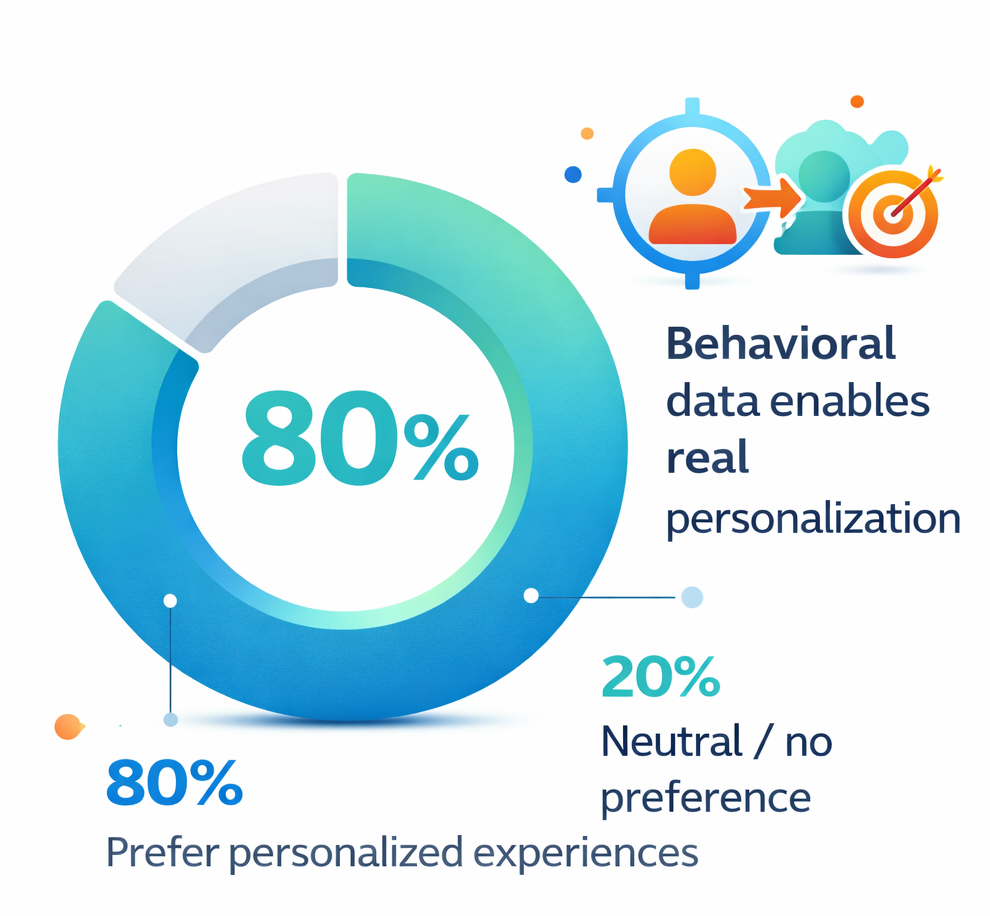
Most consumers expect personalized experiences, making behavior-driven segmentation essential for effective targeting
This approach enables:
-
More accurate targeting
-
Better customer journey mapping
-
Higher ROI on marketing spend
Supporting Statistics
-
Organizations using combined segmentation strategies see up to 2.5x higher marketing ROI.
-
74% of consumers feel frustrated when content is not personalized based on their behavior.
Practical Example
Consider two users:
-
User A: 35-year-old professional, high income
-
User B: 35-year-old professional, high income
From a demographic perspective, these users appear identical. However, behavioral data may reveal:
-
User A frequently visits product pages and abandons carts
-
User B engages with educational content but rarely purchases
These insights enable completely different messaging strategies, despite identical demographic profiles.
Conclusion
Demographic segmentation remains a valuable tool for defining broad audience characteristics, but it is no longer sufficient on its own. Behavioral segmentation provides the depth and context needed to understand intent, predict actions, and deliver meaningful engagement.
Marketers who combine both approaches are better positioned to create targeted, data-driven campaigns that resonate with modern audiences and drive measurable results.