Most ad accounts rely on targeting rules that are set once and rarely revisited. Interests, lookalikes, and demographic filters may work initially, but they degrade as audiences saturate, behavior shifts, and platforms update their delivery logic. When targeting stays static, costs rise and incremental gains disappear.
A self-improving targeting system treats every campaign as a data input. Instead of asking whether targeting is “right or wrong,” it asks how targeting can evolve based on real outcomes.
What “Self-Improving” Really Means
A targeting system improves automatically when it:
-
Collects structured performance signals
-
Feeds those signals back into future audience decisions
-
Adjusts reach, exclusions, and priorities without manual rebuilds
This does not require complex machine learning. In many cases, consistent feedback loops outperform overly sophisticated models that lack clean data.
Core Signals That Drive Improvement
Effective systems rely on a small number of high-quality signals rather than dozens of weak ones.
Primary signals
-
Conversions and qualified leads
-
Cost per acquisition (CPA)
-
Conversion rate by audience segment
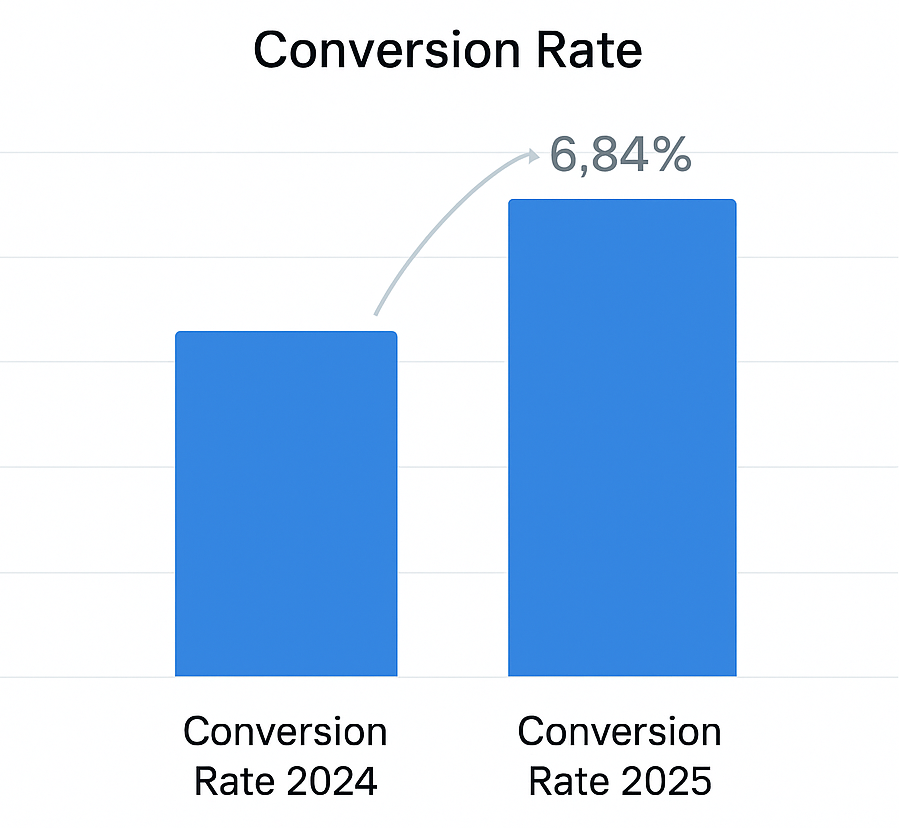
Year-over-year increase in average conversion rates highlights the value of ongoing targeting optimization
Secondary signals
-
Click-through rate (CTR)
-
Time-to-conversion
-
Frequency and decay curves
According to industry benchmarks, advertisers that optimize targeting based on post-click and post-conversion data see conversion rates improve by 20–30% compared to those optimizing only for CTR.
Building the Feedback Loop
The system improves only if data flows in one direction: from results back to targeting logic.
-
Segment results by audience source
Track performance at the level where targeting decisions are made—interests, communities, behaviors, or custom groups. -
Score audiences consistently
Assign a simple performance score based on CPA efficiency and volume stability. Avoid changing scoring rules mid-cycle. -
Promote winners, suppress losers
Increase exposure to segments that outperform baseline CPA and gradually reduce spend on underperforming ones instead of turning them off immediately. -
Recycle learning into new tests
Use top-performing segments to inform the next generation of audiences, rather than starting from scratch.
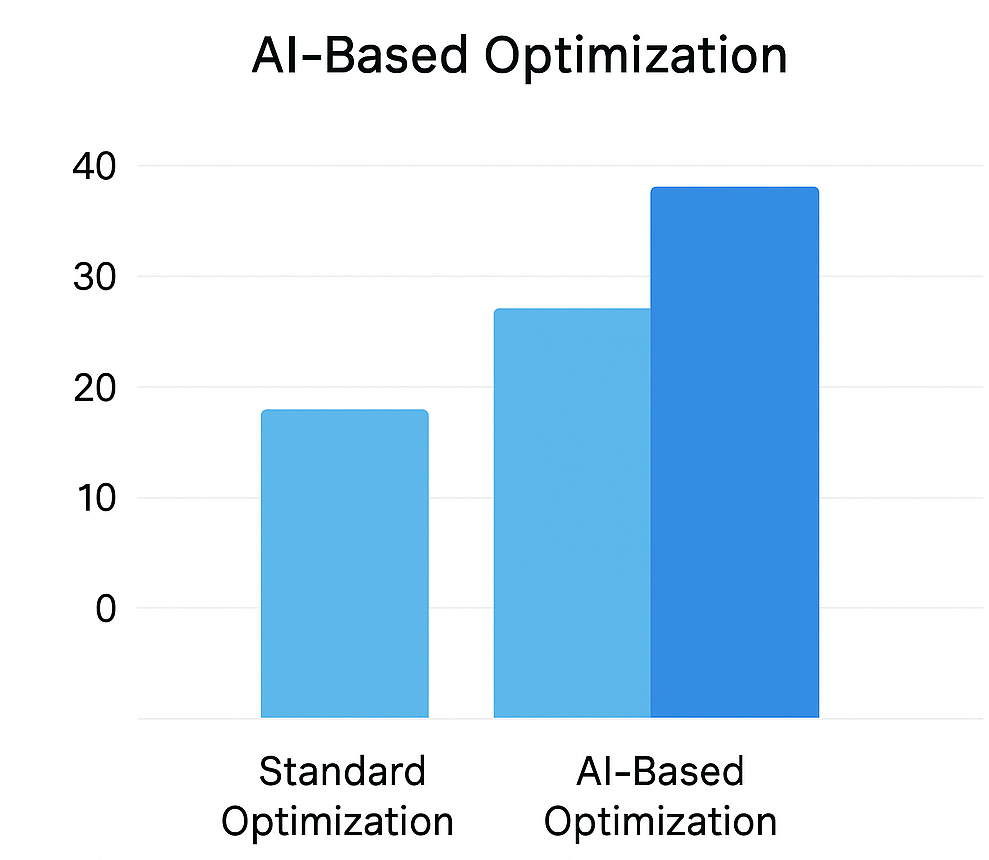
AI-based optimization can boost conversions and improve cost efficiency compared to traditional targeting approaches
Advertisers using structured audience scoring report up to 25% lower CPA volatility over time.
Designing for Compounding Gains
Compounding happens when each iteration starts from a stronger baseline than the previous one.
Key design principles:
-
Keep audience definitions stable long enough to learn
-
Refresh creatives without resetting targeting history
-
Separate testing budgets from scaling budgets
Data from long-running accounts shows that campaigns with stable targeting foundations and iterative refinement deliver 15–40% higher lifetime efficiency than frequently rebuilt campaigns.
Avoiding Common Failure Points
Self-improving systems break when:
-
Audiences are changed too frequently to accumulate signal
-
Too many micro-segments dilute data
-
Short-term fluctuations override long-term trends
A practical rule is to require statistical consistency over multiple weeks before making structural targeting changes.
Measuring Progress Over Time
Success should be measured longitudinally, not campaign by campaign.
Useful metrics include:
-
Rolling 30- and 60-day CPA trends
-
Percentage of spend allocated to proven segments
-
Speed at which new audiences reach baseline performance
On average, mature targeting systems reduce learning periods for new campaigns by 30–50% compared to isolated launches.
How This Fits Into a Scalable Growth Stack
A self-improving targeting system becomes the foundation for creative testing, budget automation, and channel expansion. When targeting learns automatically, teams can focus on higher-impact decisions instead of constant manual adjustments.