
Precision targeting is no longer optional in performance marketing. As acquisition costs rise and privacy regulations limit third-party tracking, micro-segmentation has emerged as one of the most effective strategies for increasing return on ad spend (ROAS).
Why Micro-Segmentation Matters in 2026
Digital advertising costs continue to climb across major platforms. According to recent industry benchmarks, average cost-per-click (CPC) has increased by more than 15% year-over-year in competitive B2B sectors. At the same time, broad audience targeting often results in inefficient spend allocation, lower engagement rates, and reduced ROAS.
Micro-segmentation addresses this challenge by dividing large audiences into highly specific, behavior-driven groups based on firmographic, demographic, technographic, and intent-based data.
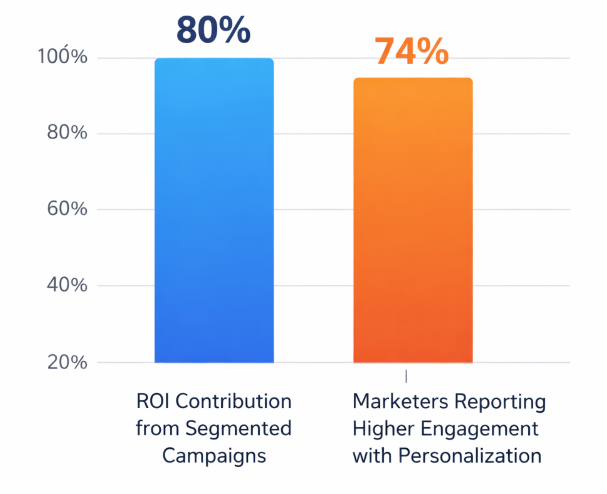
Marketing ROI is strongly driven by audience-based segmentation and personalization — nearly 80% of ROI results from segmented, targeted campaigns and 74% of marketers report higher engagement with personalization
Research shows:
-
Personalized campaigns can improve conversion rates by up to 202% compared to generic messaging.
-
Companies using advanced segmentation report up to 760% increase in revenue from segmented campaigns.
-
Behavioral targeting can increase click-through rates (CTR) by 2–3x compared to standard demographic targeting.
These gains are not incremental. They fundamentally change the efficiency model of paid acquisition.
What Is Micro-Segmentation?
Micro-segmentation is the practice of dividing a broad target market into narrowly defined audience clusters based on multiple overlapping criteria. Instead of targeting "Marketing Managers in SaaS," micro-segmentation might focus on:
-
Marketing Directors at SaaS companies
-
50–200 employees
-
Using HubSpot and Salesforce
-
Hiring SDR roles in the past 3 months
-
Located in North America
-
Showing recent intent signals related to outbound automation
Each added layer reduces noise and increases relevance.
The objective is not smaller reach for its own sake. The objective is higher message-to-market fit.
Core Data Layers for Effective Micro-Segmentation
1. Firmographic Segmentation
Includes company-level attributes:
-
Industry
-
Employee count
-
Revenue range
-
Growth stage
-
Geographic presence
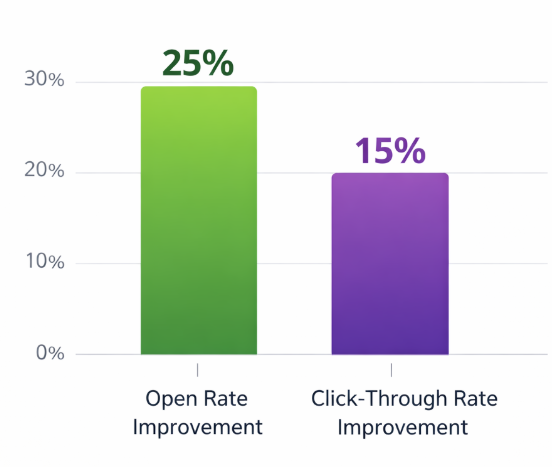
Segmentation dramatically improves campaign engagement — demographic-based segmentation can boost email open rates by 25% and click-through rates by 15% compared to generic targeting
Segmenting by firmographics ensures your offer aligns with organizational scale and maturity.
2. Technographic Segmentation
Technology stack data allows targeting based on tools already in use. For example:
-
CRM platform
-
Marketing automation software
-
Sales engagement tools
-
Analytics platforms
Technographic targeting is particularly powerful in B2B campaigns, where compatibility and integration capabilities influence purchasing decisions.
3. Behavioral & Intent Segmentation
Intent data identifies prospects actively researching relevant solutions. Signals may include:
-
Content consumption patterns
-
Job postings
-
Website visits
-
Ad engagement behavior
Campaigns built on high-intent audiences often deliver significantly higher ROAS because they prioritize in-market buyers.
4. Role-Based Segmentation
Job title targeting should go beyond generic categories. Decision-making authority varies widely between:
-
Director-level
-
VP-level
-
C-suite
-
Operations managers
Message framing must align with each role’s priorities: revenue growth, efficiency, compliance, or operational scalability.
Step-by-Step Framework to Build Micro-Segmented Audiences
Step 1: Start With Revenue-Backed ICP Data
Analyze closed-won accounts to identify:
-
Average deal size by segment
-
Sales cycle length
-
Retention metrics
-
Expansion potential
High-ROAS campaigns begin with segments that already demonstrate revenue efficiency.
Step 2: Layer Attributes Strategically
Avoid over-segmentation at the start. Begin with 2–3 high-impact filters (industry + company size + intent) and test performance. Gradually add technographic and behavioral layers to refine.
A controlled expansion model prevents audience fragmentation and data dilution.
Step 3: Customize Creative Per Segment
Micro-segmentation without tailored messaging underperforms. Align:
-
Ad copy
-
Landing page headlines
-
Case studies
-
Value propositions
According to performance benchmarks, message-match consistency can improve conversion rates by 30% or more.
Step 4: Optimize Budget Allocation by Segment Performance
Shift spend toward micro-segments demonstrating:
-
Higher CTR
-
Lower cost per acquisition (CPA)
-
Shorter sales cycles
-
Stronger pipeline contribution
Over time, your budget distribution should reflect revenue yield rather than audience size.
Common Mistakes That Reduce ROAS
-
Over-Narrowing Too Early
Excessive filtering can result in limited scale and unstable delivery. -
Ignoring Data Freshness
Outdated firmographic or technographic data reduces targeting accuracy. -
Uniform Messaging Across Segments
Different roles and industries respond to different value drivers. -
Measuring Only Front-End Metrics
High CTR does not guarantee revenue impact. Pipeline and closed-won metrics must guide optimization.
Performance Impact: What to Expect
Organizations implementing structured micro-segmentation commonly report:
-
25–40% reduction in cost per qualified lead
-
20–35% increase in ROAS within 90 days
-
Improved sales alignment due to higher lead quality
-
More predictable pipeline generation
While results vary by industry and budget size, the directional impact is consistent: precision improves efficiency.
Scaling Micro-Segmented Campaigns
Once high-performing micro-segments are identified:
-
Replicate across adjacent industries
-
Expand geographically
-
Introduce lookalike modeling based on top converters
-
Build retargeting pools from high-intent clusters
Scaling should be systematic, not broad.
Final Thoughts
Micro-segmentation is not simply a targeting tactic. It is a structural shift in how performance marketing budgets are deployed. As advertising ecosystems become more competitive and privacy constraints increase, precision will determine profitability.
Marketers who invest in layered audience intelligence and revenue-based optimization will consistently outperform those relying on broad demographic targeting.