Modern lead generation is no longer about volume alone. High-performing organizations focus on quality, ensuring that only the most relevant and ready prospects move forward. Building qualification layers into lead funnels allows teams to systematically filter, prioritize, and nurture leads based on their likelihood to convert.
According to recent industry research, companies that implement structured lead qualification processes experience up to a 50% increase in sales-ready leads and a 30% reduction in sales cycle length. This makes qualification not just an operational improvement, but a strategic necessity.
What Are Qualification Layers?
Qualification layers are predefined checkpoints within a lead funnel that assess whether a prospect meets specific criteria before progressing further. These criteria can include demographic fit, behavioral signals, engagement level, and intent.
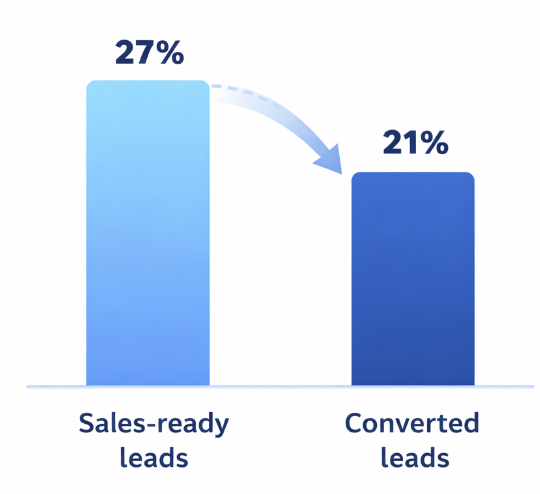
Only a small portion of leads are ready for sales, and even fewer convert—highlighting the importance of qualification layers
Instead of treating all leads equally, qualification layers introduce a tiered system that ensures only high-potential prospects reach sales teams.
Common Qualification Criteria
-
Firmographics: industry, company size, revenue
-
Behavioral data: website visits, content downloads, email engagement
-
Intent signals: search behavior, competitor comparisons
-
Budget, authority, need, and timeline (BANT framework)
Why Qualification Layers Matter
Without qualification, sales teams spend valuable time chasing unfit or unready leads. This leads to inefficiency, burnout, and missed opportunities.
Research shows that:
-
67% of lost sales are due to improper lead qualification
-
Sales representatives spend only 35% of their time actually selling
-
Organizations using lead scoring see a 77% increase in lead generation ROI
By introducing qualification layers, companies can:
-
Improve conversion rates at each stage of the funnel
-
Shorten sales cycles
-
Increase alignment between marketing and sales
Structuring Qualification Layers in Your Funnel
1. Top-of-Funnel (TOFU): Initial Filtering
At the entry point, the goal is to eliminate clearly unqualified leads while capturing as many relevant prospects as possible.
Key actions:
-
Use form fields to collect essential firmographic data
-
Implement basic lead scoring models
-
Filter out irrelevant industries or regions
2. Mid-Funnel (MOFU): Behavioral Qualification
At this stage, focus shifts to engagement and intent.
Key actions:
-
Track content consumption patterns
-
Score leads based on interaction frequency
-
Segment leads by interest and readiness
Organizations that nurture leads effectively generate 50% more sales-ready leads at a 33% lower cost.
3. Bottom-of-Funnel (BOFU): Sales Readiness
This is where leads are evaluated for immediate sales engagement.
Key actions:
-
Apply advanced scoring models
-
Use qualification frameworks like BANT or CHAMP
-
Conduct discovery calls or automated assessments
Only leads that meet strict criteria should be passed to sales, ensuring higher close rates and better use of resources.
Integrating Data and Automation
Effective qualification relies heavily on data integration and automation. Manual processes are not scalable and often lead to inconsistencies.
Key components:
-
CRM integration for unified lead profiles
-
Real-time data enrichment
-
Automated lead scoring updates
-
Workflow triggers based on behavior
Companies using marketing automation to nurture prospects experience a 451% increase in qualified leads.
Aligning Sales and Marketing
Qualification layers only work when sales and marketing teams agree on definitions and processes.
Best practices:
-
Define what constitutes a marketing-qualified lead (MQL) and sales-qualified lead (SQL)
-
Establish clear handoff criteria
-
Continuously refine scoring models based on feedback
Organizations with strong sales and marketing alignment achieve 19% faster revenue growth and 15% higher profitability.
Measuring Success
To ensure qualification layers are effective, track key performance indicators such as:
-
Conversion rates between funnel stages
-
Lead-to-opportunity ratio
-
Sales cycle length
-
Cost per qualified lead
Continuous optimization based on these metrics is essential for long-term success.
Common Mistakes to Avoid
-
Overcomplicating scoring models
-
Ignoring negative signals
-
Failing to update criteria over time
-
Lack of feedback loops between teams
Simplicity and adaptability are key to maintaining an effective qualification system.
Conclusion
Building qualification layers into lead funnels transforms how organizations approach lead generation. Instead of focusing on volume, businesses can prioritize relevance and readiness, leading to higher efficiency and better outcomes.
As competition increases and buyer journeys become more complex, structured qualification is no longer optional. It is a foundational element of modern revenue operations.
Recommended Articles