We’re excited to share this in-depth guide on building high-performance target lists for SaaS lead generation. Whether you’re scaling outbound, refining account-based marketing (ABM), or optimizing your ICP, this article will help you structure data-driven lists that convert.
In SaaS, pipeline quality is determined long before the first cold email is sent or the first call is made. It starts with the target list. A well-constructed target list aligns your Ideal Customer Profile (ICP), Total Addressable Market (TAM), and segmentation strategy into a structured dataset that drives predictable revenue growth.
According to industry research, companies that exceed revenue goals are 2.3x more likely to use data-driven prospecting strategies. Meanwhile, poor targeting can reduce campaign ROI by up to 30–40% due to wasted outreach, low engagement, and misaligned messaging.
Building an effective SaaS target list requires strategic clarity, structured data, and continuous refinement.
1. Define a Precise Ideal Customer Profile (ICP)
Your ICP is not a broad description of who "might" benefit from your product. It is a data-backed representation of accounts that generate the highest lifetime value (LTV) and lowest churn.
Key ICP dimensions include:
-
Industry and sub-industry
-
Company size (employee count and revenue)
-
Geography
-
Tech stack compatibility
-
Buying triggers (funding rounds, hiring growth, expansion)
-
Pain-point alignment
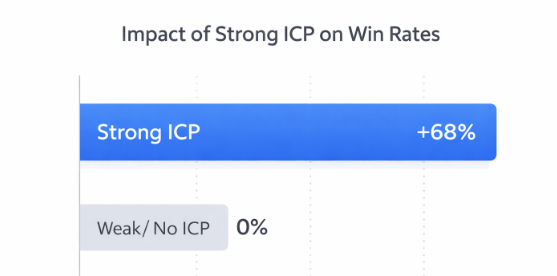
Companies with a clearly defined Ideal Customer Profile report significantly higher win rates in account performance
SaaS companies with clearly defined ICPs report 68% higher win rates compared to those targeting broad audiences.
Start by analyzing your top 20% of customers by revenue or retention. Identify shared attributes and prioritize those traits in your list-building criteria.
2. Segment by TAM, SAM, and Micro-Markets
Avoid building a single monolithic list. Instead, structure your addressable market into tiers:
-
TAM (Total Addressable Market): All potential companies that fit your general solution scope.
-
SAM (Serviceable Available Market): Companies realistically reachable based on geography, compliance, or product maturity.
-
Micro-segments: Highly specific clusters (e.g., B2B fintech startups with 50–200 employees in North America using Salesforce).
Segmented campaigns can generate up to 760% higher revenue compared to non-segmented outreach, largely due to improved message relevance.
Each micro-segment should have:
-
Dedicated messaging
-
Unique value proposition
-
Specific outreach cadence
3. Use Firmographic, Technographic, and Intent Data
Modern SaaS list building relies on three data pillars:
Firmographics
Core business attributes such as industry, size, revenue, and location. These define structural fit.
Technographics
Technology usage signals compatibility and integration potential. For example:
-
CRM platforms
-
Marketing automation systems
-
Cloud providers
-
Payment infrastructure
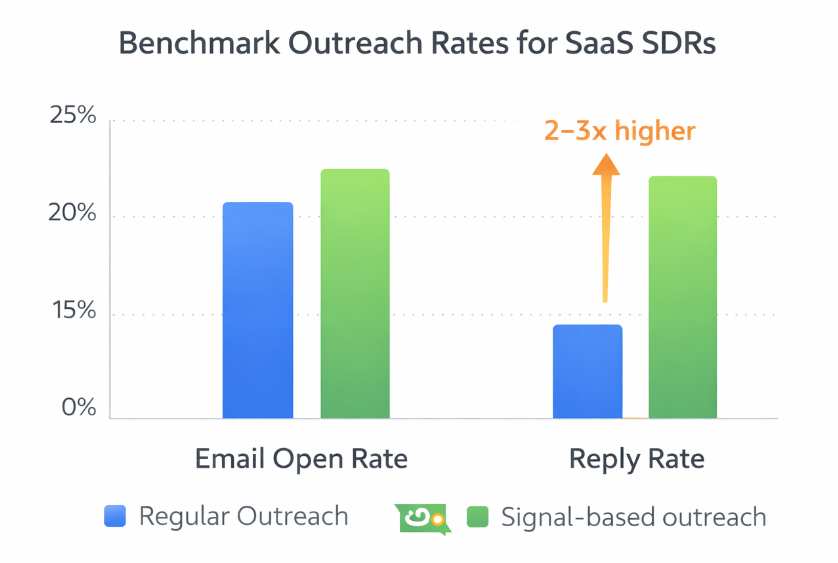
Benchmark outreach rates for SaaS SDR teams show higher performance when signal-based data is used in targeting
Technographic alignment can increase reply rates by 30% when messaging highlights relevant integrations.
Intent Data
Behavioral signals that indicate buying readiness, including:
-
Content consumption
-
Hiring trends
-
Funding events
-
Product comparisons
Organizations leveraging intent signals close deals 20% faster on average.
4. Prioritize Accounts with a Scoring Framework
Not all accounts in your list deserve equal attention. Implement a weighted scoring model based on:
-
ICP match (0–40 points)
-
Buying signal strength (0–30 points)
-
Revenue potential (0–20 points)
-
Competitive displacement opportunity (0–10 points)
Accounts above a defined threshold enter high-priority outbound sequences or ABM programs.
Data-driven account prioritization can improve sales productivity by up to 25%.
5. Validate and Clean Data Continuously
B2B data decays at a rate of approximately 2–3% per month. Employee turnover, company pivots, and funding changes quickly make lists obsolete.
Best practices include:
-
Quarterly data audits
-
Real-time enrichment workflows
-
Email verification before campaign launch
-
Automated CRM sync checks
Clean data directly impacts deliverability. Even a 5% bounce rate can significantly reduce domain reputation and long-term outreach performance.
6. Align Sales and Marketing on List Criteria
Target list construction should not be isolated within marketing or sales. Misalignment between teams leads to:
-
Low-quality MQLs
-
SDR rejection
-
Inconsistent messaging
Organizations with strong sales-marketing alignment experience 19% faster revenue growth and 15% higher profitability.
Establish shared definitions for:
-
ICP qualification
-
Account scoring thresholds
-
Handoff criteria
-
Feedback loops
Regular pipeline reviews should refine targeting assumptions.
7. Optimize for Account-Based Expansion
For SaaS companies with land-and-expand models, your list should include:
-
Parent companies
-
Subsidiaries
-
Cross-functional departments
-
Geographic branches
Mapping organizational hierarchies uncovers expansion opportunities that increase Average Contract Value (ACV).
Account expansion strategies can boost customer lifetime value by 30% or more.
8. Monitor Performance and Iterate
A target list is not static. Track performance metrics such as:
-
Reply rate by segment
-
Meeting booking rate
-
Opportunity creation rate
-
Closed-won ratio
Segments underperforming by more than 20% compared to baseline should be reviewed for:
-
Incorrect ICP assumptions
-
Weak messaging-market fit
-
Outdated firmographic filters
Continuous optimization ensures compounding improvements in pipeline quality.
Conclusion
Building target lists for SaaS lead generation is a strategic process grounded in data, segmentation, and alignment. Precision at the list level drives efficiency across outbound, inbound, and ABM initiatives.
By defining a clear ICP, structuring segmented markets, incorporating technographic and intent data, implementing scoring systems, and maintaining data hygiene, SaaS teams create a scalable engine for predictable growth.
The strongest pipelines are not built on volume — they are built on relevance.
Recommended Reading
To deepen your understanding of data-driven prospecting and account targeting, explore: