Modern audiences interact with brands across multiple touchpoints—websites, social platforms, email, in-store visits, events, and sales calls. Relying solely on digital signals provides an incomplete view of the customer journey. By combining offline and online data, businesses can build a more holistic understanding of their audience and significantly improve targeting accuracy.
Organizations that successfully unify these datasets gain a competitive edge through better segmentation, higher engagement rates, and more efficient marketing spend.
What Is Offline and Online Data Integration?
Offline data includes information collected outside of digital channels, such as:
-
CRM records
-
Sales interactions
-
Event attendance
-
Call center logs
-
In-store purchases
Online data includes:
-
Website behavior
-
Ad interactions
-
Social media engagement
-
Email activity
-
Intent signals and browsing patterns
Data integration is the process of merging these sources into a unified customer profile that can be used for segmentation, targeting, and campaign optimization.
Why Combining Data Matters
1. Complete Customer View
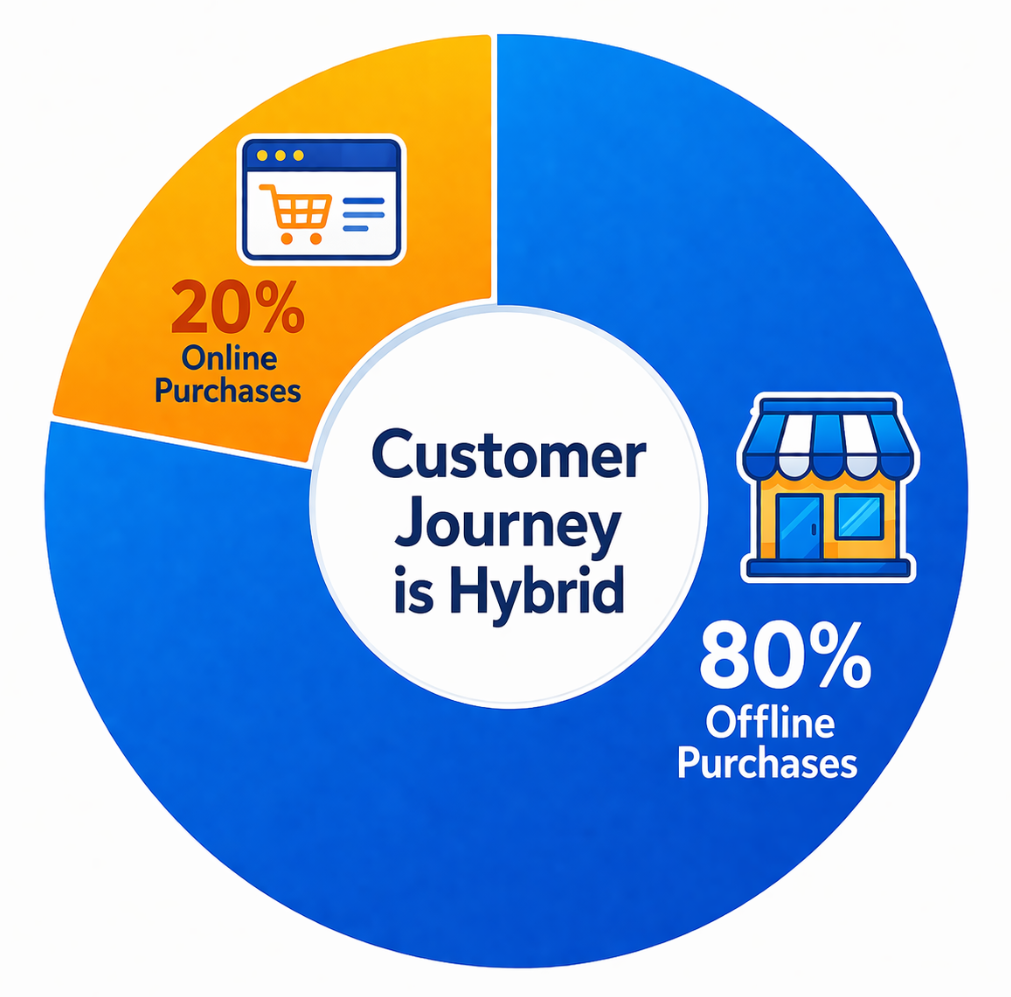
Most purchases still happen offline, highlighting the importance of integrating physical and digital customer data
According to industry research, companies using unified customer data see up to a 360-degree view of their buyers, leading to more informed decision-making. In fact, 73% of consumers expect companies to understand their unique needs and expectations.
2. Improved Targeting Accuracy
Businesses that leverage both offline and online data report up to a 30% increase in campaign targeting precision. This is because offline signals—such as purchase history or sales conversations—add context that digital data alone cannot provide.
3. Higher Conversion Rates
Studies show that campaigns using integrated data can achieve conversion rate improvements of 20–40%, as messaging becomes more relevant and timely.
4. Reduced Wasted Ad Spend
By excluding irrelevant audiences based on offline insights (e.g., existing customers or closed deals), companies can reduce wasted ad spend by up to 25%.
Key Use Cases
Account-Based Targeting
Combining CRM data with online behavior allows marketers to identify high-value accounts and deliver personalized campaigns tailored to their stage in the buying journey.
Retargeting with Context
Offline interactions—such as a recent sales call—can inform retargeting strategies, ensuring ads reflect the latest conversation rather than generic messaging.
Lookalike Audience Creation
High-quality offline data (e.g., top customers) can be used to build more accurate lookalike audiences when enriched with online behavioral patterns.
Suppression and Exclusion
Integrating offline data helps avoid targeting:
-
Existing customers
-
Inactive leads
-
Recently closed opportunities
This leads to more efficient campaigns and better customer experience.
Challenges to Consider
Data Silos
Many organizations store offline and online data in separate systems, making integration difficult without proper infrastructure.
Identity Resolution
Matching offline records with online identities requires accurate identifiers such as email addresses or hashed data.
Data Freshness
Offline data is often updated less frequently, which can create inconsistencies if not synchronized properly.
Privacy and Compliance
Handling combined datasets requires strict adherence to data protection regulations and transparent data usage policies.
Best Practices for Success
1. Centralize Data Sources
Use a unified platform or data warehouse to consolidate offline and online data into a single environment.
2. Maintain Data Quality
Ensure data is clean, deduplicated, and regularly updated to avoid targeting errors.
3. Use Strong Matching Criteria
Leverage reliable identifiers such as email addresses, company domains, or customer IDs to connect datasets accurately.
4. Align Sales and Marketing Teams
Collaboration between teams ensures that offline insights—such as deal stage or customer feedback—are effectively used in marketing campaigns.
5. Continuously Optimize
Monitor campaign performance and refine targeting strategies based on combined data insights.
Measuring Success
To evaluate the impact of combining offline and online data, track metrics such as:
-
Conversion rate improvements
-
Cost per acquisition (CPA)
-
Return on ad spend (ROAS)
-
Audience engagement rates
Organizations that adopt integrated data strategies often report measurable gains across all these KPIs.
Conclusion
Combining offline and online data is no longer optional—it is essential for modern targeting strategies. By creating a unified customer view, businesses can deliver more relevant messaging, improve campaign efficiency, and drive better results across the entire marketing funnel.