In digital marketing, timing is often as important as targeting. Audiences evolve continuously—users change jobs, interests shift, and purchase intent fluctuates. Relying on static or infrequently updated audience data can result in missed opportunities, wasted budget, and reduced campaign performance. Real-time audience updates address this challenge by ensuring that targeting criteria reflect the most current user signals available.
What Are Real-Time Audience Updates?
Real-time audience updates refer to the continuous synchronization and refresh of audience segments based on the latest available data. Instead of relying on periodic batch updates (daily, weekly, or monthly), these systems dynamically adjust audience composition as soon as new data signals are detected.
This includes:
-
Changes in user behavior (e.g., website visits, engagement patterns)
-
Updates in professional data (e.g., job changes, company growth)
-
Shifts in intent signals (e.g., researching solutions, comparing vendors)
Why Real-Time Updates Matter
1. Higher Relevance and Engagement
Up-to-date audiences ensure that ads and messages are delivered to users who are currently relevant, not those who were relevant weeks ago. According to industry research, campaigns using frequently refreshed audience data can achieve up to 50% higher engagement rates compared to static targeting models.
2. Improved Conversion Rates
Timing plays a critical role in conversion. Studies show that responding to intent signals within hours rather than days can increase conversion rates by as much as 80%. Real-time updates allow marketers to act during peak intent windows.
3. Reduced Wasted Spend
Outdated audience segments often include users who are no longer qualified or interested. This leads to inefficient ad spend. Research indicates that up to 30% of marketing budgets are wasted due to poor audience targeting and stale data.
4. Faster Optimization Cycles
With real-time updates, campaigns can adjust automatically without waiting for manual intervention. This accelerates testing and optimization cycles, allowing marketers to quickly identify what works and scale successful strategies.
5. Better Alignment with Buyer Journeys
Modern buyer journeys are non-linear and fast-moving. Real-time audience updates ensure that messaging aligns with the user’s current stage, whether they are in awareness, consideration, or decision phases.
Key Use Cases
Dynamic Retargeting
Users who visit a website or interact with content can be instantly added to retargeting audiences, ensuring timely follow-up with relevant messaging.
Intent-Based Prospecting
When users exhibit high-intent behavior, they can be immediately included in prospecting campaigns, increasing the likelihood of engagement and conversion.
Audience Exclusion
Real-time updates allow for immediate removal of converted users or irrelevant segments, preventing unnecessary ad exposure and improving user experience.
Lookalike Audience Refresh
As source audiences evolve, lookalike models can be updated in real time to maintain accuracy and performance.
Real-Time vs. Batch Updates
| Feature | Batch Updates | Real-Time Updates |
|---|---|---|
| Update Frequency | Daily/Weekly | Continuous |
| Data Freshness | Delayed | Immediate |
| Responsiveness | Low | High |
| Campaign Efficiency | Moderate | High |
| Optimization Speed | Slow | Fast |
Challenges and Considerations
While real-time audience updates offer significant advantages, they also require:
-
Robust data infrastructure capable of handling continuous data flow
-
Integration across multiple data sources and platforms
-
Strong data governance to ensure accuracy and compliance
Organizations must ensure that their systems can process and act on data quickly without compromising quality.
Best Practices for Implementation
-
Prioritize high-impact signals such as intent data and engagement behavior
-
Automate audience synchronization across platforms
-
Continuously monitor performance metrics to validate effectiveness
-
Combine real-time updates with strategic segmentation for precision
Measuring Success
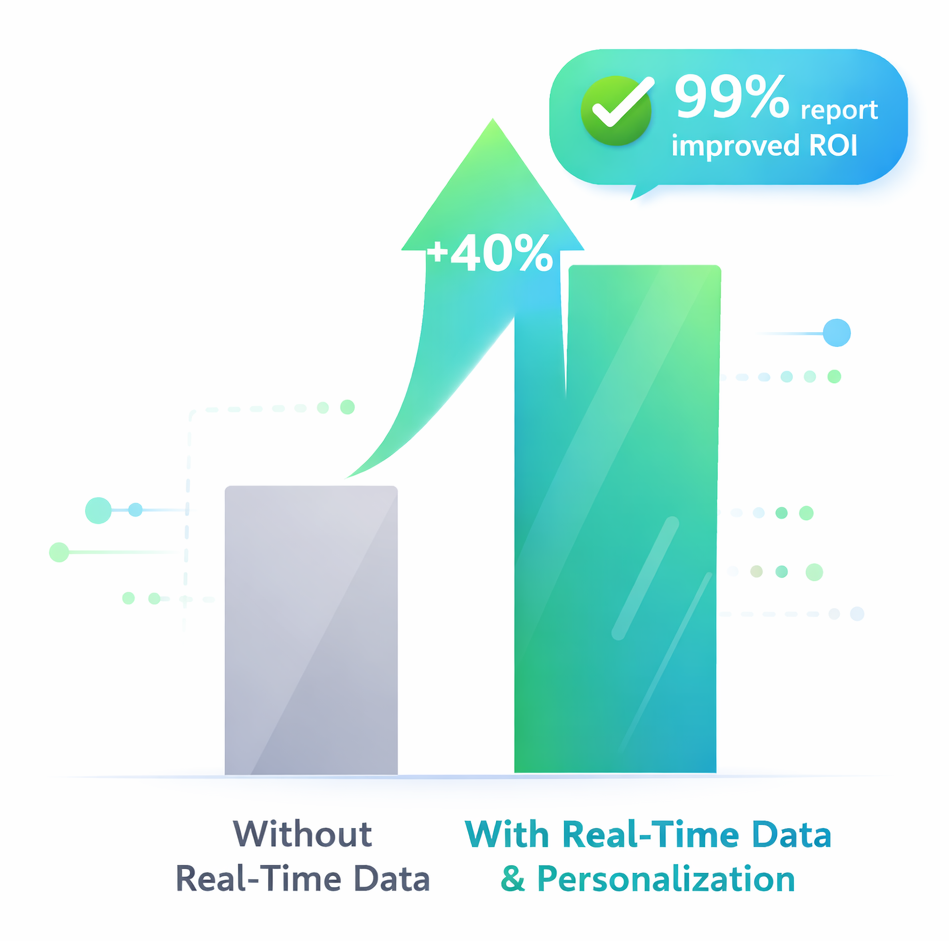
Real-time data and personalization significantly improve conversion performance and ROI
To evaluate the impact of real-time audience updates, marketers should track:
-
Conversion rate improvements
-
Cost per acquisition (CPA)
-
Engagement metrics (CTR, time on site)
-
Audience turnover and freshness rates
Companies that adopt real-time audience strategies often report measurable gains in both efficiency and performance within the first few months.
Conclusion
Real-time audience updates are no longer optional in a competitive digital landscape. As user behavior becomes more dynamic and expectations for relevance increase, marketers must adopt systems that reflect this reality. By ensuring that audience data is always current, organizations can improve targeting precision, maximize ROI, and stay ahead of rapidly changing market conditions.