Great copy doesn’t just inform — it moves people. The difference between an ad that gets ignored and one that drives action often comes down to a few psychological triggers. These triggers tap into how people naturally think, decide, and respond.
Below are the most reliable, conversion‑driving triggers you can use in ads, landing pages, and email sequences.
1. The Clarity Trigger: Remove Thinking Friction
People act faster when the message is instantly understandable. Clear, direct copy increases both comprehension and confidence.
Statistic: Studies show that reducing cognitive load in digital content can increase conversion rates by up to 20% because users require less effort to understand the offer.
How to apply it:
-
Use specific verbs ("Get", "Download", "Save")
-
Cut unnecessary adjectives
-
State the outcome in the first line
2. The Urgency Trigger: Activate Quick Decisions
Urgency pushes the brain to prioritize action. When people believe waiting means missing out, they respond significantly faster.
Statistic: Time‑limited messaging increases conversion likelihood by up to 332% when paired with a clear value proposition.
How to apply it:
-
Use countdowns or "ending soon" phrasing
-
Highlight what will change if they wait
-
Add urgency only when it’s real to maintain trust
3. The Social Validation Trigger: People Follow People
When unsure, people look to others for guidance. Social proof signals that the decision is safe and popular.
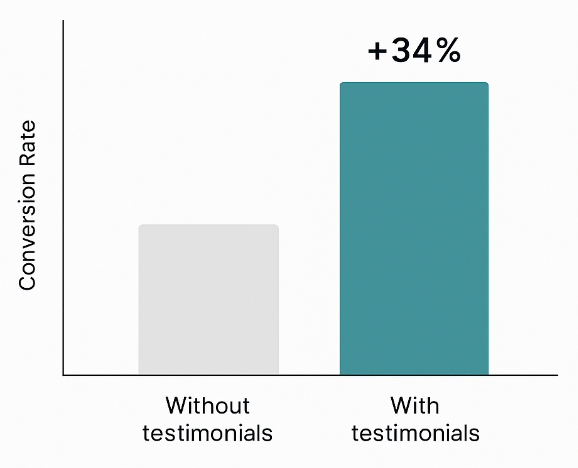
Pages with customer testimonials convert up to 34% more often than similar pages without reviews
Statistic: Visitors who interact with testimonials or proof elements convert at a rate 108% higher than those who do not.
How to apply it:
-
Showcase review snippets
-
Highlight numbers of users or customers
-
Include short case‑style wins ("Saved 3 hrs/week")
4. The Specificity Trigger: Vague Doesn’t Sell
Specifics make your claims credible. Numbers and concrete details eliminate ambiguity and build trust.
Statistic: Copy with specific numerical claims converts up to 2.3× higher than vague benefit statements.
How to apply it:
-
Replace "Boost results" with "Increase sign‑ups by 27%"
-
Add exact timeframes
-
Use concrete nouns over abstractions
5. The Contrast Trigger: Show the Before vs. After
Contrast helps the brain quickly understand value by comparing the current state with the improved state.
How to apply it:
-
Show the transformation ("From 10 hours of manual work to 30 minutes automated")
-
Use side‑by‑side comparisons
-
Frame your offer as the bridge between two states
6. The Emotion Trigger: Facts Inform, Emotions Move
Emotions drive decisions before logic steps in. Fear of loss, desire for gain, and relief from problems are core motivators.
Statistic: Emotional messaging can increase long‑term brand impact by over 200% compared to rational‑only messaging.
How to apply it:
-
Describe the pain point in relatable terms
-
Paint the desired outcome vividly
-
Lead with emotion, close with facts
Bringing It All Together
The strongest copy uses multiple triggers at once — clarity plus specificity, contrast plus emotion, urgency plus social validation. The more aligned these triggers are with the audience's real motivations, the stronger the impact.
Start by selecting two or three triggers that best fit your offer and audience. Then refine them through testing and iteration.