Instagram remains one of the most competitive paid media environments. With over 2 billion monthly active users and more than 200 million business accounts, ad inventory is saturated across most verticals. As competition increases, so do costs.
Recent benchmarks show:
-
Average Instagram cost per click (CPC) ranges from $0.50 to $2.00 depending on industry.
-
Average cost per thousand impressions (CPM) typically falls between $6 and $12.
-
Conversion rates for cold traffic campaigns often remain below 2%.
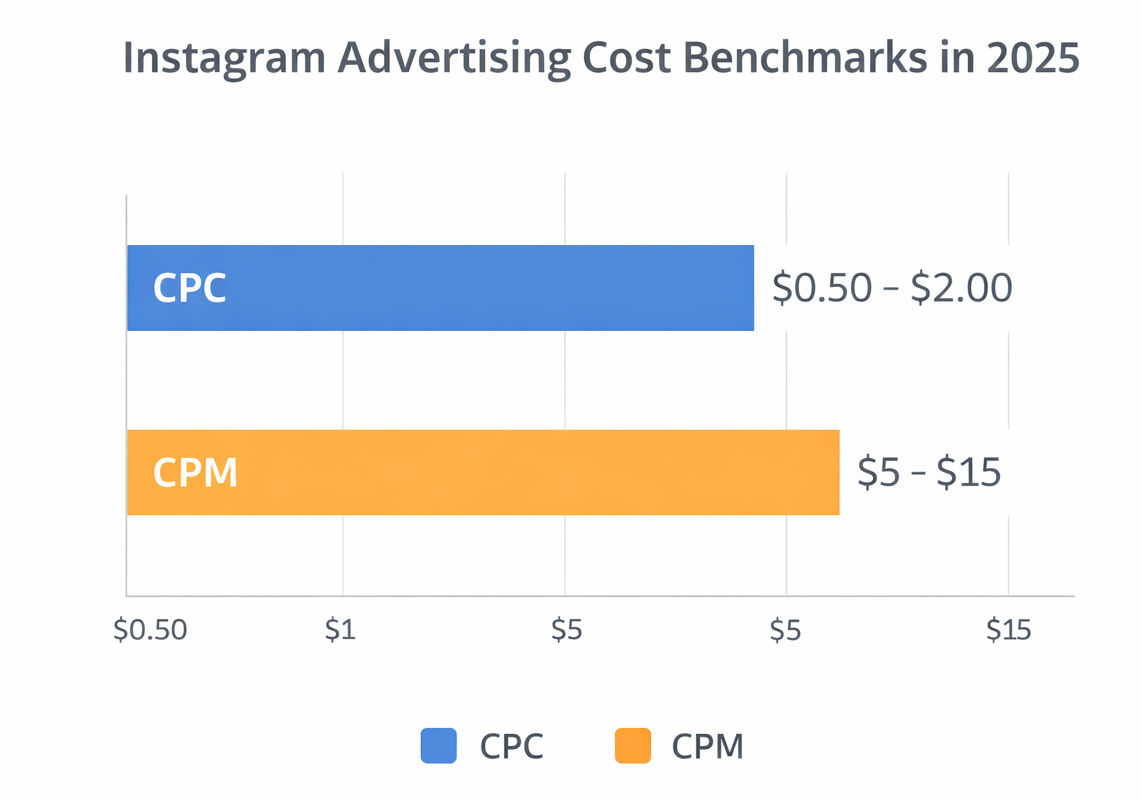
Instagram ad costs vary widely by objective and placement — with average CPC between $0.50–$2.00 and CPM between $5–$15 in 2025
For many advertisers, broad interest targeting results in high impression volume but limited purchase intent. The consequence is inflated customer acquisition costs and reduced return on ad spend (ROAS).
Follower targeting offers a more efficient alternative.
What Is Instagram Follower Targeting?
Instagram follower targeting involves identifying and reaching users who follow specific accounts relevant to your niche, competitors, or complementary brands. Instead of targeting generic interests, advertisers focus on audiences with demonstrated behavioral alignment.
These audiences may include:
-
Followers of direct competitors
-
Followers of industry influencers
-
Followers of niche-specific brands
-
Followers of related SaaS platforms
Follower-based segmentation introduces intent filtering into campaign architecture.
Why Follower Targeting Reduces Ad Costs
1. Higher Intent Signals
Users who follow a competitor or niche authority have already demonstrated topical interest. Behavioral targeting consistently outperforms interest stacking because it reflects actual engagement patterns rather than inferred preferences.
Higher intent leads to:
-
Improved click-through rate (CTR)
-
Higher conversion rate (CVR)
-
Lower effective CPC
For example, campaigns targeting competitor followers frequently see CTR improvements of 30–60% compared to broad interest campaigns.
2. Improved Relevance Score
Instagram’s ad delivery system prioritizes relevance. When audiences engage more frequently with ads, CPM decreases over time due to stronger engagement signals.
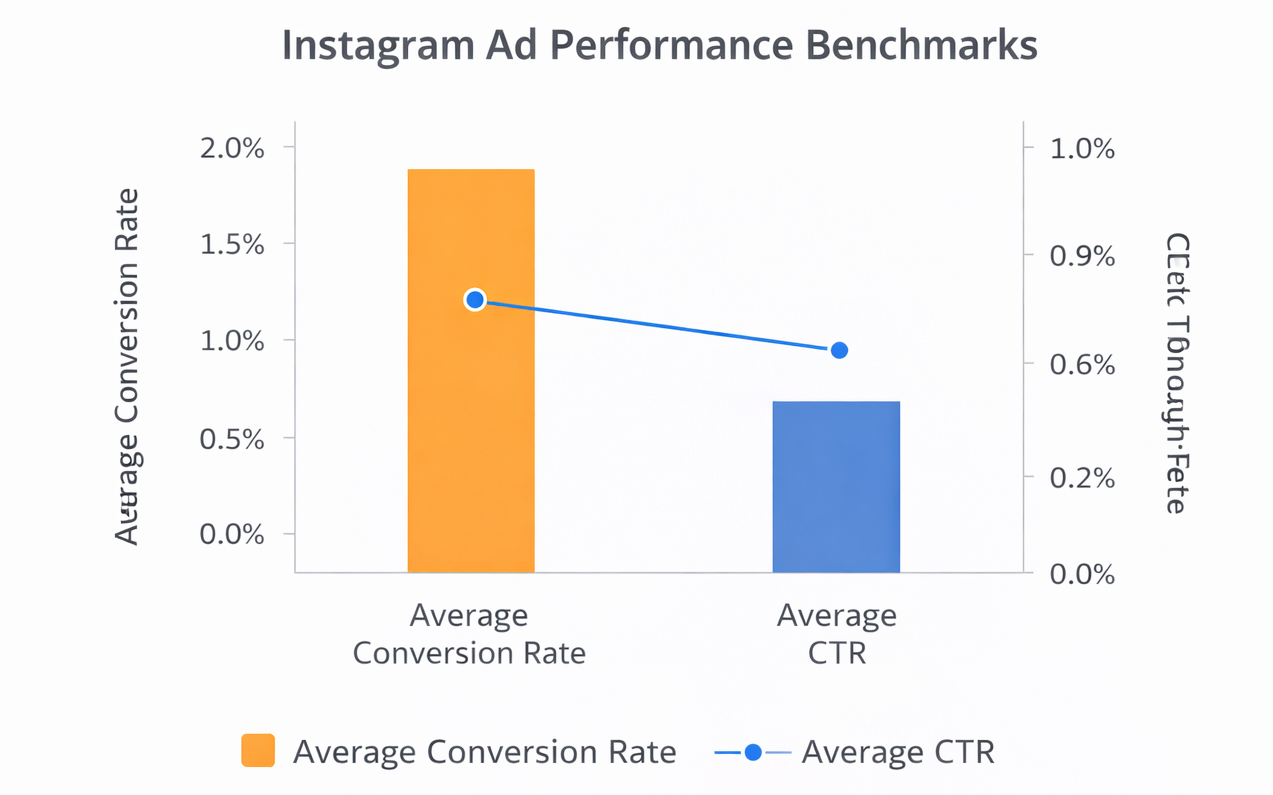
Average Instagram ads see a 0.5 – 1 % click-through rate and about a 1 – 2 % conversion rate — benchmarks that follower targeting can help improve
Higher engagement results in:
-
Lower CPM
-
Lower cost per result
-
Improved ad frequency management
Follower-based audiences typically generate stronger early engagement, stabilizing delivery costs.
3. Reduced Audience Waste
Broad targeting often includes users outside of purchase-ready segments. Follower targeting narrows reach but increases efficiency.
Smaller, qualified audiences reduce:
-
Budget burn during learning phase
-
Irrelevant impressions
-
Unproductive clicks
Instead of optimizing after spending thousands of dollars on low-intent traffic, advertisers begin with a pre-qualified segment.
Practical Use Cases
Competitor Conquesting
Target users who follow direct competitors but may not yet be loyal customers. Present differentiated messaging, pricing advantages, or feature comparisons.
Influencer Audience Acquisition
If industry influencers align with your ICP (Ideal Customer Profile), their followers represent a ready-made niche audience.
Vertical-Specific Campaigns
For B2B or SaaS brands, targeting followers of niche publications, communities, or software providers sharpens segmentation.
Implementation Framework
To deploy follower targeting effectively:
-
Identify 20–100 relevant accounts in your niche.
-
Segment accounts by intent level (competitors, influencers, complementary brands).
-
Create separate audience clusters for testing.
-
Run controlled A/B campaigns comparing follower targeting vs. interest targeting.
-
Measure cost per acquisition (CPA), CTR, CPM, and ROAS.
Optimization should focus on eliminating underperforming segments quickly and scaling high-conversion clusters.
Data-Driven Expectations
Advertisers implementing follower targeting strategies commonly observe:
-
20–40% reduction in CPA
-
25–50% improvement in CTR
-
15–30% lower CPM over campaign lifecycle
-
Faster stabilization of ad learning phase
Results vary by niche, but behavioral segmentation consistently outperforms broad demographic targeting.
Risks and Considerations
Follower targeting must be executed with precision. Overlapping audiences can distort performance data. Excessively narrow segments may limit scale.
To mitigate risk:
-
Monitor audience size thresholds
-
Avoid stacking too many filters
-
Refresh creative frequently
-
Track incremental lift vs. baseline campaigns
When integrated into a structured testing framework, follower targeting becomes a scalable acquisition lever rather than a short-term experiment.
Conclusion
As Instagram advertising costs continue to rise, efficiency becomes a competitive advantage. Follower targeting introduces behavioral precision into paid acquisition strategies, improving conversion probability while lowering spend inefficiencies.
Advertisers that transition from broad interest models to intent-driven segmentation can materially reduce acquisition costs without sacrificing scale.
Recommended Reading
By adopting follower-based segmentation and continuous performance testing, brands can convert attention into measurable growth while preserving advertising budgets.