Instagram remains one of the most powerful platforms for audience targeting and digital lead generation. With over 2 billion monthly active users worldwide and more than 500 million daily active Stories users, the platform offers unmatched reach. However, reach alone does not drive results. Engagement does.
According to recent industry benchmarks, the average Instagram engagement rate across industries ranges between 0.5% and 1.5%, depending on audience size. Micro-influencers (10,000–50,000 followers) often see engagement rates exceeding 3%. This demonstrates a critical point: highly engaged audiences are more valuable than large but passive ones.
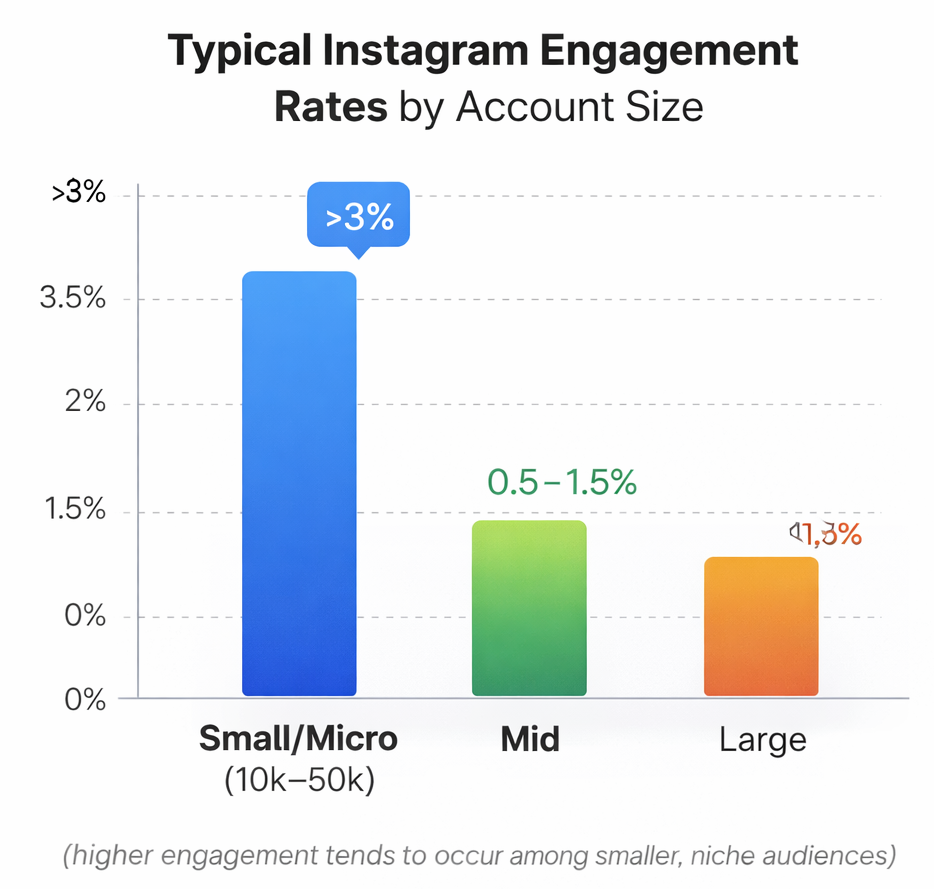
Typical Instagram Engagement Rates by Account Size (higher engagement tends to occur among smaller, niche audiences)
This guide explains how to systematically find and target engaged Instagram users using measurable criteria and scalable processes.
-
Define What "Engaged" Means for Your Campaign
Before identifying engaged users, establish operational metrics. Engagement typically includes:
-
Likes per post
-
Meaningful comments (not generic emojis)
-
Story interactions (replies, polls, sticker taps)
-
Shares and saves
-
Reels interactions
For B2B or lead generation campaigns, deeper engagement signals are more valuable than vanity metrics. For example, users who frequently comment with questions or participate in discussions demonstrate purchase intent more strongly than users who only like posts.
Create a baseline engagement threshold. For example:
-
Engagement rate above 2%
-
At least 5 meaningful comments in the past 30 days
-
Recent activity within the last 14 days
These thresholds help filter passive accounts and bots.
-
Identify Competitor and Industry Audience Pools
One of the most efficient targeting strategies is leveraging competitor audiences. Users who actively engage with competitors have already demonstrated interest in similar products or services.
Steps:
-
Analyze competitor profiles within your niche
-
Review users who repeatedly comment on posts
-
Track participants in live sessions and giveaways
-
Examine hashtag-based communities relevant to your industry
Users who consistently interact with niche-specific content are significantly more likely to convert. Studies indicate that audiences exposed to relevant content are 70% more likely to take action compared to broad, untargeted groups.
-
Use Hashtag and Content Interaction Analysis
Hashtags act as micro-communities. Targeting engaged users within niche hashtags allows you to access high-intent segments.
Process:
-
Identify 10–20 niche-specific hashtags
-
Review recent posts under those hashtags
-
Analyze accounts actively commenting or posting high-quality content
-
Filter by engagement consistency
Focus on users who actively contribute rather than passive scrollers. Consistency of activity is often a stronger predictor of responsiveness than follower count.
-
Segment Users by Behavioral Patterns
Not all engaged users behave the same way. Segmenting improves campaign precision.
Examples of behavioral segmentation:
-
Frequent commenters
-
Story interaction users
-
Giveaway participants
-
Reels engagers
-
Direct message responders
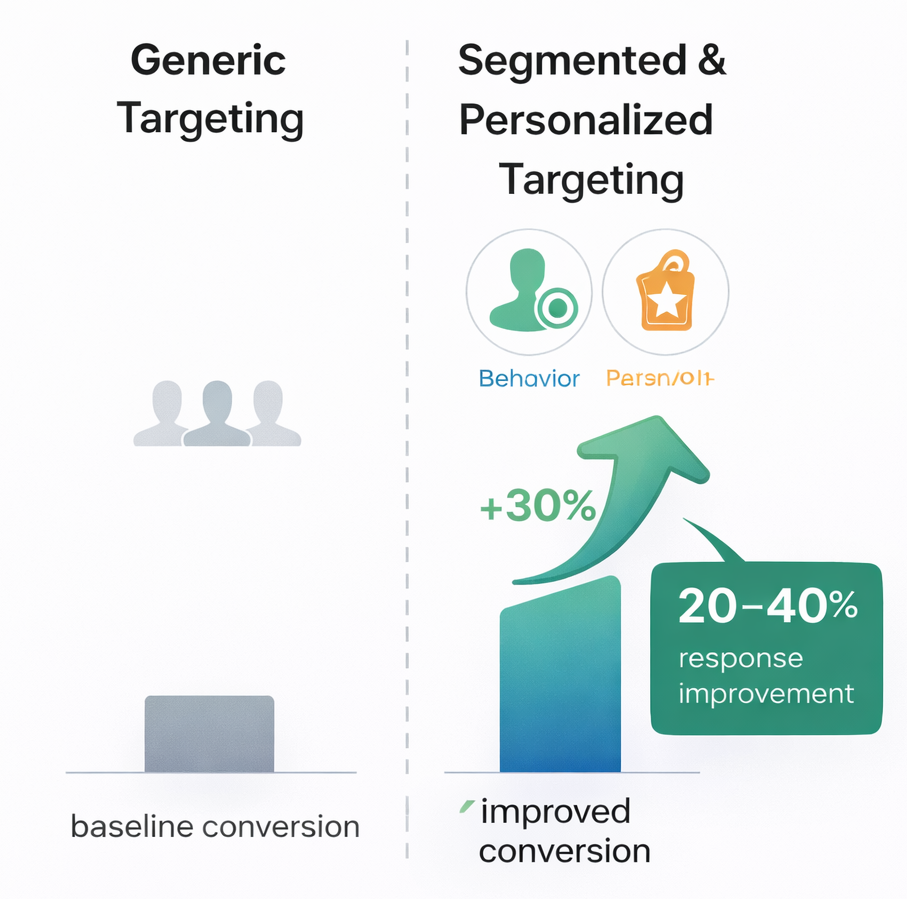
Impact of Behavioral Segmentation and Personalization on Conversion and Response Rates
Behavioral segmentation can increase conversion rates by up to 30% compared to one-size-fits-all messaging. Personalized outreach tailored to interaction history significantly improves reply rates.
-
Analyze Engagement Authenticity
Engagement quality matters more than volume. Evaluate:
-
Comment depth (are comments meaningful?)
-
Repetitive generic comments (possible engagement pods)
-
Follower-to-engagement ratio
-
Sudden spikes in activity
Tools that automate audience extraction and filtering based on engagement signals can significantly reduce manual analysis time while improving targeting accuracy.
-
Prioritize Micro-Communities and Niche Clusters
Large accounts often have diluted audiences. Smaller niche clusters usually deliver stronger engagement and better conversion rates.
Data shows that micro-communities often generate 60% higher engagement compared to macro accounts. Targeting these users creates stronger relationships and improves long-term campaign sustainability.
-
Automate Data Collection and Filtering
Manual targeting does not scale. For consistent growth, automation is necessary.
Effective systems allow you to:
-
Extract users interacting with specific profiles
-
Filter by activity level
-
Export segmented lists
-
Continuously update audience pools
Automation reduces human error and ensures consistent criteria application across campaigns.
-
Personalize Outreach Based on Engagement Context
Once engaged users are identified, outreach must reflect their interaction history.
For example:
-
Reference a recent comment they made
-
Mention shared interests visible in their profile
-
Connect through mutual communities
Personalized messaging can improve response rates by 20–40% compared to generic templates.
-
Track Performance Metrics and Optimize
Targeting engaged users is an iterative process. Monitor:
-
Response rate
-
Click-through rate
-
Conversion rate
-
Cost per acquisition
-
Engagement growth over time
Compare campaigns targeting general audiences versus high-engagement segments. In most cases, smaller engaged segments produce higher ROI despite lower volume.
Conclusion
Finding and targeting engaged Instagram users requires structured criteria, behavioral segmentation, authenticity analysis, and scalable automation. The objective is not to reach the largest possible audience, but to reach the most responsive one.
By focusing on users who consistently interact within your niche, you increase conversion probability, reduce acquisition costs, and build sustainable growth pipelines.
Recommended Articles for Further Reading