December is one of the most volatile and opportunity-rich months in digital marketing. Competition spikes, user behavior shifts weekly, and advertising costs fluctuate sharply before and after major shopping events. Smart advertisers plan December as its own strategic season — not just the final page of the yearly calendar.
Below is a structured playbook for the priorities that consistently drive stronger ROAS and more efficient acquisition during this high-stakes month.
1. Prioritize High‑Intent Audiences as CPMs Surge
Competition peaks in early December. The days surrounding major holidays often produce CPMs that rise 20–40% across social platforms.
This is the time to:
-
Shift budget toward retargeting and warm audiences.
-
Reduce reliance on broad targeting until post‑holiday CPMs drop.
-
Reinvest in proven creatives instead of experimenting with untested angles.

Holiday season uplift in advertising costs: CPC +22%, CPM +24.7% — underscores importance of reallocating spend toward high-intent audiences
Useful statistic: During early December, cost per impression can rise by up to 35%, while warm-retargeting conversion rates remain 2–3× higher than cold prospecting.
2. Refresh Creatives by Mid‑Month to Combat Ad Fatigue
December attention span is short. Frequency grows fast as advertisers fight for visibility.
Why refresh?
-
Ad fatigue can cause CTR to drop 25% or more after the first two weeks of exposure.
-
Post‑holiday shoppers respond best to clean, value‑forward designs.
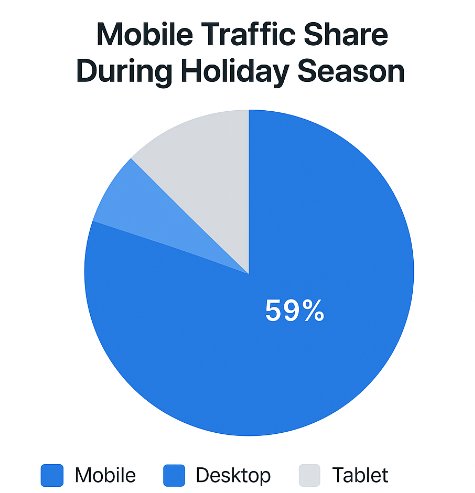
During holiday season, mobile devices accounted for nearly 60% of traffic — peaking at 79% during Cyber Five week — highlighting the need for mobile-optimized ads and landing pages
Refresh tactics that work:
-
Swap in new formats (e.g., vertical or dynamic layouts).
-
Update visuals to reflect post‑holiday messaging.
-
Re‑test top‑performing offers with modified creative angles.
3. Lean Into Post‑Holiday Buyers With "Second Wave" Campaigns
While many brands slow down after the 25th, smart advertisers double down.
Why?
-
Cost per click often drops by 20–30% between December 26 and January 5.
-
Shoppers return with gift cards, year‑end bonuses, and New Year motivations.
Effective post‑holiday tactics:
-
Reactivate previously warm audiences who didn’t convert earlier.
-
Promote lower‑commitment offers or trial‑based funnels.
-
Focus campaigns on New Year readiness and self‑improvement themes.
4. Strengthen Attribution for Accurate Year‑End Reporting
Data becomes messy in December due to:
-
Shorter buying cycles
-
High frequency
-
More cross‑device activity
Advertisers should:
-
Shorten attribution windows for more accurate reporting.
-
Track December separately in dashboards to isolate seasonal impact.
-
Compare year‑over‑year metrics to identify trend changes rather than anomalies.
Statistic: Up to 62% of holiday shoppers interact with ads on multiple devices before converting, making proper attribution essential.
5. Prepare January Funnels Before December Ends
January is a momentum month — but only for advertisers who prepare early.
Do this during late December:
-
Build refreshed audiences based on December traffic.
-
Pre-load January creative variations.
-
Set up retargeting flows for people who engaged but didn’t convert.
Insight: Traffic generated in December can improve January retargeting ROAS by up to 50% when nurtured through properly sequenced campaigns.
6. Audit Budgets Weekly — Not Monthly
December performance shifts too rapidly for monthly pacing.
Weekly reviews help you:
-
Reallocate budget to best-performing placements.
-
Detect spikes in ad costs before they drain efficiency.
-
Optimize spend for peak end‑of‑year demand.
A weekly audit can reduce wasted budget by 10–15%, especially during mid‑month transitions.
Suggested Next Reads
Here are three additional articles that expand on concepts from this playbook: