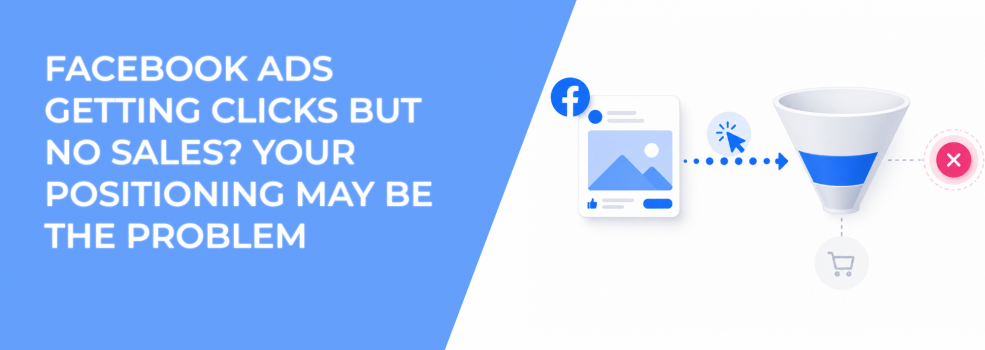
Getting clicks from Facebook ads can look promising, but clicks do not always mean demand. A campaign can have decent CTR, acceptable CPC, and steady delivery while still failing to generate sales, booked calls, or qualified leads.
When this happens, the issue is often positioning. The ad creates interest, but it does not give the right buyer a clear reason to act. People click because the topic feels relevant, not because the offer feels specific, useful, or urgent.
Problem: The Ad Gets Attention, But Not Buyer Intent
A click means the ad interrupted the feed. It does not mean the user understood the offer or wanted to buy.
This often happens when the ad speaks too broadly. A message like “Most businesses waste money on Facebook ads” can attract many types of users. Some may be marketers, some may be founders, and some may just be curious.
In Ads Manager, this can look misleading. CTR holds steady, but landing page conversion rate stays weak. CPC looks manageable, but cost per sale or qualified lead keeps rising. If the campaign uses lead forms, sales may still report poor-fit prospects.
This is why curiosity clicks can destroy campaign efficiency. The ad gets attention, but it does not qualify the user before the click.
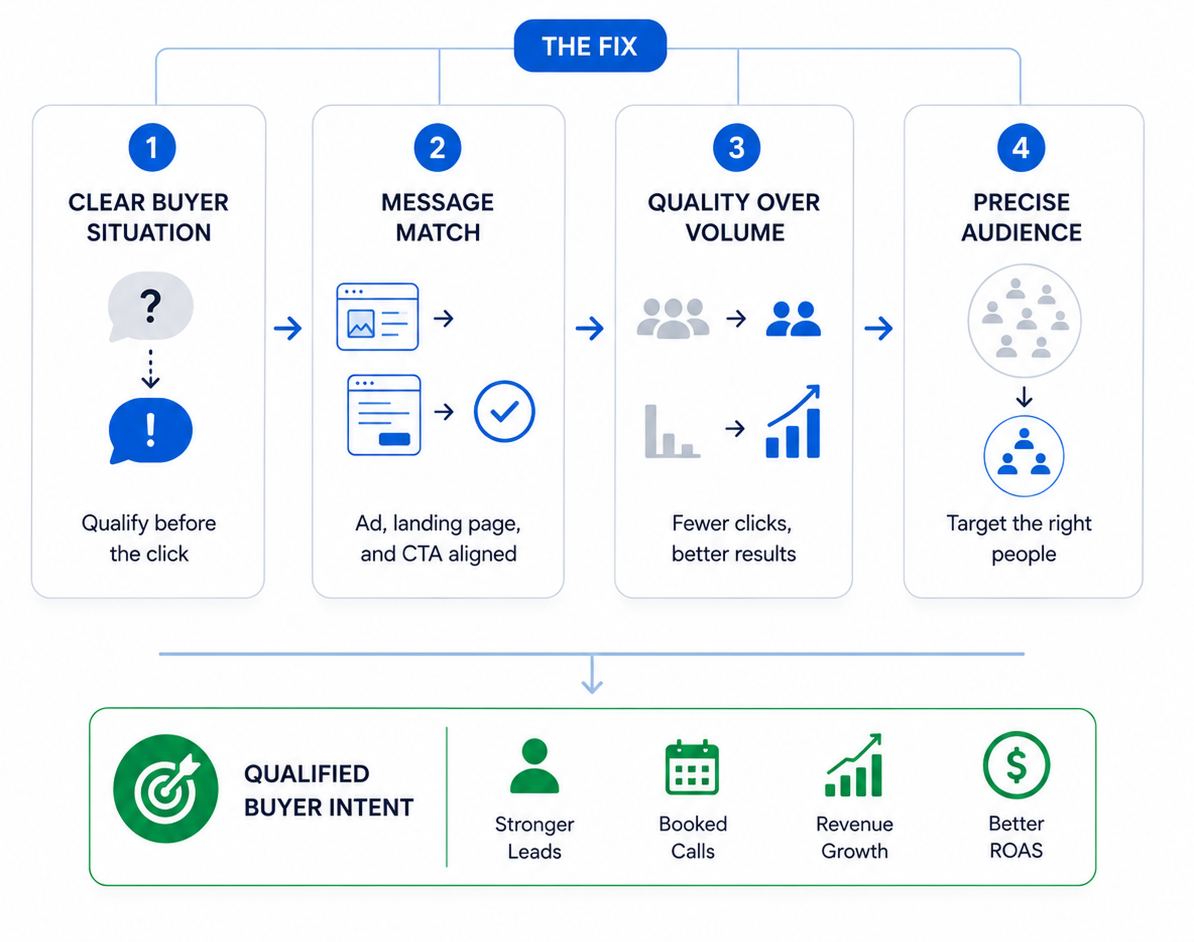
Solution: Make the Buyer Situation Clear Before the Click
The ad should help the right person recognize themselves. It does not need long copy. It needs a clear situation, problem, or outcome.
Instead of a broad message like “Stop wasting money on ads,” a stronger version would be “Getting Facebook leads that never answer sales calls?” The second message speaks to a specific problem inside a lead-gen funnel.
This type of positioning may reduce casual clicks. That is not a bad thing. The goal is to attract people who are closer to the buying problem, not everyone who finds the topic interesting.
Solution: Keep the Landing Page Aligned With the Ad Promise
Clicks often fail to turn into sales because the ad and landing page do not tell the same story. The ad may focus on poor lead quality, while the landing page talks about general campaign growth.
That mismatch creates friction. Users expect one thing, then land on a page that makes them reconnect the dots.
If the ad talks about low-quality leads, the landing page should explain how the offer improves lead quality. If the ad talks about wasted spend, the page should quickly show how the solution reduces waste.
This is where it helps to align Facebook ad messaging with buyer intent. The ad, page, and call to action should support the same buyer moment.
Solution: Judge Click Quality, Not Just Click Volume
CTR is useful, but it does not prove that the campaign is attracting buyers. A high CTR can hide weak positioning when users click for information but never take serious action.
Look at what happens after the click:
- Landing page conversion rate, because it shows whether the ad promise carries through.
- Cost per qualified lead, because CPL alone can look good while sales quality is poor.
- Demo booking or sales call rate, because it shows whether users are ready for a real next step.
- ROAS or pipeline value after scaling, because early click metrics can hide poor commercial performance.
If CTR is strong but these numbers are weak, the campaign does not have a traffic problem. It has a positioning problem.
Solution: Use More Precise Targeting To Support the Positioning
Positioning works better when the audience actually matches the message. If the campaign targets too broadly, Meta may find users who click often but do not fit the offer.
LeadEnforce can help advertisers select a more precise audience that fits their positioning. For example, if the ad is written for people in a specific niche, advertisers can use Facebook groups, Instagram followers, and social engagement data to build a more relevant audience.
This is especially useful when the offer depends on a clear community, profession, or interest group. Advertisers can also learn more about how to use Facebook group followers for ad campaigns.
Solution: Reposition Before Rebuilding the Whole Campaign
When clicks do not become sales, many advertisers change too much at once. They replace the creative, change the audience, adjust the budget, and rewrite the landing page.
That makes the real issue harder to find.
Start with the message. Ask what expectation the ad creates before the click, then compare it with the landing page and conversion action. If the ad attracts people who want to learn, but the landing page asks them to buy immediately, the positioning is not strong enough for the ask.
A better test is to keep the campaign structure stable and change the positioning. Try a clearer buyer situation, a sharper problem, or a more specific outcome. Then judge the result by qualified actions, not clicks alone.
Final Takeaway
Facebook ads that get clicks but no sales usually have a positioning gap. The ad gets attention, but the message does not attract enough people who understand the problem and feel ready to act.
The fix is to qualify users earlier with clearer positioning, keep the landing page aligned with the same promise, and use audience targeting that fits the message. Better positioning may reduce casual clicks, but it should bring in traffic with a stronger chance of becoming revenue.