Facebook Groups have evolved from simple discussion spaces into high-intent ecosystems rich with behavioral and contextual data. When structured correctly, group followers can become one of the most effective audience sources for paid advertising, outperforming cold targeting in both efficiency and conversion quality.
This article breaks down how to activate Facebook Group followers for ad campaigns while maintaining compliance and audience trust.
Why Facebook Group Followers Are High-Value Audiences
Facebook Group followers differ significantly from page followers or interest-based audiences:
-
They actively opt in and often answer entry questions
-
They engage through comments, reactions, polls, and posts
-
They self-reveal pain points, preferences, and buying intent
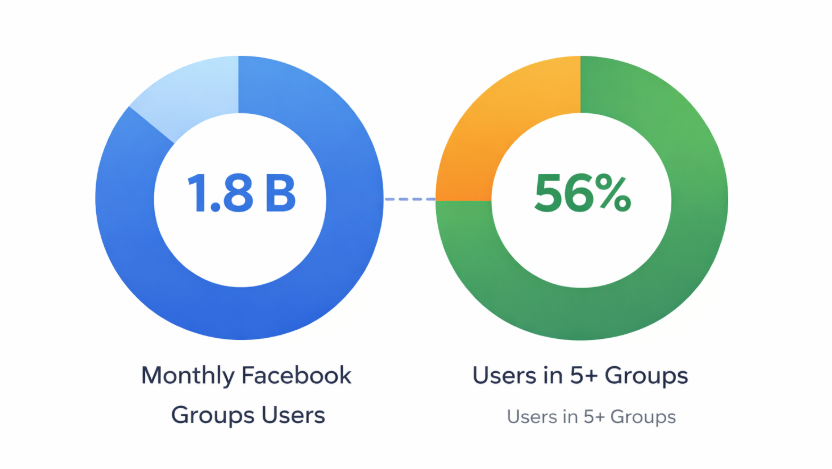
Monthly Facebook Group usage and depth of membership engagement
According to Meta performance benchmarks, ads delivered to warm audiences with prior engagement achieve up to 2× higher click-through rates than cold audiences. Industry data also shows that warm audience targeting can reduce cost per acquisition by 30–50% when properly segmented.
Preparing Your Facebook Group for Advertising Use
Before group followers can be used effectively in ad campaigns, the group must be intentionally structured.
Optimize Group Entry Questions
Entry questions act as the first layer of qualification. Well-designed questions can identify:
-
Experience or skill level
-
Primary challenges or goals
-
Purchase intent or timeframe
Groups that use three or more strategic entry questions report up to 35% higher engagement in the first month compared to open-entry groups.
Create Consistent Content Categories
Organizing posts into clear categories such as education, discussion, case studies, and offers improves behavioral clarity. This makes it easier to later segment users based on meaningful engagement signals rather than raw activity.
Methods to Use Facebook Group Followers in Ad Campaigns
1. Engagement-Based Custom Audiences
Facebook allows advertisers to build custom audiences from engagement signals. Group members who interact with posts, videos, or live sessions can be retargeted with tailored ads.
Best practices include:
-
Target members active in the last 30–60 days
-
Separate educational engagement from promotional engagement
-
Exclude inactive users to protect relevance metrics
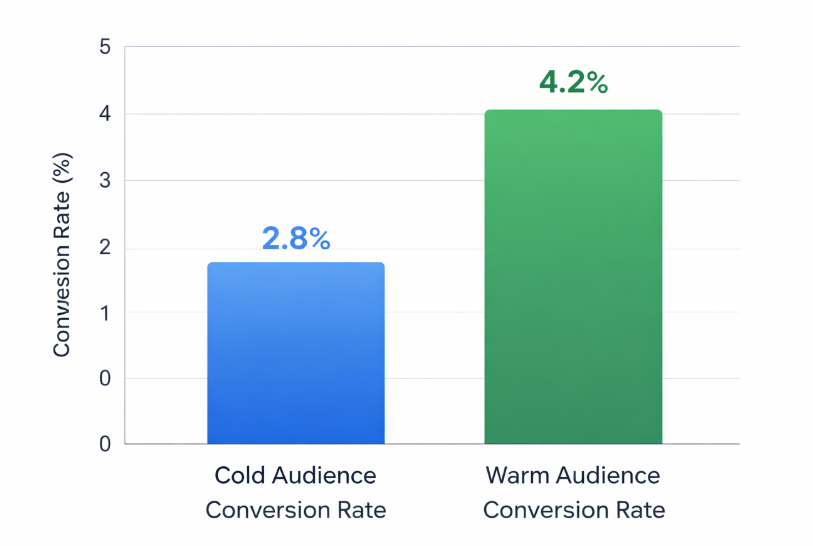
Comparison of Conversion Rates for Cold vs Warm (Engaged) Audiences in Facebook Ads
Engagement-based retargeting typically improves conversion rates by 20–40% compared to interest-only audiences.
2. First-Party Data Collection Through Group Activity
Groups are effective environments for collecting first-party data through:
-
Polls and surveys
-
Free resource access
-
Webinar or event registrations
When users provide explicit consent, this data can be used to create highly accurate custom and lookalike audiences. Campaigns built on first-party data outperform third-party targeting by an average of 25% higher return on ad spend, especially in privacy-restricted environments.
3. Lookalike Audiences Built from Group Signals
High-quality group-based custom audiences can be used as seeds for lookalike audiences.
Optimization tips:
-
Use only the top 10–20% most engaged members
-
Base lookalikes on conversion events, not just clicks
-
Test 1%, 2%, and 5% lookalikes independently
Well-seeded lookalike audiences frequently reduce CPM by 15–30% while preserving strong conversion intent.
Compliance and Ethical Considerations
Using group followers for advertising requires strict adherence to platform policies and user expectations.
Key rules include:
-
Never scrape or export group member data
-
Clearly communicate how data will be used
-
Only advertise to users who have provided appropriate consent
Transparent data practices not only protect ad accounts but also strengthen long-term trust and engagement within the group.
Measuring Performance and Optimization
To evaluate the effectiveness of group-based ad audiences:
-
Compare CPA against cold interest audiences
-
Monitor frequency to avoid ad fatigue
-
Track assisted conversions, not just last-click results
Advertisers who actively optimize warm audiences report up to 40% faster exits from the learning phase and more stable performance at scale.
Recommended Articles for Further Reading
Final Thoughts
Facebook Group followers combine trust, engagement, and intent in a way few other audiences can. When activated through ethical data collection, engagement-based targeting, and disciplined optimization, they can become a foundational driver of sustainable ad performance.
Focusing on existing communities instead of constantly expanding cold reach often results in higher efficiency, stronger conversions, and long-term growth.