With tightening privacy regulations across Europe and increasing enforcement of the General Data Protection Regulation (GDPR), advertisers using Meta platforms must rethink how they track performance and optimize campaigns.
The Growing Importance of GDPR-Compliant Tracking
Since GDPR came into force in 2018, companies have faced significant scrutiny over how they collect, store, and process user data. The regulation applies to any business handling personal data of EU residents, regardless of where the company itself is located.
Recent enforcement trends highlight how seriously regulators treat data privacy:
-
As of 2024, GDPR fines have exceeded €4 billion in total penalties across the EU.
-
Over 70% of European websites now display consent banners for cookies and tracking technologies.
-
More than 40% of marketers report decreased data availability due to privacy regulations and browser restrictions.
For advertisers relying on Meta platforms such as Facebook and Instagram, the challenge is clear: maintain effective performance measurement while ensuring that tracking methods meet strict legal standards.
Key GDPR Principles That Affect Advertising Tracking
To design compliant tracking systems, advertisers must understand the core GDPR principles affecting digital marketing data.
Lawful Basis for Data Processing
Under GDPR, businesses must have a lawful basis for collecting and processing personal data. In advertising contexts, this is most commonly user consent. Consent must be:
-
Explicit
-
Freely given
-
Informed
-
Easily withdrawable
Without valid consent, most tracking technologies used for advertising optimization cannot legally be activated.
Data Minimization
Organizations should only collect the minimum amount of personal data necessary for a specific purpose. This principle discourages excessive tracking and encourages advertisers to rethink which events and identifiers they actually need.
Transparency and User Rights
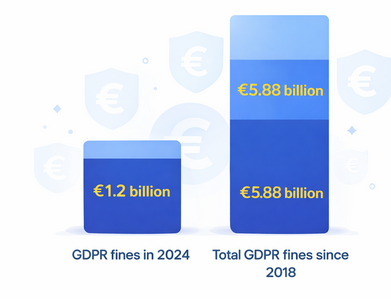
GDPR enforcement continues to impose significant financial penalties on companies mishandling user data
Users must be clearly informed about how their data will be used. They also have rights to access, correct, delete, or restrict the processing of their personal data.
Advertisers must therefore ensure their tracking setups align with privacy notices and data access procedures.
Modern Tracking Challenges for Meta Advertisers
Privacy regulations are not the only obstacle. Browser-level restrictions and platform changes have also reduced traditional tracking accuracy.
Several developments have reshaped the landscape:
-
Apple's App Tracking Transparency reduced cross-app tracking availability dramatically.
-
Third‑party cookies are being phased out by major browsers.
-
Ad blockers are used by approximately 40% of global internet users.
As a result, many advertisers report signal loss in attribution models and inconsistent event tracking across devices.
To maintain reliable insights, marketers must adopt more resilient and privacy-conscious tracking architectures.
GDPR-Compliant Tracking Strategies
Implement Consent-Based Event Tracking
Consent management should be the foundation of any compliant tracking system.
A properly configured consent management platform ensures that tracking scripts only fire once a user has granted permission. Event tracking for actions such as page views, sign-ups, or purchases should be conditional on user consent.
Key best practices include:
-
Trigger tracking scripts only after consent confirmation
-
Store proof of consent
-
Allow users to modify consent preferences at any time
This approach not only ensures compliance but also increases trust with website visitors.
Use First-Party Data Infrastructure
First-party data has become the most reliable asset for advertisers operating under strict privacy regulations.
Instead of relying heavily on third-party identifiers, advertisers should prioritize data collected directly from interactions on their own websites and platforms.
Examples of first-party signals include:
-
Account registrations
-
Email subscriptions
-
Purchase events
-
Logged-in user activity
First-party data is generally more resilient to browser restrictions and aligns better with GDPR transparency requirements.
Implement Server-Side Tracking
Server-side tracking is increasingly adopted as a privacy-friendly alternative to purely browser-based data collection.
With server-side implementations, event data is first processed on a secure server environment before being transmitted to advertising platforms.
Benefits include:
-
Greater control over which data fields are shared
-
Reduced dependence on browser cookies
-
Improved data reliability in restricted environments
Many organizations report up to 20–30% improvement in event match quality after implementing server-side tracking frameworks.
Focus on Aggregated and Modeled Attribution
Because individual user tracking is becoming more limited, advertisers must rely more on aggregated analytics and statistical modeling.
Modern attribution models combine partial signals from multiple sources to estimate campaign performance.
While this approach sacrifices some user-level granularity, it allows advertisers to maintain actionable insights without violating privacy requirements.
Building a Sustainable Measurement Framework
A future-proof measurement strategy balances performance optimization with privacy protection.
Advertisers should consider the following operational practices:
-
Conduct regular data protection audits
-
Document all tracking and data processing activities
-
Limit unnecessary parameters in event payloads
-
Maintain clear communication in privacy policies
Organizations that proactively integrate privacy considerations into their analytics infrastructure will be far better positioned as regulations continue to evolve.
Conclusion
Privacy regulations and technological restrictions have fundamentally changed the digital advertising landscape. For Meta advertisers, maintaining performance insights now requires a shift toward consent-based tracking, first-party data strategies, and server-side infrastructure.
By adopting GDPR-compliant tracking methods, advertisers can continue optimizing campaigns while respecting user privacy and reducing regulatory risk.
Recommended Reading
For further insights into privacy-focused marketing analytics, consider exploring these articles: