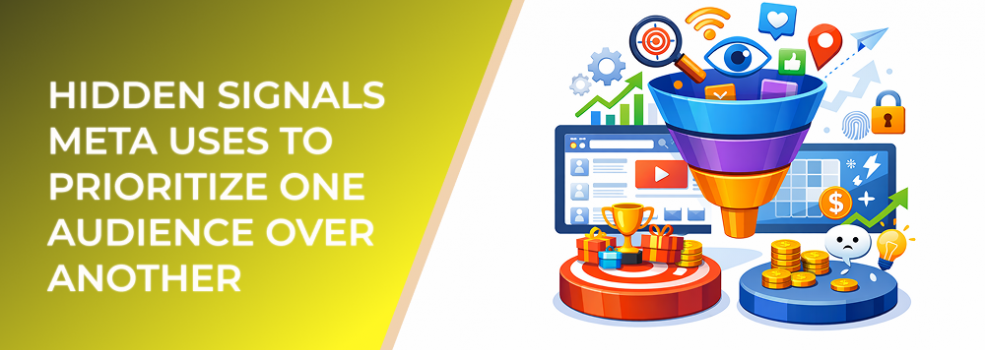
Meta’s ad delivery system is designed to maximize predicted outcomes such as clicks, conversions, or engagement. Instead of distributing impressions evenly across selected audiences, the algorithm automatically prioritizes groups it predicts will generate the highest results.
According to industry research, Meta’s machine‑learning models evaluate thousands of data points per ad impression. In many campaigns, more than 70% of impressions can concentrate within a small subset of the originally targeted audience once the system identifies high‑performing users.
For advertisers, this means the audience defined in Ads Manager often differs significantly from the audience that actually receives most impressions.
Hidden Behavioral Signals
One of the most influential categories of signals involves subtle behavioral patterns. These signals help the system estimate how likely a person is to respond to an ad.
Examples include:
-
Historical engagement with similar ads
-
Interaction patterns with posts and stories
-
Time spent watching video content
-
Frequency of purchases after clicking ads
Studies show that users who previously engaged with ads are up to three times more likely to receive additional ad impressions compared with users who rarely interact with advertising.
Conversion Probability Modeling
Meta also predicts the likelihood that each user will complete a desired action.
The system analyzes past events such as:
-
Purchases
-
App installs
-
Lead form submissions
-
Website visits tracked by the Meta Pixel
When campaigns optimize for conversions, the algorithm prioritizes users with the highest predicted probability of completing that action. This is why advertisers frequently observe that a large share of conversions originates from a relatively small group of users.
Research from performance marketing reports suggests that in many conversion‑optimized campaigns, roughly 60–80% of conversions come from the top 20% of users identified by the model.
Auction Value Signals
Every ad impression enters an auction. Meta determines the winner using three primary factors:
-
Bid amount
-
Estimated action rate
-
Ad quality and relevance
The estimated action rate relies heavily on hidden signals derived from user behavior, device context, and historical data. Even if two advertisers bid the same amount, the system may prioritize one audience segment because its predicted action rate is higher.
This dynamic means that ad delivery is constantly shifting toward users who maximize expected value for the platform.
Device and Context Signals
Meta also evaluates environmental signals surrounding each impression. These include:
-
Device type and operating system
-
Network speed
-
Time of day
-
Recent app activity
For example, mobile users often receive a higher share of impressions in ecommerce campaigns because data shows they complete purchases more frequently after interacting with social media ads.

Most social media ad impressions occur on mobile devices, which strongly influences how advertising algorithms prioritize users and placements
According to recent digital advertising benchmarks, more than 85% of Meta ad impressions now occur on mobile devices.
Engagement Momentum
Another important signal is engagement momentum — the speed at which an ad begins generating interactions after launch.
Ads that quickly receive likes, comments, clicks, or shares tend to gain algorithmic priority. When early engagement signals are strong, the system assumes the ad is relevant to similar users and expands delivery toward those segments.
This effect can cause two campaigns with identical targeting to produce dramatically different reach patterns.
Practical Implications for Advertisers
Understanding how hidden signals influence delivery can help marketers design more predictable campaigns.
Key implications include:
-
Campaigns should gather meaningful engagement early to influence optimization
-
Conversion tracking must be accurate so the algorithm can identify high‑value users
-
Audience sizes should be broad enough for the system to discover responsive segments
Advertisers who align campaign structure with algorithmic optimization tend to see significantly lower acquisition costs.
Industry benchmarks indicate that campaigns optimized with strong conversion signals can reduce cost per acquisition by 20–30% compared with poorly optimized campaigns.
Conclusion
Meta’s advertising platform does far more than simply match ads to predefined audiences. Behind the scenes, complex machine‑learning models evaluate behavioral patterns, conversion probabilities, engagement signals, and contextual data to determine which users are most valuable for a campaign.
For advertisers, recognizing that hidden signals drive delivery is essential. Campaign success often depends less on manual targeting and more on providing the algorithm with clear signals about which users are most likely to respond.
Suggested Articles to Read Next