Lead scoring has long been a cornerstone of modern sales and marketing strategies. By assigning value to prospects based on their likelihood to convert, teams can focus resources on the most promising opportunities. However, traditional lead scoring methods—often based on static rules and limited datasets—struggle to keep pace with increasingly complex buyer journeys.
Artificial intelligence (AI) addresses these limitations by introducing dynamic, data-driven scoring models that continuously learn and adapt. As a result, organizations can significantly improve both the accuracy and effectiveness of their lead qualification processes.
Limitations of Traditional Lead Scoring
Conventional lead scoring systems typically rely on predefined rules, such as demographic data, firmographics, and basic behavioral signals. While these methods provide a starting point, they present several challenges:
-
Subjectivity: Scoring criteria are often based on assumptions rather than data-backed insights.
-
Static models: Rules rarely evolve in real time, making them less responsive to changing buyer behavior.
-
Limited data usage: Traditional systems cannot effectively process large volumes of complex or unstructured data.
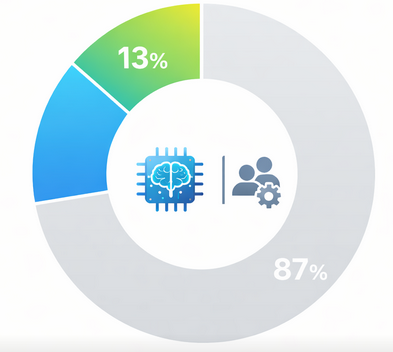
Most organizations have yet to adopt AI for lead scoring, creating a significant competitive gap
According to industry research, up to 68% of B2B organizations report that their lead scoring models are only moderately effective or worse, highlighting the need for more advanced approaches.
How AI Enhances Lead Scoring Accuracy
1. Data-Driven Insights at Scale
AI models analyze vast datasets, including historical conversions, engagement patterns, CRM activity, and external signals. This allows for more comprehensive and nuanced scoring.
Studies show that AI-driven lead scoring can increase conversion rates by up to 30% by identifying high-intent leads more accurately.
2. Continuous Learning and Adaptation
Unlike static models, AI systems continuously update their scoring algorithms based on new data. This ensures that scoring remains aligned with evolving customer behaviors.
Organizations using machine learning for lead scoring report up to a 25% improvement in sales productivity due to better prioritization.
3. Behavioral Pattern Recognition
AI excels at detecting patterns in user behavior that may not be obvious to human analysts. For example, it can identify combinations of actions—such as repeated website visits, content downloads, and email interactions—that signal strong buying intent.
4. Predictive Modeling
Predictive analytics allows AI systems to forecast the likelihood of conversion based on historical data. This shifts lead scoring from reactive to proactive decision-making.
Research indicates that companies leveraging predictive lead scoring experience a 20% increase in sales opportunities.
5. Reduction of Human Bias
AI minimizes subjective bias by relying on empirical data rather than assumptions. This leads to more consistent and objective lead evaluation.
Key Benefits for Sales and Marketing Teams
Implementing AI-driven lead scoring delivers measurable advantages:
-
Higher conversion rates through better lead prioritization
-
Improved alignment between marketing and sales teams
-
Enhanced efficiency by focusing efforts on high-value prospects
-
Scalability to handle growing datasets and complex buyer journeys
Organizations that adopt AI for lead management report up to a 50% increase in qualified leads entering the sales pipeline.
Best Practices for Implementing AI Lead Scoring
To maximize the effectiveness of AI-driven lead scoring, consider the following practices:
-
Integrate diverse data sources: Combine CRM, marketing automation, and external data for richer insights.
-
Ensure data quality: Clean, accurate data is critical for reliable AI predictions.
-
Collaborate across teams: Align sales and marketing objectives to define meaningful scoring outcomes.
-
Monitor and refine models: Regularly evaluate performance and adjust models as needed.
Suggested Articles for Further Reading
Conclusion
AI is redefining how organizations approach lead scoring by introducing intelligent, adaptive systems capable of processing complex data at scale. By improving accuracy, reducing bias, and enabling predictive insights, AI empowers sales and marketing teams to focus on the opportunities that matter most.
As buyer behavior continues to evolve, adopting AI-driven lead scoring is no longer optional—it is a strategic necessity for maintaining competitive advantage.