Buyer intent is not static. It fluctuates throughout the year in response to fiscal cycles, budget planning periods, consumer mood shifts, and macroeconomic behavior. Spring consistently marks a transition from evaluation mode to execution mode.
Across multiple industries, Q1 is characterized by cautious budget deployment. Decision-makers reassess vendors, analyze prior-year performance, and set new KPIs. By late Q1 and early Q2, those budgets begin moving.
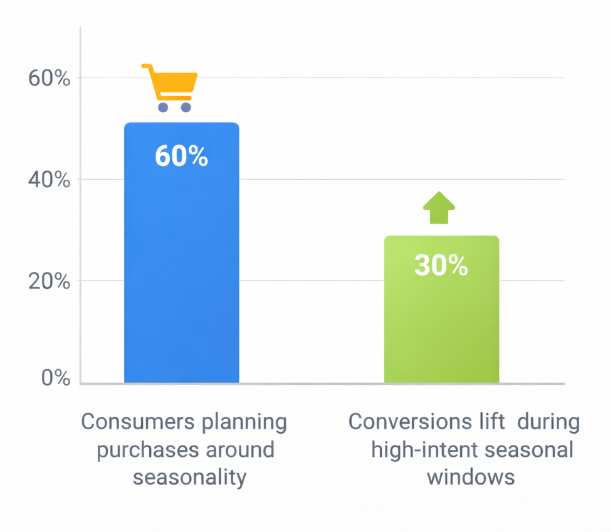
Percentage of consumers who plan purchases around seasonal events and the corresponding conversion uplift in high-intent periods
Several data-backed behavioral patterns explain this shift:
-
Retail sales historically increase between March and May following post-holiday slowdowns.
-
In B2B sectors, marketing and sales budget utilization typically accelerates in Q2 after strategic planning cycles conclude.
-
Search volume across high-intent commercial queries tends to rise in early spring, particularly in industries tied to growth, hiring, expansion, and optimization.
This isn’t coincidence — it’s budget release combined with psychological renewal.
From Research Mode to Purchase Mode
During winter months, many buyers operate in exploratory mode. They consume content, compare vendors, and gather data. Conversion rates often decline despite stable traffic levels.
In spring, three changes occur:
-
Shortened decision cycles. Buyers who spent weeks researching move toward execution.
-
Increased urgency. Q2 performance targets create pressure to implement solutions.
-
Budget clarity. Approved allocations reduce procurement friction.
According to industry benchmarks, B2B conversion rates can increase by 10–20% between late Q1 and mid-Q2 when campaign messaging aligns with implementation readiness rather than awareness.
If ads were underperforming in January or February, the issue may not have been targeting or creative — it may have been timing relative to intent maturity.
Why Ads Start Converting Again
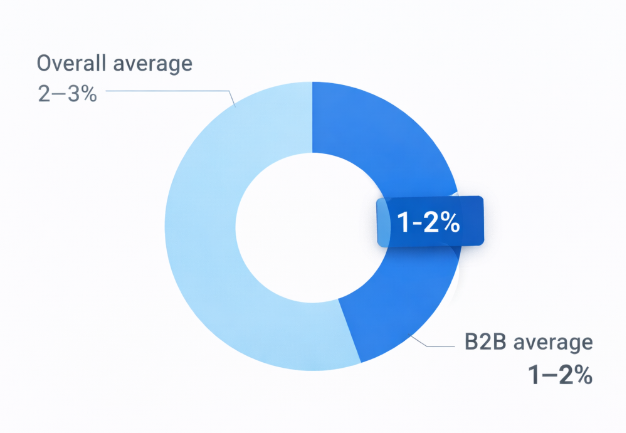
Comparison of average conversion rates across all industries versus B2B sectors
When buyer intent strengthens, three advertising mechanics improve simultaneously:
1. Click-Through Rate (CTR)
Higher commercial intent leads to stronger resonance with solution-driven messaging.
2. Conversion Rate (CVR)
Landing pages perform better because visitors are closer to decision.
3. Cost Efficiency
As conversion rates rise, effective cost per acquisition decreases — even if cost per click remains stable.
Performance marketers often observe that campaigns paused during winter can regain profitability in spring without major structural changes.
The key difference is audience temperature.
Industry-Specific Spring Intent Surges
While seasonality affects most sectors, certain verticals experience more pronounced lift:
-
SaaS and B2B services (budget activation in Q2)
-
HR and recruitment platforms (spring hiring cycles)
-
Home improvement and construction (warmer weather project starts)
-
Fitness and wellness (post-winter behavior shifts)
-
Travel and hospitality (early summer planning)
Understanding whether your industry aligns with these seasonal patterns determines whether to scale aggressively or test cautiously.
Strategic Adjustments to Capture Spring Demand
If intent is rising, campaign strategy should reflect implementation readiness.
Shift Messaging Toward Outcomes
Replace educational messaging with:
-
ROI-driven headlines
-
Case study positioning
-
Time-to-value framing
Tighten Retargeting Windows
Shorten lookback periods to prioritize users who recently engaged and are likely moving toward purchase.
Increase Budget on High-Intent Segments
Focus spend on:
-
Bottom-of-funnel keyword clusters
-
Competitor comparison audiences
-
Website visitors from pricing or demo pages
Re-test Previously Paused Campaigns
Campaigns that underperformed in low-intent periods may become profitable as intent strengthens.
Data Signals That Confirm Intent Is Rising
Instead of guessing, monitor these indicators:
-
Rising branded search volume
-
Increased demo requests relative to traffic
-
Shorter sales cycle length
-
Improved email reply rates
-
Higher ad engagement from decision-maker job titles
When two or more of these metrics trend upward simultaneously, seasonality is likely influencing behavior.
Common Mistake: Scaling Too Slowly
Many teams wait for multiple weeks of confirmed performance before increasing budget. In seasonal windows, delay reduces upside.
Spring demand surges are often concentrated in 60–90 day windows. If competitors scale faster, auction competition increases and cost efficiency declines.
The correct approach is controlled acceleration: incremental budget increases paired with close monitoring of CPA and ROAS thresholds.
Conclusion: Seasonality Is a Performance Lever
If ads start converting again in spring, it isn’t random. It reflects renewed buyer intent driven by budget activation, psychological renewal, and operational planning cycles.
Performance improvement during this period is not about luck — it’s about alignment.
Marketers who understand intent timing outperform those who only optimize creatives and bids.
Recommended Reading
Spring doesn’t automatically fix campaigns. But when intent rises, aligned strategy converts momentum into measurable growth.