Performance spikes—sudden increases in metrics such as traffic, conversions, or engagement—are often celebrated. However, not all spikes are beneficial or even real. Artificial spikes can result from bots, tracking errors, misconfigured campaigns, or short-term anomalies that do not reflect sustainable growth.
Failing to identify these anomalies can lead to flawed conclusions, poor budget allocation, and ineffective optimization strategies. Understanding how to detect artificial performance spikes is critical for maintaining accurate analytics and making data-driven decisions.
What Are Artificial Performance Spikes?
Artificial performance spikes are abnormal, short-term increases in key metrics that do not represent genuine user behavior or long-term trends. These spikes can originate from both internal and external sources.
Common causes include:
-
Bot traffic or click farms
-
Tracking or attribution errors
-
Misconfigured marketing campaigns
-
Viral but irrelevant traffic
-
Data duplication or reporting glitches
According to industry studies, up to 40% of internet traffic can be attributed to bots, with a significant portion classified as malicious. Additionally, analytics misconfigurations account for approximately 15–25% of reported anomalies in marketing dashboards.
Why Artificial Spikes Are Dangerous
Artificial spikes can create a false sense of success. Teams may incorrectly assume that a campaign or channel is performing well, leading to:
-
Misallocation of budget
-
Incorrect targeting decisions
-
Inflated ROI calculations
-
Poor forecasting accuracy
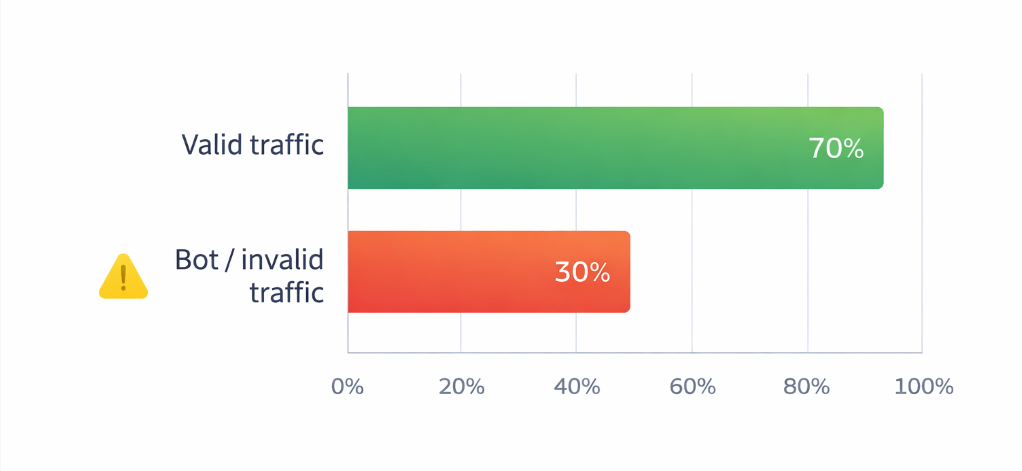
A significant portion of marketing spend can be lost to bot-driven traffic, distorting performance metrics and ROI calculations
Research indicates that companies relying on flawed analytics data can see up to a 20% decrease in marketing efficiency due to misguided optimizations.
Key Indicators of Artificial Spikes
1. Sudden Traffic Surges Without Context
A sharp increase in traffic without a corresponding campaign, announcement, or seasonal trend is a strong indicator of artificial activity.
Look for:
-
Traffic spikes outside business hours
-
Unusual geographic sources
-
High volume from a single referral source
2. Abnormally High Bounce Rates
If traffic increases while engagement drops significantly, the spike is likely artificial.
Typical benchmarks:
-
Normal bounce rate: 40–60%
-
Suspicious bounce rate: 80%+
3. Disproportionate Conversion Rates
Artificial spikes often show either extremely high or extremely low conversion rates compared to historical averages.
For example:
-
Conversion rate jumps from 3% to 15% overnight
-
Or drops to near zero despite increased traffic
4. Short Session Durations
Bots and low-quality traffic typically result in session durations under 5 seconds. A spike accompanied by a drastic decrease in average session time is a red flag.
5. Repeated Patterns in User Behavior
Artificial traffic often follows predictable patterns, such as:
-
Identical session durations
-
Repeated page sequences
-
High frequency of single-page visits
Methods to Detect Artificial Spikes
1. Segment Your Data
Break down performance metrics by:
-
Source/medium
-
Geographic location
-
Device type
-
Time of day
Segmentation helps isolate anomalies and identify the exact source of irregular activity.
2. Analyze Traffic Sources
Identify whether spikes originate from:
-
Unknown referral domains
-
Suspicious ad placements
-
Low-quality partner networks
A sudden influx from a single obscure source often indicates artificial activity.
3. Compare Against Historical Baselines
Establish benchmarks using past data. If current performance deviates significantly without a clear reason, further investigation is required.
A deviation of more than 30–50% from baseline metrics typically warrants analysis.
4. Use Anomaly Detection Tools
Advanced analytics platforms can automatically flag irregular patterns using machine learning.
These tools can detect:
-
Traffic anomalies
-
Conversion irregularities
-
Behavioral inconsistencies
5. Audit Tracking and Attribution
Ensure that:
-
Tracking pixels are correctly implemented
-
Events are not firing multiple times
-
Attribution models are properly configured
Even minor tracking errors can inflate metrics significantly.
How to Prevent Artificial Spikes
1. Implement Bot Filtering
Use filtering mechanisms to exclude known bot traffic. Many analytics tools allow automatic filtering based on bot databases.
2. Monitor Campaign Quality
Avoid low-quality traffic sources and continuously evaluate partner performance. Pause campaigns that generate suspicious activity.
3. Set Up Alerts
Configure alerts for unusual changes in:
-
Traffic volume
-
Conversion rates
-
Engagement metrics
Real-time alerts enable faster response and minimize impact.
4. Maintain Data Hygiene
Regularly audit your analytics setup to prevent duplication, misfires, and inconsistencies.
Real-World Example
A B2B company experienced a 120% increase in website traffic over two days. Initially perceived as a successful campaign, further analysis revealed:
-
85% of traffic came from a single unknown referral source
-
Bounce rate exceeded 90%
-
Average session duration dropped below 3 seconds
After filtering out the source, actual performance returned to baseline, preventing misallocation of budget and incorrect strategic decisions.
Conclusion
Artificial performance spikes can significantly distort your analytics and lead to costly mistakes. By identifying key indicators, segmenting your data, and implementing preventive measures, you can ensure that your performance metrics accurately reflect real user behavior.
Accurate data is the foundation of effective decision-making. Detecting and eliminating artificial spikes is not just a technical task—it is a strategic necessity.
Recommended Reading