Audience saturation happens when the same people see your ads too often, causing engagement and conversion rates to decline. Once most high-intent users in an audience have already interacted, converted, or consciously ignored your ads, additional impressions become less effective and more expensive.
Saturation is not tied to budget size alone. Even small budgets can saturate narrow or highly specific audiences, while large budgets can remain efficient when audiences are refreshed or expanded correctly.
Key Signs of Audience Saturation
Rising Frequency With Flat or Falling Results
Frequency measures how often the same user sees your ad over a given period. A frequency that steadily climbs while conversions stay flat or decline is one of the clearest indicators of saturation.
Industry benchmarks show that when frequency exceeds 2.5–3.0 within 7 days for prospecting audiences, click-through rate often drops by 15–25%, while cost per conversion increases.
Declining Click-Through Rate (CTR)
A consistent CTR decrease, especially when creative and bidding remain unchanged, often signals audience fatigue rather than creative fatigue.
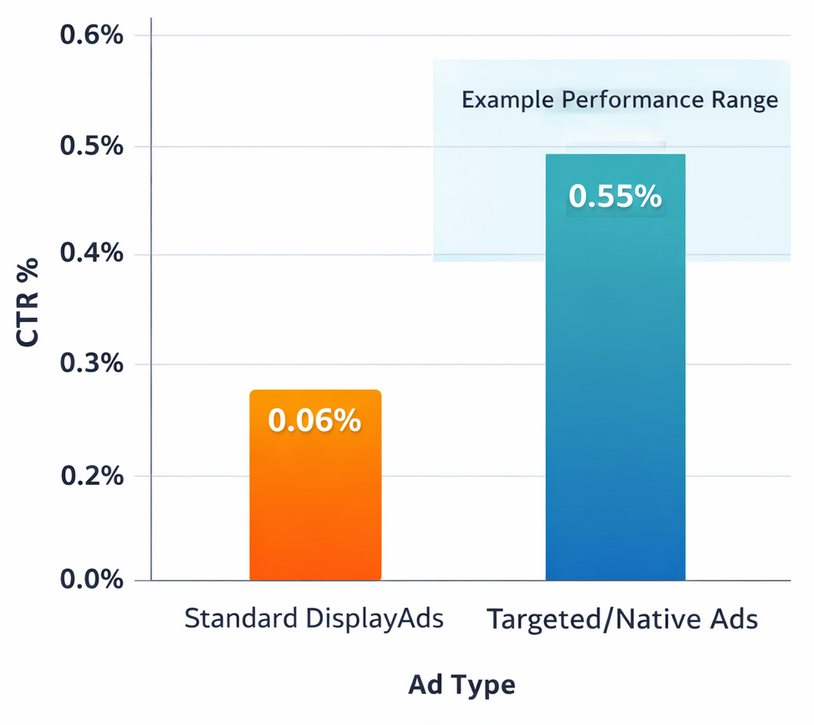
Average click-through rates (CTR) for display ads show how engagement varies by format, illustrating why CTR decline is a key signal of audience saturation
On average, saturated audiences see CTR decline by 20–40% compared to their initial performance window.
Increasing Cost per Conversion
When cost per conversion rises without changes to landing pages, tracking, or offer structure, audience exhaustion is frequently the root cause.
Data across multiple ad accounts shows that once audiences become saturated, cost per conversion can rise by 30–60% over a 2–4 week period.
Shrinking Reach Despite Stable Budget
If daily spend remains consistent but reach or impressions stop growing, the platform may be repeatedly serving ads to the same users. This typically occurs in narrow custom or interest-based audiences.
How to Confirm Saturation (Not Other Issues)
Before acting, it’s critical to rule out other common causes of performance decline:
-
Creative fatigue: If new creatives restore performance, saturation may not be the issue.
-
Seasonality or demand shifts: Compare performance with the same period in previous months.
-
Tracking or attribution changes: Sudden drops across all campaigns may indicate technical issues.
If performance remains weak after creative refreshes and no external changes are identified, saturation is the most likely explanation.
Metrics to Monitor Weekly
To catch saturation early, track these metrics on a rolling 7–14 day basis:
-
Frequency
-
Click-through rate (CTR)
-
Cost per conversion
-
Unique reach vs. impressions
-
Conversion volume stability
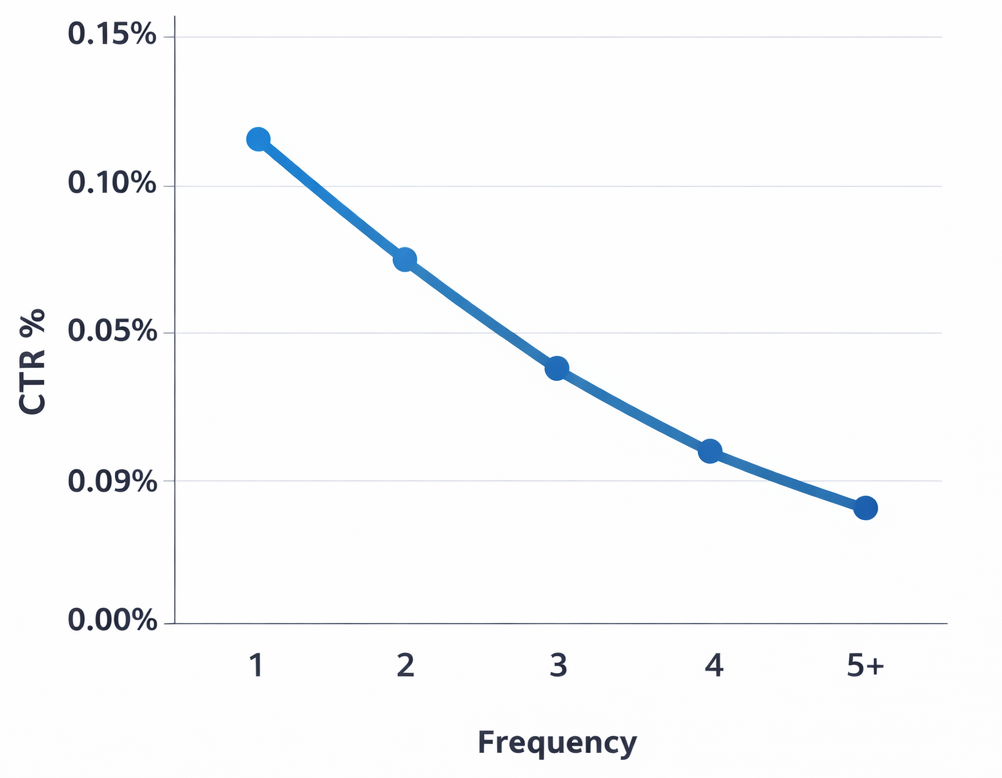
Engagement tends to decline as ad frequency increases, a measurable sign of audience saturation that signals when to refresh or expand audiences
A healthy audience typically shows stable CTR and cost per conversion while frequency grows slowly. When frequency accelerates and efficiency drops, saturation is setting in.
What to Do When Saturation Is Detected
Expand or Refresh Audiences
Gradually broaden targeting parameters or introduce new seed data to bring fresh users into delivery. Even modest expansions can significantly extend audience lifespan.
Rotate Audiences Strategically
Instead of continuously pushing spend into one audience, alternate between multiple qualified audiences. This helps reduce overexposure while maintaining delivery stability.
Consolidate Overlapping Audiences
Overlapping audiences can accelerate saturation by competing against each other. Consolidation often improves delivery efficiency and slows frequency growth.
Adjust Budget Scaling Pace
Aggressive scaling can rapidly exhaust smaller audiences. Slower, incremental budget increases reduce the risk of sudden saturation.
Final Thoughts
Audience saturation is a natural phase of every successful campaign. The goal isn’t to avoid it completely, but to detect it early and respond with the right structural adjustments. By monitoring frequency, CTR, and cost trends together, you can identify saturation before it significantly impacts overall performance.