Testing and experimentation are often used interchangeably in marketing and growth discussions. In practice, they represent two very different approaches to learning and optimization. One focuses on validating specific changes, while the other is designed to uncover deeper insights about how and why performance changes over time.
Recognizing the difference is essential for teams that want reliable data, sustainable performance improvements, and fewer costly false conclusions.
What Testing Really Means
Testing is typically a tactical process. It answers a narrow, well-defined question, such as whether version A performs better than version B.
Common characteristics of testing include:
-
A single variable change (for example, headline, creative, or call to action)
-
A short time frame
-
A clear success metric, such as click-through rate or cost per conversion
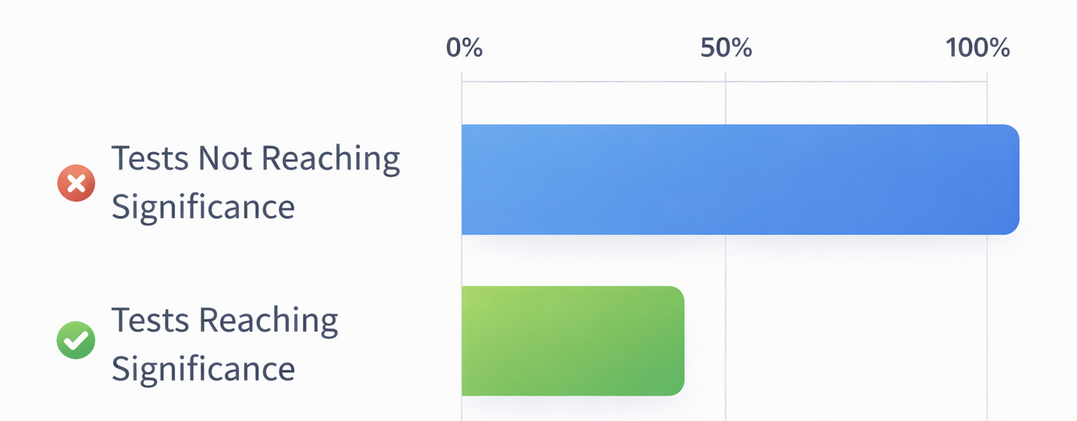
Percentage of A/B Tests That Reach Statistical Significance
Testing is especially useful for incremental optimization. Industry benchmarks show that only about 10–30% of A/B tests reach statistical significance, which means most tests either fail to produce clear winners or are stopped too early to draw reliable conclusions.
When used correctly, testing helps fine-tune existing strategies. When overused or rushed, it can lead to overfitting and decisions based on noise rather than signal.
What Experimentation Is About
Experimentation is broader and more strategic. Instead of asking “Which version performs better?”, experimentation asks “What happens if we change how this system works?”
Key traits of experimentation include:
-
Multiple variables or structural changes
-
Longer learning periods
-
A focus on understanding cause-and-effect relationships
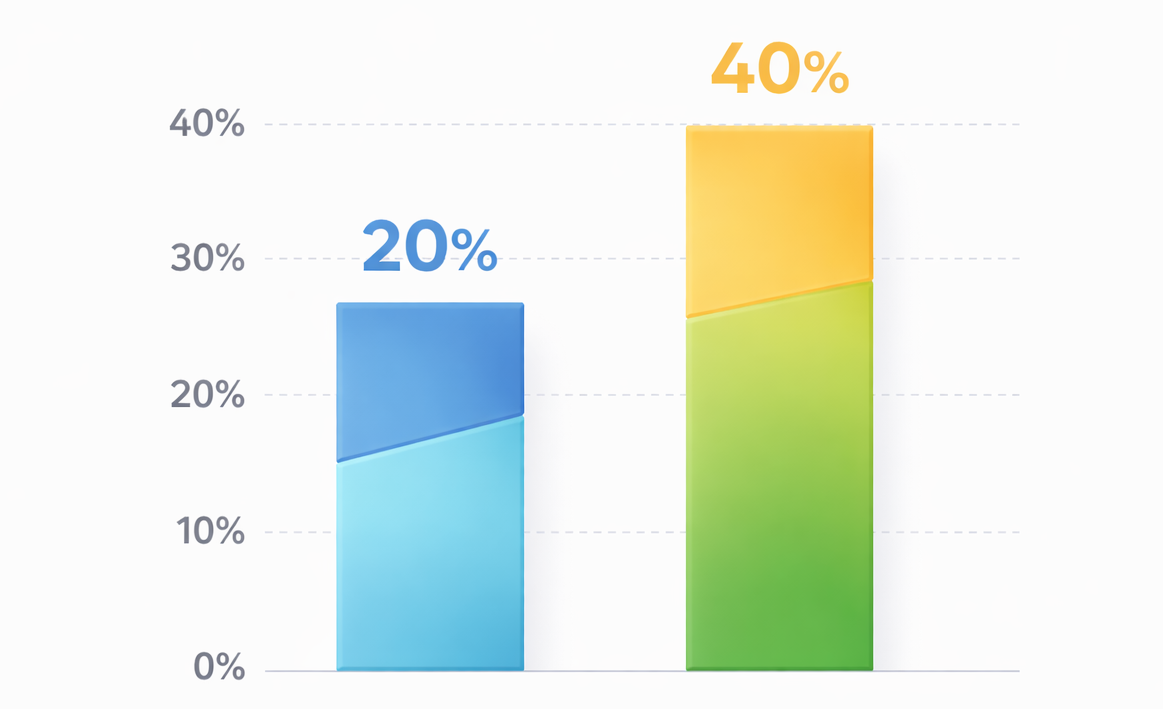
Conversion Rate Lift Range from Strategic Experimentation
Experiments often explore new audience strategies, bidding models, funnel structures, or budget allocation approaches. According to large-scale marketing studies, well-designed experiments can drive conversion rate lifts of 20–40% when insights are applied across campaigns, not just within a single test.
Unlike tests, experiments are designed to generate knowledge that can be reused across accounts, channels, and future campaigns.
Testing vs. Experimentation: A Practical Comparison
Testing is about confirmation. Experimentation is about discovery.
-
Testing answers: “Is this better than that?”
-
Experimentation answers: “Why did performance change, and will it scale?”
Testing typically leads to local improvements, such as a slightly higher CTR. Experimentation often leads to strategic shifts, such as redefining target segments or restructuring campaigns.
Both approaches are valuable, but they should not be confused or treated as interchangeable.
When to Use Each Approach
Testing works best when:
-
You already have a stable baseline
-
You want to optimize a specific element
-
The risk of change must remain low
Experimentation is more appropriate when:
-
Performance has plateaued
-
You are entering new markets or audiences
-
You need insights that apply beyond a single campaign
Data from performance-driven teams shows that organizations combining regular testing with periodic experimentation are up to 2× more likely to sustain long-term growth compared to teams that rely on testing alone.
Common Mistakes to Avoid
One of the most common mistakes is running small tests and treating the results as universal truths. A creative that wins a test in one audience may fail entirely in another.
Another frequent issue is calling every change an “experiment” without proper design, control groups, or sufficient data volume. Without these elements, results are difficult to trust and nearly impossible to scale.
Building a Balanced Learning Framework
High-performing teams separate testing and experimentation into different layers of their strategy. Testing is used continuously to optimize execution, while experimentation is planned deliberately to challenge assumptions and unlock new growth opportunities.
This balance reduces wasted spend, increases confidence in decisions, and ensures that insights compound over time rather than resetting with every new test.
Related Articles
Conclusion
Testing helps you improve what already exists. Experimentation helps you understand what could exist next. Teams that know when to use each approach move faster, learn more reliably, and build strategies that scale beyond short-term wins.