Meta Ads campaigns rarely fail because of one wrong setting. They fail because the funnel moves unevenly. One stage gets attention while another quietly breaks.
Funnel imbalance reduces efficiency even when metrics look fine. You may see cheap clicks, but sales stay flat. The issue is structural, not creative.
This guide shows how to spot imbalance and fix it with clear steps.
What Funnel Imbalance Really Means
Funnel imbalance happens when traffic, intent, and budget do not match across stages. One layer grows while another cannot convert.
For example, prospecting drives traffic but retargeting lacks volume. Or retargeting spends heavily while cold traffic dries up. Both scenarios create unstable results.
If you need a deeper look at stage structure, read this guide on mapping the customer journey to Facebook campaign structure. It explains how campaign setup influences flow between stages.
Common Imbalance Patterns
Here are patterns that show up often in Meta accounts:
-
Prospecting overload with weak retargeting depth. You generate traffic, but audience pools never grow enough to support strong remarketing. Frequency rises and results drop.
-
Retargeting dependence with no top-of-funnel growth. Warm campaigns perform for a while, then audience size shrinks. CPA rises because no new users enter the system.
-
Middle funnel congestion. Many landing page views occur, but few users take the next step. This signals friction between your ad promise and page experience.
Each pattern needs a different fix. First, diagnose correctly.
Step 1: Map Your Funnel With Ratios, Not Just Volume
Looking at campaigns separately hides structural problems. You need to see the funnel as one system.
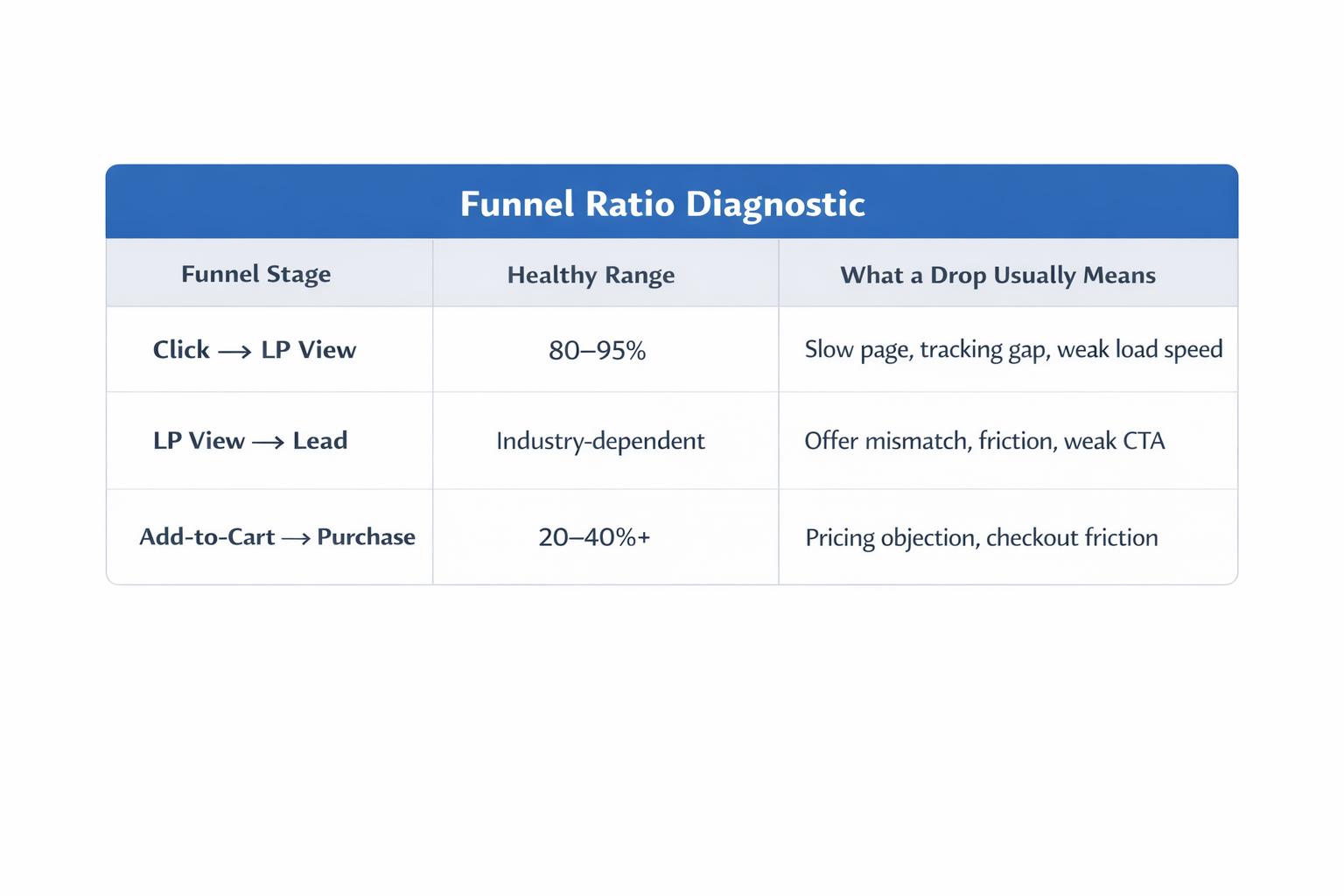
Track these layers together:
-
Impressions and reach at the top; measure unique exposure.
-
Landing page views; compare clicks to actual page loads.
-
Micro conversions; such as add-to-cart or form start.
-
Final conversions; revenue or qualified leads.
If your clicks look strong but conversions lag, review why clicks don’t equal demand. High CTR does not guarantee buying intent.
Key Ratios to Watch
Volume can mislead you. Ratios reveal bottlenecks.
Focus on:
-
Click-to-landing page view rate; low numbers often mean slow pages.
-
Landing page view-to-lead rate; shows message alignment.
-
Add-to-cart-to-purchase rate; reveals checkout friction.
If one ratio drops sharply, that stage constrains growth.
Step 2: Align Budget With the Bottleneck
Many advertisers scale whatever performs today. That approach often worsens imbalance.
If the middle funnel converts poorly, sending more traffic makes things worse. You pay more for the same weak output.
Instead, shift budget based on constraints:
-
If retargeting audiences are small; increase prospecting gradually.
-
If landing pages convert poorly; reduce traffic until fixed.
-
If checkout completion is low; strengthen cart retargeting.
For a detailed breakdown of traffic splits, review prospecting vs retargeting ideal ratios. Balanced allocation protects stability.
Step 3: Clean Up Audience Structure
Audience overlap and poor segmentation often cause imbalance. The algorithm favors easier conversions and ignores weaker stages.
Separate stages clearly:
-
Cold audiences for discovery.
-
Warm audiences for consideration.
-
Hot audiences for conversion.
If you mix them, Meta will prioritize the lowest friction users. That hides real performance issues.
If you suspect overlap, read why audience overlap is killing your Facebook ad performance. Overlapping segments inflate CPM and distort data.
Use Exclusions Intentionally
Exclusions protect funnel logic.
For example:
-
Exclude purchasers from prospecting.
-
Exclude cart abandoners from broader website visitor campaigns.
-
Exclude recent leads from new lead campaigns.
This keeps stages clean and measurable.
Step 4: Match Creative to Funnel Stage
Creative mismatch often breaks the middle funnel. Cold users see direct response ads too early. Warm users see basic awareness messages again.
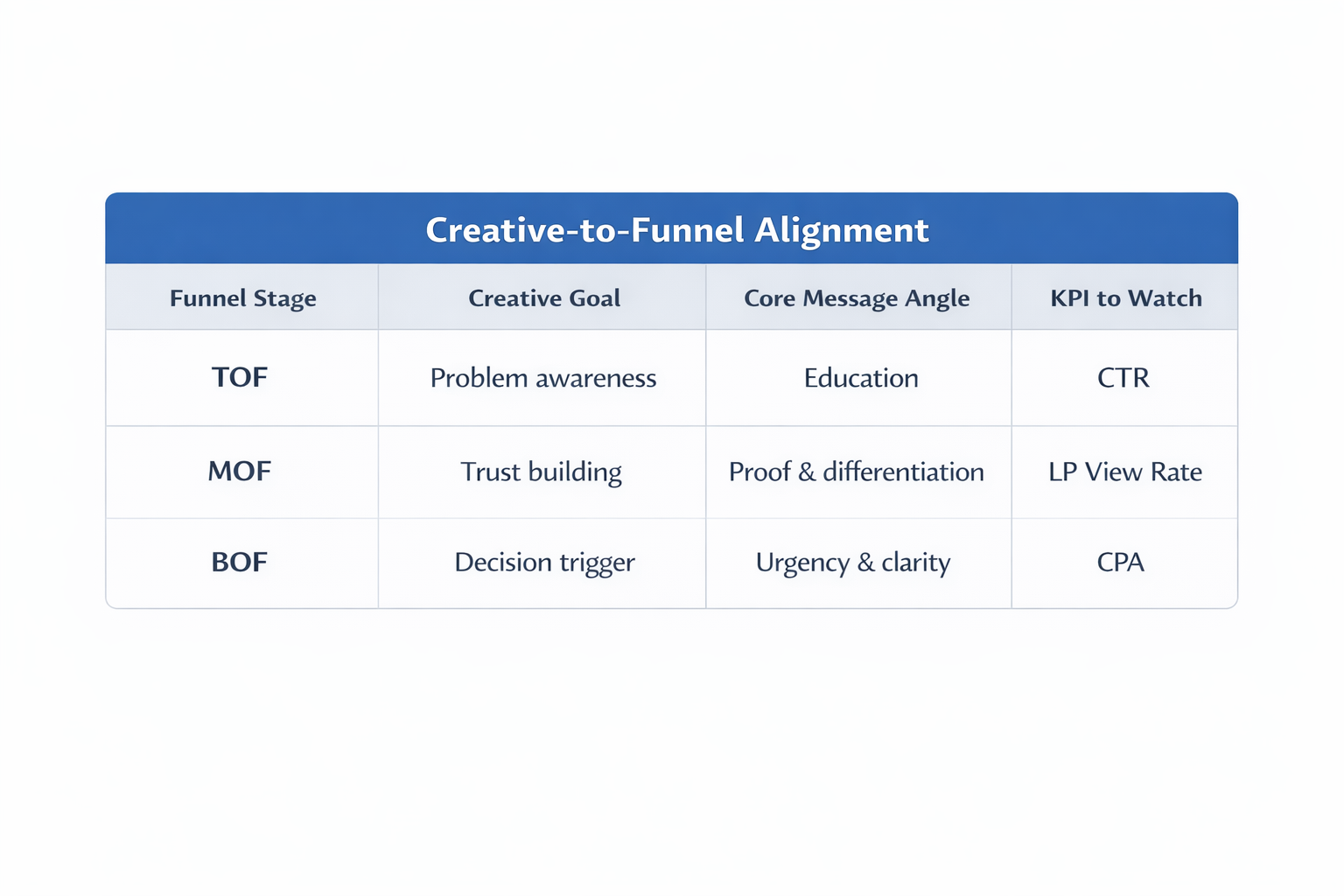
Align creative with intent depth:
-
Top of funnel; educate and frame the problem.
-
Middle of funnel; handle objections and show proof.
-
Bottom of funnel; emphasize urgency and clarity.
If you want a practical framework, review how to build funnel-specific creatives. Creative progression should feel logical, not random.
Step 5: Connect Funnel Metrics to Revenue Quality
Imbalance is not only about volume. It also affects lead quality and revenue depth.
Cheap leads can hide poor qualification. Sales teams feel the gap before marketing does.
Track deeper metrics:
-
Lead-to-meeting rate; measures early qualification.
-
Meeting-to-close rate; tests promise alignment.
-
Revenue per campaign; shows audience profitability.
When volume rises but revenue per lead drops, rebalance targeting and creative. Quality should guide scaling.
Stabilizing the Funnel Over Time
Rapid scaling often breaks balance. Prospecting expands faster than retargeting pools. CPA becomes unstable.
Scale in small steps and watch:
-
Retargeting audience growth.
-
Frequency levels.
-
Conversion rate stability.
If warm audience size does not grow with spend, pause expansion. Restore equilibrium first.
Funnel imbalance is a systems issue. Fixing it requires structure, not random tweaks. When stages support each other, Meta campaigns become predictable and easier to scale.