Audience selection is one of the most expensive points of failure in paid advertising. When targeting is misaligned, even high-quality ads struggle to generate clicks, conversions, or meaningful learning signals. The challenge is that broken audiences often look acceptable at launch but quietly drain budget while providing misleading data.
A broken audience is not simply “too small” or “too broad.” It is an audience that cannot realistically respond to the message being delivered, either due to poor intent, low relevance, weak data quality, or platform misinterpretation. Identifying these issues early protects both budget and optimization timelines.
What Defines a Broken Audience
A broken audience typically shows at least one of the following characteristics:
-
Low engagement signals despite strong creative
-
High costs with no learning progress
-
Erratic or unstable performance metrics
-
No correlation between impressions and downstream actions
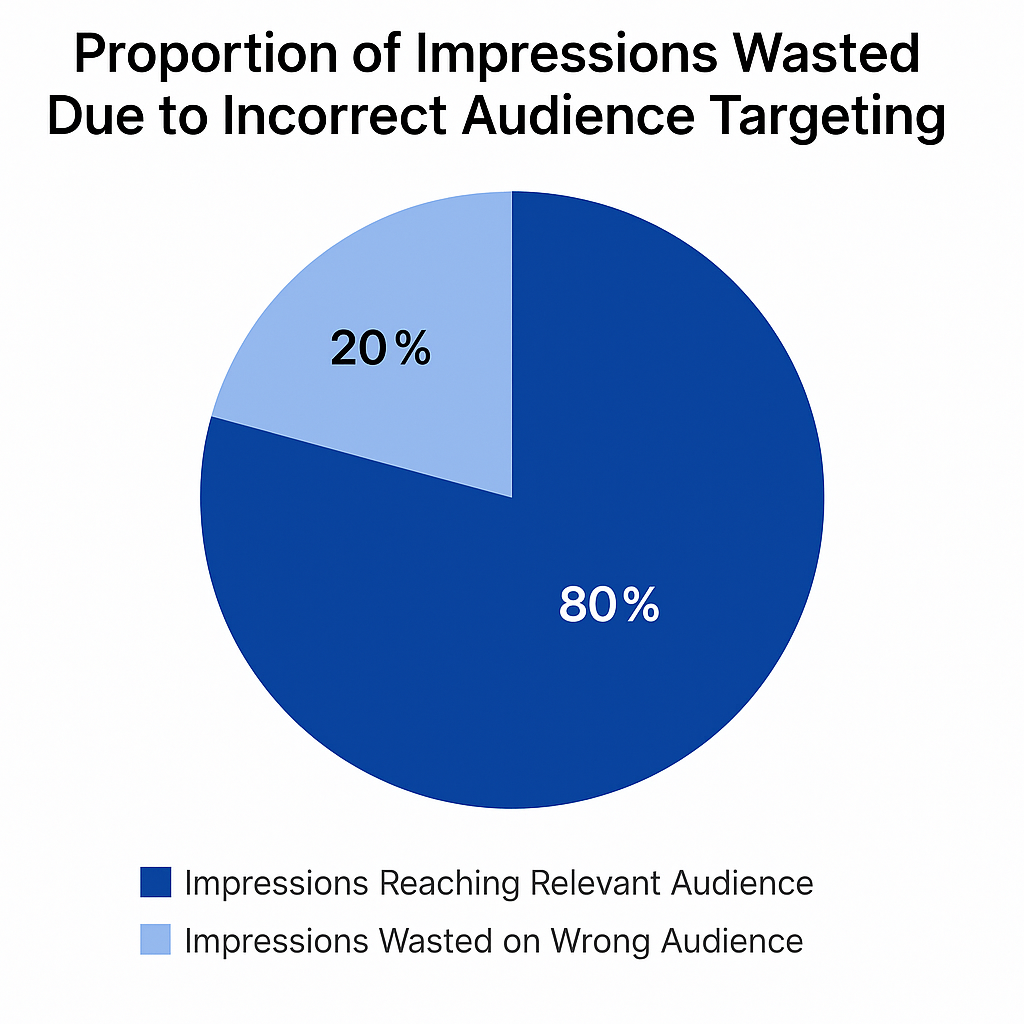
Proportion of impressions wasted due to incorrect audience targeting
According to industry benchmarks, nearly 37% of paid media budgets are lost due to poor audience targeting rather than creative or offer issues. In addition, campaigns that start with misaligned audiences take 2.5× longer to reach stable performance, delaying meaningful optimization.
Early Warning Signs Before Scaling Spend
1. CTR Below Platform Baselines
Click-through rate is often the first indicator of audience health. When CTR is significantly below platform averages, it signals low relevance or poor intent alignment.
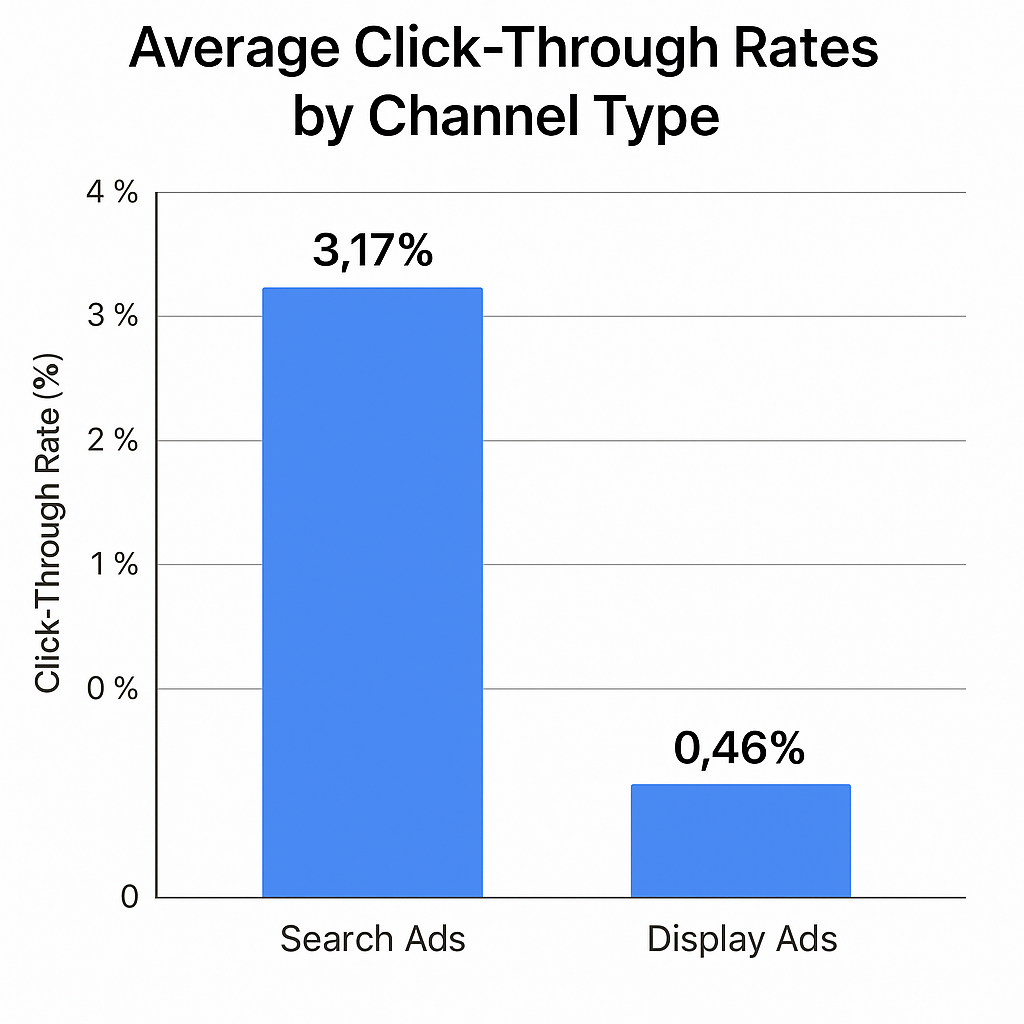
Comparison of average click-through rates for Search vs Display advertising formats in 2025
Average benchmarks show:
-
Search and retargeting audiences often exceed 2–3% CTR
-
Interest-based prospecting typically ranges from 0.8–1.2% CTR
If CTR consistently falls below 0.5% in early delivery, the audience may be fundamentally unresponsive—regardless of creative quality.
2. High CPM With No Engagement Lift
Rising CPMs are not inherently bad, but high CPM combined with low engagement is a red flag. This pattern often indicates that the platform is struggling to find qualified users within the defined audience.
Studies show that audiences with poor data signals can generate up to 60% higher CPMs while delivering fewer clicks and conversions. This cost inflation happens before meaningful learning even begins.
3. No Learning Progress After Initial Spend
Most ad platforms require a minimum number of conversion events to stabilize delivery. When an audience fails to generate signals, the system remains stuck in a learning phase.
Campaign analysis data indicates:
-
Healthy audiences typically show optimization signals within the first 20–30% of planned budget
-
Broken audiences often fail to exit learning even after 50%+ of budget is spent
If there is no directional improvement early, waiting rarely fixes the issue.
Structural Causes of Broken Audiences
Over-Aggregation
Combining too many interests, behaviors, or data sources into one audience often dilutes intent. Broad definitions can appear scalable but lack a clear signal for delivery algorithms.
Stale or Inaccurate Data Sources
Audiences built on outdated engagement or loosely correlated behaviors degrade quickly. Research shows that intent data older than 90 days can lose more than 50% of its predictive value.
Platform Assumption Mismatch
Ad platforms infer intent differently. An audience that performs well in one channel may fail entirely in another due to differences in behavioral modeling and delivery logic.
How to Validate an Audience Before Full Budget Allocation
Start With a Controlled Test Budget
Allocate no more than 10–20% of the planned spend to validate audience responsiveness. The goal is not efficiency, but signal clarity.
Measure Signal Density, Not Just Conversions
Early-stage validation should focus on:
-
Click concentration
-
Engagement consistency
-
Conversion path depth
Audiences that generate shallow clicks with no downstream actions are unlikely to improve at scale.
Compare Against a Known Baseline
Running a control audience alongside a new one helps isolate audience quality from creative or offer variables. In controlled tests, benchmark audiences outperform broken ones by 3–5× in conversion signal density.
When to Kill an Audience
An audience should be paused or rebuilt when:
-
CTR remains below 0.5% after initial optimization
-
CPM rises without engagement improvement
-
No learning progress occurs within expected budget thresholds
Data shows that advertisers who cut underperforming audiences early reduce wasted spend by 28–35% over a quarter, reallocating budget toward scalable segments faster.
Suggested Articles to Read Next
Final Thoughts
Broken audiences are costly not only because they waste budget, but because they distort learning and delay growth. Identifying them early requires discipline, controlled testing, and a focus on signal quality over hope-driven scaling. By validating audiences before committing spend, advertisers preserve capital and build more reliable performance foundations.